On 18 September 1873, the leading American bank Jay Cooke & Co collapsed after a disastrous bet on the railroad boom. Like the bankruptcy of Lehman Brothers in 2008, it was a watershed moment in an unfolding global financial crisis. Yet ‘the first Great Depression’, which lasted until 1896, is now mostly forgotten, despite some intriguing parallels to contemporary events and a fascinating dramatis personae, which includes the Rothschilds, Ottoman sultans and Otto von Bismarck.
The Panic of 1873 and its aftermath took place in a period of financial globalisation and technological growth, with bond markets funding the epochal projects of America’s first transcontinental railroad and the Suez Canal. US railroads were the artificial intelligence investment of the day. The Financial Times’s Robin Wigglesworth estimates that US railroad bonds represented a staggering third of the nation’s GDP by 1890.
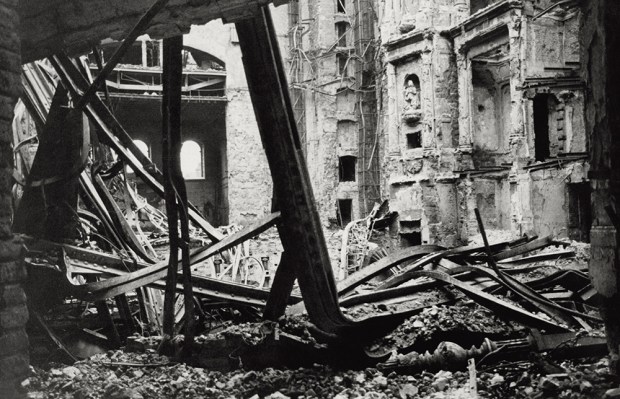
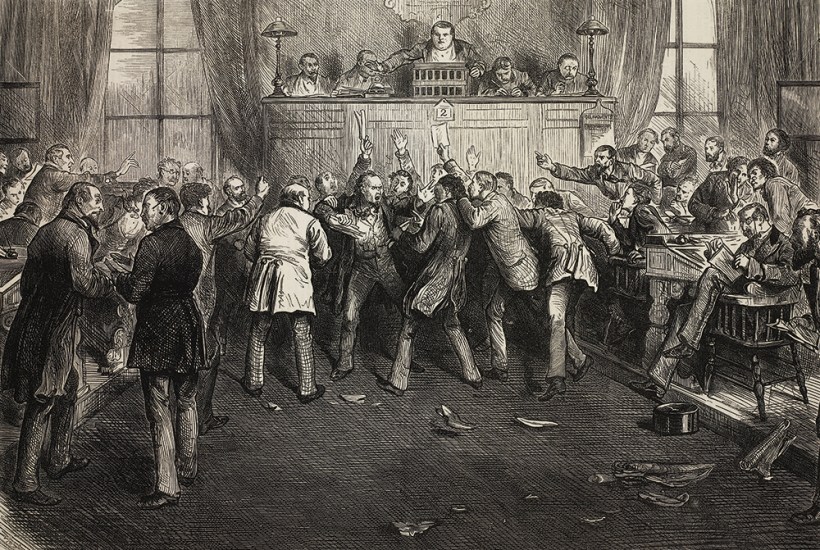
A combination of financial speculation and misguided government policy upended economies and ushered in two decades of material deflation. The tumult began in Vienna when a speculative real estate market bubble burst on 9 May 1873, and alarm soon spread to New York and the railroad markets. The New York Stock Exchange shut its doors for ten days, while stocks fell more than 70 per cent in Vienna and 30 per cent in Berlin that year.
There were winners and losers from the maelstrom which emerged: financiers flourished, while conditions were terrible for those in agriculture. European nations brought in tariffs, while America went through the disputed 1876 presidential election and raised import levies to 50 per cent. Some of the parallels are eerily familiar.
This original Great Depression was exacerbated by the ill-timed decision by key economies, such as Germany and America, to move to the gold standard and do away with backing currencies with silver. This was the context for William Jennings Bryan’s speech at the 1896 Democratic National Convention, in which he cried: ‘You shall not crucify mankind upon a cross of gold.’ The monetary policy debate might seem rather obscure, but it crops up in some unexpected places. In Oscar Wilde’s 1895 play An Ideal Husband, Mabel Chiltern discourages an unwanted proposal of marriage by ‘assuring him that I was a bimetallist’.
As Liaquat Ahamed puts it in his enjoyable and well-written book, the Panic ‘might have easily gone down in history as just one in the long series of minor setbacks that peppered the 19th century’ had the major powers not ‘simultaneously blundered’ by fundamentally rejigging the currency system during inauspicious financial conditions.
1873 is, mercifully, not a dry work of financial history. The author is an engaging chronicler – no easy task when the tale covers events from the Franco-Prussian war to the economic travails of the Ottoman empire and Egypt. There are a wide-ranging set of interesting figures, among them Mark Twain (who co-wrote The Gilded Age, which satirised the era’s financial corruption), Karl Marx (who had recently written Das Kapital) and Paul Gauguin (who abandoned a career as a stockbroker). Political characters include William Gladstone (who had around 40 per cent of his personal investments in Egyptian government bonds), the economically disastrous Sultan Abdulaziz (who apparently committed suicide ‘with a pair of scissors that he had requested to trim his beard’), the ‘out of his depth’ Ulysses S. Grant and the ‘implacable’ Bismarck, who sought to cripple France financially.
But one name above all hangs over the period: Rothschild. The Jewish banking dynasty, which owned ‘41 stately mansions in the most coveted locales across Europe’, was at the centre of events and the go-to lender. When Benjamin Disraeli needed a vast urgent loan to prevent the French gaining complete control of the Suez Canal, it was to the Rothschilds he turned. The security of the family business was bolstered by an extraordinary level of intermarriage: ten of the dynasty’s founder Mayer Amschel’s 11 grandsons married their first cousins.
Scapegoats are always sought in times of economic uncertainty, and Jews were an easy target. Édouard Drumont’s anti-Semitic La France juive, which attacked Jews generally and the Rothschilds specifically, became a bestseller. But as different nations struggled to come to grips with events, other factors were also put forward as explanations. Ahamed finds that American officials flagged ‘the destruction of crops in the Midwest by a massive plague of locusts’; the French highlighted ‘the wholesale destruction of vineyards caused by the outbreak of phylloxera, as well as the disappearance of sardines from the coast of Brittany’; and the Italians pointed to ‘a disease attacking silkworms’.
Judged against later crises, it’s understandable that 1873 has been overshadowed by much deeper subsequent crashes, such as that of 1929. American industrial production only fell 6 per cent over the period. Yet the connections to our own times still stand out. Ahamed correctly highlights the familiarity of ‘a real-estate bubble, stock market mania, careless lending, a cascade of defaults and financial disruptions ricocheting across the ocean’. Unfortunately, he doesn’t really take it much further or analyse the railroad and AI connection. There is also a strangely abrupt and underwhelming conclusion. Still, 1873 is an interesting read about an under-appreciated and (perhaps) surprisingly relevant financial era.
Got something to add? Join the discussion and comment below.
You might disagree with half of it, but you’ll enjoy reading all of it. Try your first month for free, then just $2 a week for the remainder of your first year.