I was lucky enough to become friendly with Bert Kelly MP in the last years of his life. Bert had been the Liberal member for the federal seat of Wakefield. He was briefly a minister under Harold Holt and John Gorton. For many years, he wrote a column in the Australian Financial Review under the heading, the Modest Member. When he retired, he changed the name to Modest Farmer.
One of Kelly’s main contributions to public life was his early support for removing tariffs and industry protection. This was an unpopular position to hold at the time. He formed a small group of like-minded parliamentarians around him that went by the name Modest Members. John Hyde was another leading light.
The most important thing I learned from my long discussions with Bert was his almost complete lack of interest in economics. He was interested in morality, doing the right thing. He saw industry protection as a form of unearned preferment of some businesses and their workers at the expense of others. Kelly’s thinking was importantly explained by his devotion to the teachings of the Methodist Church.
To be sure, high rates of industry assistance impose all sorts of economic costs, including taxing consumers and reducing the need for firms to compete, invest and innovate. But for Kelly, the central issue was a moral one, not an economic one.
I recall asking him what the best moment of his life had been, thinking he might refer to his contribution to the intellectual debate about trade protection. But his response was much more prosaic: the day that Myxomatosis was released onto his family farm in the mid-north of South Australia. The farm has been overrun by rabbits, and this was causing serious problems.
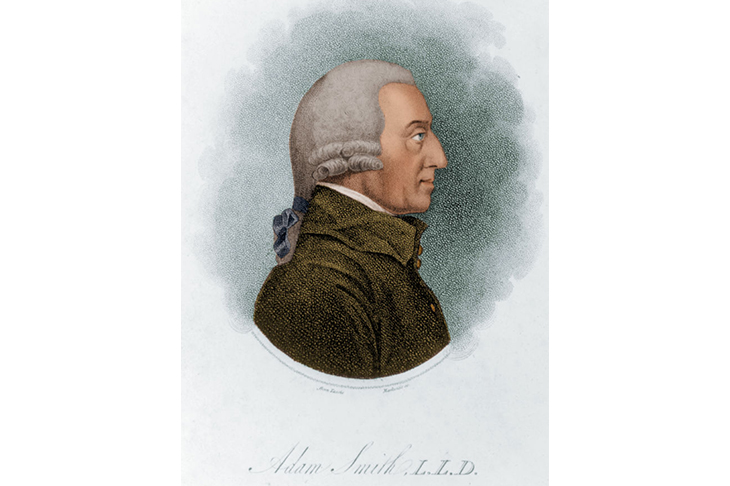
I was thinking of Bert the other day, deciding that he was definitely on to something by emphasising morality over economics. In fact, the term economics came relatively late in the piece. Adam Smith was the Professor of Moral Philosophy at Glasgow University and Alfred Marshall, who is regarded as the father of neo-classical economics, was Lecturer in Moral Sciences at Cambridge University.
The way economics has developed over the past century or so has been based on the false assumption that it is free of morals. Using fancy mathematical modelling and ever-increasing computing power, many economists try to portray their discipline as a science. They regard the estimates of the size of linkages in the economy as indisputable and accurate. Policy advice is similarly beyond question because of the support of the underlying modelling. It’s a form of determinism: apply the appropriate set of policy settings and the outcome is assured.
I would be the first to admit that economists can be arrogant sods – insufferable at times. A high-water mark – or should that be a low-water mark – was the emergence of the so-called Washington Consensus in the late-1980s and early-1990s.
The Berlin Wall had fallen, and the Soviet Union had collapsed. The transformation of the economies of the countries behind the Iron Curtain was an imperative. The advice was clear: they must be freed from the destructive clutches of government control to be replaced by market-based arrangements. Economists had all the answers.
Harvard-trained economist, Jeffrey Sachs, was one of the most prominent experts to be consulted on the shift. He roamed around Poland and Russia, doling out advice like a mother preparing school lunches. Needless to say, he was paid handsomely for his efforts. The guidance offered up came to be known as the Washington Consensus – at the time, it was regarded as akin to the Ten Commandments. It contained a set of policies deemed to guarantee high rates of economic growth and low inflation and unemployment.
The key components were trade liberalisation/globalisation; privatisation of government-owned enterprises; financial sector deregulation; liberal rules regarding foreign inward investment; elimination of industry protection; disciplined fiscal policy; inflation-targeted monetary policy; and freely floating exchange rates.
If it sounds like a recipe in a cookbook, it’s because it is. But depending on the skills of the cook, the quality of the ingredients and other factors, a recipe can succeed or it can flop.
The central problem with the Washington Consensus in practice was the failure to consider context and to allow for the way in which the policy prescriptions were implemented. In the case of privatisations, for instance, far too often government monopolies were effectively handed over to politically influential individuals. A new cadre of obscenely rich oligarchs was suddenly created, particularly in Russia.
The benefits of globalisation were also talked up with scant regard for the losers in the process. The fact that swathes of workers in the American Midwest lost jobs as large manufacturing plants closed was regarded as the price to be paid to achieve higher per capita incomes. Think here J.D.Vance’s compelling first chapters in Hillbilly Elegy for a description of the personal costs of that trend.
Many economists sought to lay the blame on technology for the job losses and to complain about governmental failure to deal with the distributional consequences. They argued that the benefits of global trade were so great that losers could be compensated, even if they weren’t.
It was the Pareto theorem, a central belief of most economists, in practice: if the winners can compensate the losers and everyone is better off, then the change is worthwhile. But just think about it – this theorem itself is replete with morality. It implies that the winners are indistinguishable from the losers; that they are equally resilient and respond from the same starting point in terms of physical and human capital.
It was this fervent belief in the Washington Consensus that led Bill Clinton to be convinced by economists to push for the premature entry of China as a full member of the World Trade Organization even though it was widely recognised that the country didn’t meet the requirements. The benefits for China of membership of the WTO as a developing economy were very substantial, paving the way for its meteoric rise as an industrial powerhouse.
It is widely recognised that the Chinese Communist party sought to manipulate the value of its currency – a violation of the Washington Consensus – to boost the competitiveness of its exports. But for reasons that are not completely clear, many economists simply shrugged their shoulders.
I have sometimes wondered what Bert Kelly would have made of world and economic developments this century – he died in 1997. There is no doubt that he would be appalled at the massive increase in the size of the government and the associated rise in government debt. There is something deeply immoral about a government effectively handing out current benefits while handing the bill to future generations to pay off.
He may well have modified his views on free trade given the lying and cheating that goes on with global transactions and the clear primacy of geopolitical objectives on the part of some countries. It would be interesting to hear his views about the need for countries to retain essential and critical industries and how they should go about this endeavour. The world that so many economists assumed was always a mirage, far removed from reality. It’s time for them to open their eyes and see the world as it is and to modify their view accordingly.
Got something to add? Join the discussion and comment below.
You might disagree with half of it, but you’ll enjoy reading all of it. Try your first month for free, then just $2 a week for the remainder of your first year.