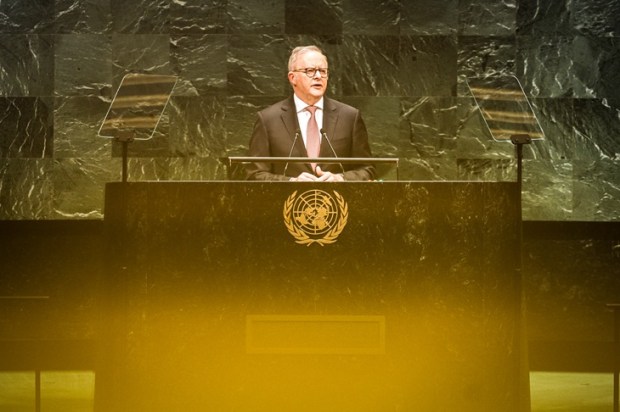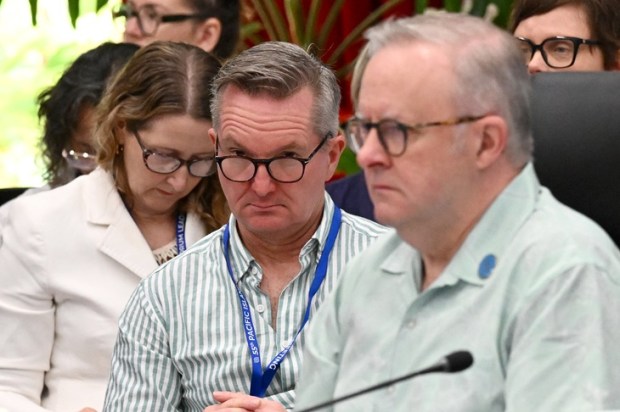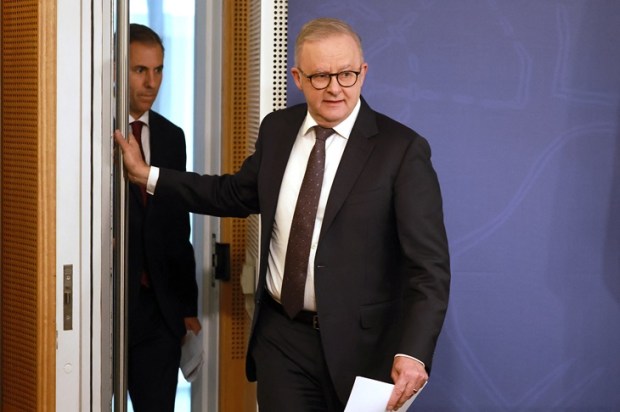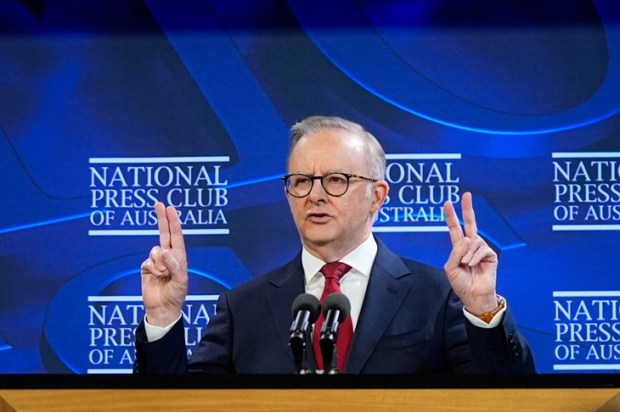
There are species of sloth that move faster than the Prime Minister.
This much is evident as we discover today that someone in his office, probably the secretary, decided to bring forward a scheduled meeting with Singapore later in the year – to this week.
As our largest and most important supplier of fuel, they have recently cancelled critical shipments. This has left Australia in serious trouble.
It was also entirely predictable given Singapore is a third-party that has made its wealth by processing majority Middle Eastern oil and on-selling to nations like Australia, who ditched their refineries due to self-inflicted energy costs, wage inflation, and environmental regulations.
It does not take a strategic genius to realise Singapore would not be able to fill those orders after the Strait of Hormuz was closed.
Australian strategists would have known this the moment Donald Trump started making threats toward the Iranian leadership.
In December of 2025, extremely serious anti-regime protests erupted in Iran. Isolated movements to reinstate the Shah through Reza Pahlavi manifested into legitimate Western-backed support that began approaching America for legitimisation.
Keep in mind, Trump had been nominated for the Nobel Peace Prize by Pakistan and had already sorted out several extremely difficult conflicts including between the DRC and Rwanda. The appetite for Trump as a global saviour was riding high and he was being actively pursued by Persian interests to facilitate a regime change and liberate Iran from its Islamic oppressors.
Oppressors in control of all the oil.
And what did the Australian government do?
Did they hold meetings to consider fuel security keeping in mind what happened to Australia during the 1970s Iranian revolution? Did they start ringing around their strategic partners to find out what the situation would be if shortages emerged? Did they make overtures to America to guarantee military supply of fuel as a Pacific ally?
They did not appear to do anything.
Several months later in February, after Trump had already established a proven record of hot military action in Venezuela, Trump said:
‘For 47 years, the Iranian regime has chanted, Death to America!’ and waged an unending campaign of bloodshed and mass murder, targeting the United States, our troops, and the innocent people in many, many countries.’
On the same day, Albanese issued an official statement declaring that Australia ‘stands with the brave people of Iran in their struggle against oppression’.
And yet Albanese made no public contingency plans if the Iranians were successful in their uprising.
Was the Prime Minister’s press release more meaningless waffle? Did the Prime Minister dismiss the struggle of the Iranian people as doomed to fail and therefore made no preparations for its success?
It was a long statement in which he repeated the same lines as the President.
‘It has long been recognised that Iran’s nuclear program is a threat to global peace and security. The international community has been clear that the Iranian regime can never be allowed to develop a nuclear weapon … we support the United States acting to prevent Iran from obtaining a nuclear weapon and to prevent Iran continuing to threaten international peace and security.’
This makes it clear that the Australian government was at least partially aware that America could stage an attack against nuclear facilities inside Iran and attempt to assassinate key figures in the regime. By this point, it was extremely likely.
And what did Labor do?
They upgraded the travel advice, but not Australia’s domestic security.
Even after the war in Iran began, and perhaps for more than a week of hostilities, no serious action was taken by the Australian government.
War in Iran started late February. The Strait of Hormuz closed on March 2. The Energy Minister didn’t perk up until mid-March.
That is a catastrophic failure of duty for someone who should have started moving, at the latest, in December.
As for this new (trade?) trip with Singapore, no one is quite sure what it will achieve as the correspondence has been vague and the logistical limitation of Singapore’s supply is a fixed risk.
One statement from Singapore read:
‘We are committed to working together to strengthen energy supply chain resilience, including by deepening regional co-operation, accelerating renewable energy transition, addressing unjustified import and export restrictions, and maintaining open trade flows.
‘In this context, we reaffirm our commitment to strengthen energy security, to support the flow of essential goods including petroleum oils, such as diesel, and liquefied natural gas between our two countries, and to notify and consult each other on any disruptions with ramifications on the trade of energy.’
Less than a day after threatening to erase the Iranian civilisation from the face of the Earth, Trump and Iran agreed to a ceasefire and a two-week opening of the Strait of Hormuz. Allow us to be generous and say this holds and Israel doesn’t accidentally blow up a nuclear power plant without approval. There is a genuine concern that a bidding war on Singapore’s fuel will begin negating any attempt Australia has made to cushion the cost of fuel.
As for China, who for some bewildering reason holds a majority market share over our aviation fuel, they have been clear they will not deliver scheduled orders unless their domestic supply is first guaranteed, regardless of how many nice tweets the Prime Minister makes about them. (And no, he hasn’t negotiated the return of the Port of Darwin despite election promises.)
So far, this is what the Prime Minister has said about his trip to Singapore:
‘Singapore is Australia’s largest two-way trade partner and investor South-East Asia, and one of our closest strategic and economic partners.
‘The visit follows Australia and Singapore’s joint commitment to keep fuel between both countries and to work together to strengthen energy supply-chain resilience.
‘Together, we share concern over the situation in the Middle East, including the consequences for both our nations.
‘We share a deep strategic trust. I regard Prime Minister Wong as a friend of Australia, and the fact that we have reconstituted these annual leaders’ meetings is very important.’
Of far more concern is that the Albanese government doesn’t seem interested in permanently diversifying Australia’s Asia-heavy reliance with America or Venezuela despite the guarantee that they are isolated from Middle East and Pacific conflict. Nor have they done much to re-invest in Australia’s domestic supply, even if only to ready the nation in an emergency capacity.
Queensland Premier David Crisafulli has. After the enormous success of his earlier announcements, he came out today pushing ahead with Taroom Trough.
Good morning from the Taroom Trough – the first oil field to be developed in Australia for half a century.
National fuel security is about drilling, refining and storing fuel locally and we’re determined to lead the country and make it happen.
We’re streamlining this… pic.twitter.com/fNNlfZrrmb
— David Crisafulli (@DavidCrisafulli) April 7, 2026
And what about the rest of the country? What about the other state premiers? The federal government?
To the casual observer, it seems there are tens of billions of dollars thrown around the energy sector for anything with a Net Zero sticker, but when it comes to matters of national security, all the ‘experts’ wander out pointing at graphs and counting the cents.
Thistlethwaite, the forgotten Assistant to a Republic that Never Existed, is now the Assistant Trade and Foreign Affairs Minister. He has praised the government’s efforts in temporarily diversifying deliveries with the US rising to 20.9 per cent. This, in and of itself, makes the point that this is a reliable and necessary alternate route that should have been organised and signed off on when Donald Trump made his first statement of intent regarding Iran.
Why did the Labor government hesitate?
Why were no contingency plans put in place for an Iran war and Middle East fuel disruption that everyone knew was coming?
Considering what it has cost Australians and businesses, they deserve clarity over what was said and done in the weeks leading up to the closure of the Strait of Hormuz.
There is a general feeling that Labor, and perhaps the government in general, sat on their hands while a crisis was allowed to develop, hoping things would sort themselves out instead of taking proactive action to protect Australian interests.
When was the first phone call made?
Did the government seek confirmation in advance from our top five suppliers that there would be interruption to supply?
Why did it take the Prime Minister more than a month to seek out Singapore?