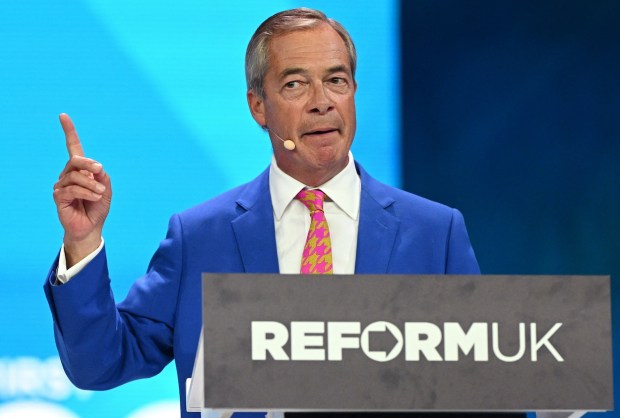
Liberals don’t realise it yet, and perhaps they never will, but Reform has just done them a massive favour. Nigel Farage’s party has announced that a Reform government would deny visas to nationals of any country seeking slavery reparations from the UK. The party’s home affairs spokesman, Zia Yusuf, says those countries which try to ‘use history as a weapon to drain our treasury’ will find ‘the bank is closed and the door is locked’. This appeals to the sorts of voter the Reform coalition is built on: fed up with Britain being taken for a ride, resentful of the shame-drenched view of the nation’s history advanced by its ruling elites, and disaffected by a political class that cannot be relied upon to resist reparations because doing so might inadvertently advance British national interests.
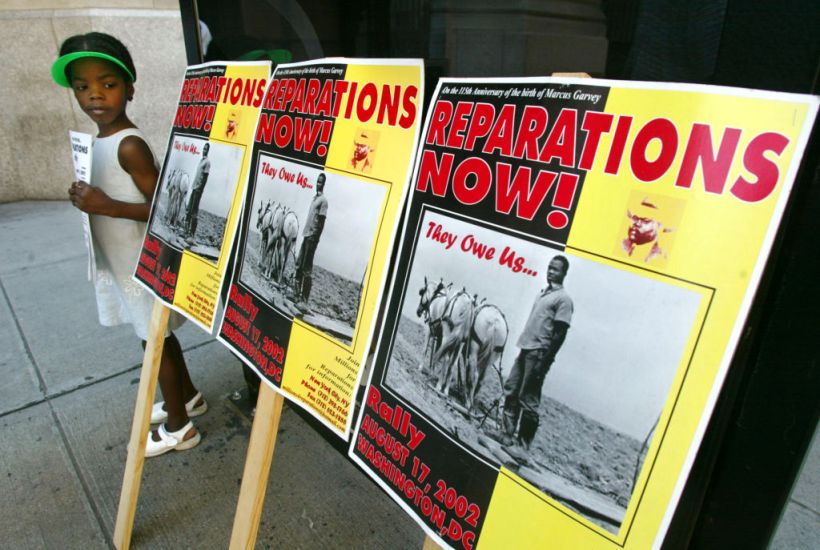
However, you needn’t be minded to vote Reform to appreciate the value of this latest policy as a spine-stiffener for ministers and civil servants. Reparations are firmly on the agenda. In March, Ghana, with the support of the African Union and the Caribbean Community, passed a resolution at the UN General Assembly declaring the trans-Atlantic slave trade – ‘trans-Atlantic’ being the operative word – as ‘the gravest crime against humanity’ because of, among other reasons, the ‘enduring consequences that continue to structure the lives of all people through racialised regimes of labour, property and capital’. The text says ‘reparations represent a concrete step towards remedying historical wrongs against Africans and people of African descent’. This time the operative term is ‘of African descent’. The resolution is calling for the UK and other nations involved in the trans-Atlantic slave trade – and only that particular slave trade – to transfer vast sums of money to the origin nations of slaves and to people, including those living in this country, who share that heritage.
This is a shakedown on a global scale and with a global price tag
This is a shakedown on a global scale and with a global price tag. According to a report by Patrick Robinson, a former Jamaican judge on the International Court of Justice, Britain is ‘required by law’ to pay £18.8 trillion in reparations, more than 14 times the Treasury’s total managed expenditure in 2025. Merely to make a demand for such a sum is an act of aggression, blackmail cloaked in the language of law and justice. As we have seen with the surrender of the British Indian Ocean Territory, the default setting of the modern British state is to place the interests of foreigners before those of Britons and call the result ‘soft power’. That instinct was on display during the Ghana resolution vote, where the UK abstained (because of course it did) over the inclusion of the word ‘gravest’, with British chargé d’affaires James Kariuki saying ‘we must not create a hierarchy of historical atrocities’. I say, old boy, this picking my pocket is a bit of a rum business, but there’s no need for the insensitive language.
If you treasure Britain’s liberal democracy and want to keep it, reparations are and must be a non-starter. They impose a severe financial penalty on a population, not a single one of whom was alive at the time of the trans-Atlantic slave trade. Advocates can protest that it is the British state, not Britons as a people, who will be asked to pay, but the functional difference is meaningless. Every pound extracted – let’s be honest, extorted – from the Treasury by claimant nations is a pound taken from public spending, like education, policing and the NHS. Yes, your child might well need an education or emergency medical care, but maybe Admiral Hawkins should have thought about that.
It’s difficult to predict where the economic and societal harm involved would lead, but given the scale of both, it is likely to include a swarming of the political mainstream by racialism and ethnic nationalism. Reparations would require the transfer of national resources from a multi-racial country for actions committed when that country was mono-racial, a formula destined to stir up racial resentment and discord. Remember that phrase ‘people of African descent’? That opens up the possibility of the British state having to pay reparations to British citizens or residents with African ancestry. The very concept of race-based payouts is antithetical to the British sense of justice, and bear in mind that this would be taking place in a future Britain where demographic change would be even starker. An evaporating white majority, and the social anxieties that come with that, plus taxpayer-funded handouts to preferred racial groups. The Southport riots would be looked back on fondly as a spot of light summer joshing.
The trans-Atlantic slave trade, like all trades in human beings, was a moral obscenity, the merchandising of men, women and children deemed less than full persons because of the colour of their skin. The men responsible for this monstrous enterprise are deservedly remembered with revulsion where they are remembered at all. Britain benefited financially from the slave trade, and it was Britain that became the first world power to end the practice. Britain’s modern interactions with Africa, following the demise of colonialism, have been marked by co-operation, the sharing of medical and technological abilities, and the transfer of substantial sums in development aid. The demand for reparations plays on the liberal guilt of a nation that strives so much to be a good global citizen that it opens itself up to being an international mark. And not just a mark for slavery reparations. If the British state gives in on this, it can expect to hear demands for reparations over every colony or territory a British administrator ever set foot on.
Reparations appeal to likely recipients, communists and other foes of Britain, and well-meaning liberals who just want to do what is right – or at least what is high-status. The first two are unlikely to be dissuaded, but liberals sorely need to knock some sense into themselves on this issue, as on so many others. Reparations are not a liberal idea – they are oriented to racial reckoning, not justice – and the forces unleashed by such a policy would be profoundly illiberal. Liberals might regard Reform with abhorrence, far greater abhorrence than they do reparations, but on this matter Reform is helping them in spite of themselves.