Japanophiles, look away now. A country renowned for inspiring fascination, warm feelings and not a little envy in its rapidly rising numbers of visitors – from crime-free streets to clean and plentiful public toilets – is in the grip of problems deeper and darker than you might imagine.
The classic Japan itinerary reveals little of those problems. You’ll enjoy hyper-modern Tokyo with its fabulous restaurants, flawless transport and non-stop shopping and entertainment. You’ll jostle tourists and schoolchildren for the perfect view of the Golden Temple in Kyoto without losing your enthusiasm for Japan’s ‘eternal city’. Then you’ll fly home with pretty much only good things to say about Japan and the Japanese.
Companies making nappies for babies are pivoting to nappies for the elderly
Yet a short train ride out from these places would deliver you into the world that Tom Feiling describes, with heartfelt sadness, in this beautiful, measured meditation on the country’s predicament. The author lived there in the early 1990s, the last years of its postwar heyday. Returning 30 years later, he finds that cities such as Tokyo continue to thrive – but largely thanks to what he sees as a Dorian Gray effect. They look young because they draw in young Japanese from across the country and because, thanks to a hyperactive construction industry, the average age of a building in Tokyo is just 28 years. Suburban and rural Japan are the portrait in the attic: deprived of their young, shops and schools are shutting down and properties are lying vacant.
The underlying dynamics here are well-established. Large-scale urbanisation in Japan dates back to the 1950s and 1960s. The country’s demographic decline began, as Feiling points out, in 1974, when its fertility rate fell below the level needed to maintain the population. But successive attempts to distribute opportunities, culture and people more evenly have come to little. Four cities – Tokyo, Yokohama, Nagoya and Osaka – are now home to fully half Japan’s population. Long-term trends have been compounded by three ‘lost decades’ of economic stagnation and the failure of politicians and business to address challenges that have been talked about for generations.
Feiling lays bare the grim consequences, combining his own travels and observations with research and conversations with acquaintances, academics and journalists. He encounters predictions ranging from blood banks running dry to the collapse of basic rural infrastructure. As parts of the countryside are subtly but steadily reclaimed by nature, Feiling reports a senior Japanese economist suggesting that even Tokyo will soon shrink and slums form. Already 17 per cent of homes in Osaka lie vacant.
Everywhere Feiling goes he finds a ‘veneer of polite discretion masking mass dysfunctionality’. His most telling interviews reveal the sense of a broken social contract. Once upon a time, if children submitted themselves to the punishing routine of school and homework followed by evening cram-school (known as juku), they were all but guaranteed a stake in a high-trust, high-functioning society. Now the old obligations remain but the incentives are disappearing. More people are working irregular hours on insecure contracts, struggling to get mortgages and less likely, as a result, to risk the commitment and expense of starting a family.
Poignant attempts to adapt to all this include a slew of buzzwords and books making a virtue of isolated living. There is talk of ‘self-actualisation’ alongside titles such The Courage to be Disliked and Supreme Solitude. Some commentators put a positive spin on hikikomori (social withdrawal), seeing it not as the product of social or psychological struggles but rather a decision to opt out of a failing society. Feiling discovers self-help gurus advising people on how to live alone on the cheap, and shops selling sex toys – including something called the CybOrgasMatrix – to a population of young people who are having less sex than ever (Japan’s ‘love hotels’ declined, we learn, from around 38,000 in 2013 to just 7,000 a decade later). Companies making nappies for babies are pivoting to nappies for the elderly.
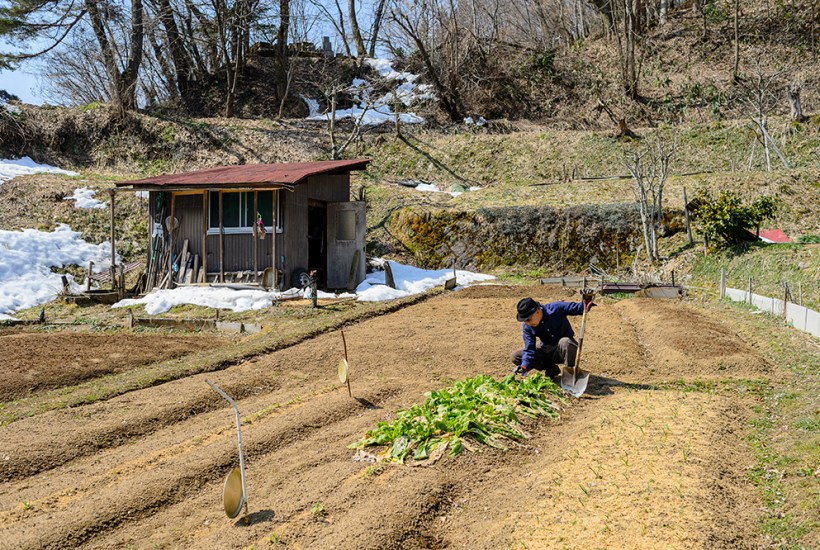
Feiling finds the ageing residents of rural areas living healthy and active but often lonely lives in villages where first the homes and schools emptied out and then the businesses closed down. Next to go is usually the money to pay for public services, encouraging yet more people to leave. In the haunting words of the proprietor of a place Feiling stays at in the village of Kaifu, in Tokushima: ‘Isolation is a quiet experience. It can make people strange… Without jobs and often without families, their minds wander… People no longer feel that they are being propelled into the future.’
It isn’t all bad news. Government-sponsored rural revitalisation campaigns may not yet be delivering large numbers of city-dwellers back to the bosom of Japan’s rich volcanic soil. But the countryside still retains just enough romance in the minds of jaded urbanites that some are willing to explore the prospect of healthier living and cheaper homes. Feiling meets some much-needed entrepreneurial souls, including a woman who invited an Italian chef to her area so that he could encourage people to do more with the lemons that grow there in abundance. Serious thought is being put into managing a necessary shift from growth-based national economics towards sustainable local economies.
Feiling is rightly sceptical that automation can balance out the effects on the workforce of precipitous population decline. Meanwhile, politics and public anxieties are trending away from support for large-scale immigration. Instead, the answers seem to lie in reimagining what ‘community’ might look like as cities shrink, the countryside – with luck – experiences a modest renaissance driven by counter-urbanisation and re-directed tourism and Japan returns by 2050 to the working-age population that it had a century earlier – somewhere around 50 million people.
This, Feiling points out, is our future too – in the UK, in the developed world and eventually across the planet. The global population is on course to peak at around 10.3 billion in the mid-2080s and decline from then on. All the more reason for us to take a close interest in what works – and doesn’t – in Japan.
Got something to add? Join the discussion and comment below.
You might disagree with half of it, but you’ll enjoy reading all of it. Try your first month for free, then just $2 a week for the remainder of your first year.