On the outskirts of Fort Worth, Texas, there is a two-storey factory churning out a vast number of dollar bills every day for the United States Federal Reserve. When Oliver Bullough visited, he counted 129 pallets in one room, collectively containing more than $4 billion. He also watched a woman use a jack to casually shift another $64 million across the concrete floor. Yet he barely used cash on his visit to the Lone Star state, relying on credit cards and smartphone apps, apart from when tipping waiters. As he points out, this is increasingly typical: many fewer Americans or Brits are bothering with cash, and when they do it is for small transactions. So why is more and more money being printed in such places, and in the biggest denominations?
The answer, he suggests, is money laundering. Those dollars grease the global network used by gangsters, terrorists and thieves to evade the law and fund their operations and bank profits. This is why the value of US dollar bills has hit a record high, despite the waning use of cash in the country. It explains why the $100 bill – the third most common banknote in circulation after the $20 and $1 two decades ago – now comprises about 80 per cent of paper dollars at a time when most citizens use small denominations – if at all. It is a similar story with Canadian dollars, Swiss francs and the pound sterling. But then, according to one estimate, 70 per cent of dollars are held abroad. ‘The link between Medellin and Moscow is the$100 bill,’ says a top British cop.
Bullough, who set out on his journalistic career in Vladimir Putin’s home city of St Petersburg, has built a reputation for focusing on financial crime. Now he turns his attention to the money laundering that lies behind so much bloodshed and misery in the world. It is of course impossible to say accurately how much dirty money is sloshing around, but according to some estimates the mountains of illicit cash might be larger than every nation’s economy apart from the US’s and China’s. Even the IMF admits it could be as much as $5 trillion.
Clearly there is a shameful systemic failure – and this book offers an insight into the complicity, hypocrisy and unforgivable inertia that aids some of the most gruesome people on the planet. More than five decades of legislation, diplomacy and prosecution have been a total failure, Bullough states boldly at the outset – a view endorsed by one of the world’s foremost experts, who says that all efforts to stem these streams of laundered cash are worthless. With a journalistic eye for a good story and considerable depth of knowledge, Bullough examines Baltic banks, the bureaucratic mess of compliance and the bizarre casinos handling massive sums on US Pacific islands.
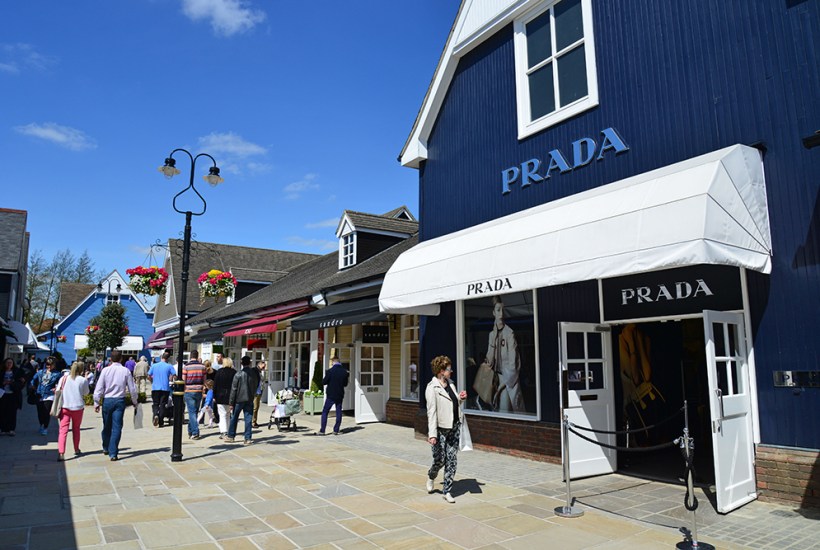
His narrative begins in the unlikely environs of Bicester village, observing the hordes of young Chinese shoppers loading up with expensive goods. When he mentions this to a senior police officer, he is given a lesson in how criminal networks develop strategies to evade controls. Factories in China ship drugs to our gangsters, who make payment to Chinese students at our universities, who buy designer handbags and luxury watches at our shopping malls, which are sent on to China for sale to their own fashion victims. ‘There’s the profit, see?’ says the officer. ‘It’s all co-ordinated by WeChat and we really struggle to follow it.’
This concept of swapping drugs for Gucci handbags and Rolex watches sparked Bullough’s exposé. He moves on to examine cash smuggling in the 1980s era of Miami Vice, the explosion of shell companies and offshore banks in the 1990s, then the hiding of murky money through trade, free ports and cryptocurrency (although he is over-negative about Bitcoin). Often the tactics used are blatant: Anguilla, a British colony, had three banks for its 6,000 inhabitants in 1980, then 96 three years later. Later on, when crooks could no longer simply stuff their cash into dodgy banks, a researcher digging into US customs data found claims of salad dressing sold for $720 a bottle, razor blades imported from Panama at $29.35 each and sinks coming from Venezuela that supposedly cost $8,911.85 when similar ones were on sale in Hong Kong for barely a dollar.
It is hard to disagree with Bullough’s central argument that powerful players only pay lip service to stopping the cleaning of dirty cash, picking on weak targets such as the Marshall Islands and Muslim charities while ignoring flagrant violations in Britain, Switzerland and the US. Bullough seems incensed by how Al Capone – who reportedly inspired the term ‘money laundering’ after funnelling his bootlegging profits through cash-intensive businesses such as laundromats – was jailed finally for tax evasion rather than murder, kidnapping or extortion. ‘This was not a triumph wrought by official ingenuity but a disaster caused by political idiocy,’ he fumes. ‘If a criminal has that much money for you to follow, you’ve already failed.’
The parallel with the modern war on drugs is obvious, since this lethal market is the liquidity that lies at the heart of the money laundering system. Ending this self-defeating struggle is among Bullough’s suggestions to cure this societal curse, along with simpler measures such as to stop printing those high denomination banknotes and for western countries to impose effective transparency on shell companies in their domains. Instead, blinkered politicians in Washington and Westminster shy away from stopping the torrents of cash that sustain murderous cartels, child pornographers, dictators, human traffickers and kleptocrats, with the most terrible consequences for the world.
Got something to add? Join the discussion and comment below.
You might disagree with half of it, but you’ll enjoy reading all of it. Try your first month for free, then just $2 a week for the remainder of your first year.