The barbarians are not at the gates. They are already inside the walls and the institutions, hollowing them out.
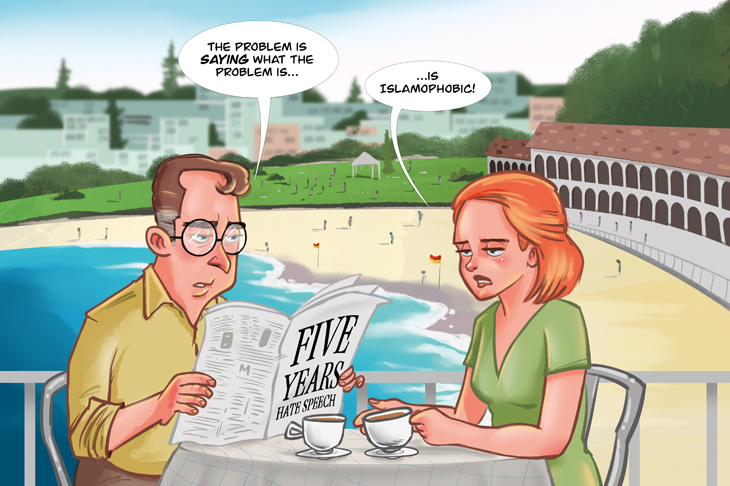
The Albanese government’s new ‘hate speech’ laws deserve their name, not because they confront hatred, but because they reveal a deep hostility to speech itself. Speech, like most natural liberties, is unruly. It resists bureaucratic tidiness. Governments fixate on regulating it precisely because it remains one of the few forces they cannot fully control.
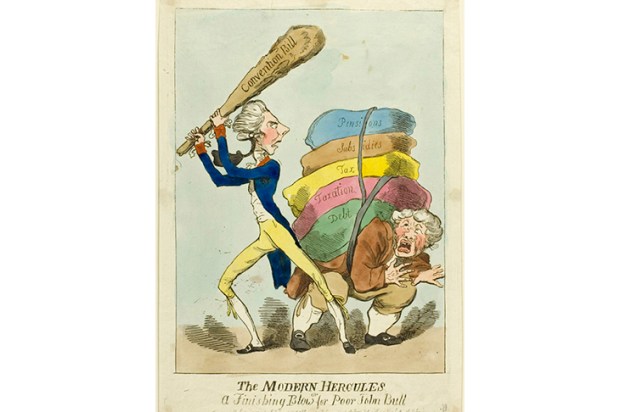
In Australia, mirroring a grim trend across the democratic world, speech is no longer treated as a right to be defended but as a risk to be managed. Thus once again, Australians are confronted with the familiar reflex of the modern managerial state: the belief that every social, cultural, economic, and security anxiety can be legislated away neatly, cheaply, and without consequence. It is a belief that is not merely wrong but the fatal conceit of government.
This instinct is not only misguided but intellectually shallow. It treats law as a universal solvent, capable of cleansing human nature itself. It assumes that resentment, malice, tribalism and hatred are technical glitches rather than permanent features of the human condition. This assumption underpins the government’s proposals, and it is why these laws are not merely flawed but foolish.
More troubling still is the suggestion, voiced by some otherwise serious figures, that failure to pass overreaching legislation would somehow invite future violence. This is not reasoning but emotional blackmail. It replaces evidence with fear and substitutes urgency for judgment. The implication is clear: dissent is dangerous, hesitation immoral, and liberty negotiable in moments of anxiety. The reality is both starker and less comforting. You cannot legislate away hatred. You cannot criminalise resentment out of existence. Attempting to do so is like treating cancer with aspirin. Politicians may feel virtuous, but the disease continues to spread beneath the surface.
These laws obsess over what people say while refusing to confront why such sentiments are growing louder and more pervasive. Antisemitism, racial animus, conspiracy thinking and social fragmentation are not new. What is new are the conditions that amplify them and the institutions that have lost the capacity to contain them.
Any serious response to acts of violence or social breakdown requires diagnosis before prescription. Yet our political class recoils from this inquiry because the answers are inconvenient. Instead, armed with the blunt instrument of the state, it treats every problem as a nail and legislation as the hammer. Supporters of hate-speech laws insist that policing language prevents social conflict and even violence. The appeal of this logic is understandable in moments of fear. But the evidence is thin. In practice, such laws address symptoms rather than causes.
The experience of other democracies offers a cautionary tale. In the United Kingdom, the home of Magna Carta, roughly 30 people are arrested every day for online speech deemed too offensive. These interventions have done little to reduce polarisation or restore trust. Instead, they have fuelled resentment and reinforced the perception that speech norms are enforced unevenly and politically.
The likely effect of Australia’s new laws is predictable. Hatred will not disappear. Extremism will not dissolve. It will retreat from the public square into private spaces, encrypted networks, and closed communities, where it can fester unchallenged and unseen. Driving ideas underground does not neutralise dangerous beliefs; it shields them from scrutiny. From a security perspective alone, this approach is perverse. It is far safer to know who are the extremists, to hear them openly, to expose their arguments, and defeat them in daylight. Suppression grants radicals the romance of secrecy and the status of martyrs. It replaces visibility with mystery and grievance with mythology.
Hatred and tribal hostility have always existed and always will. Human beings are not infinitely malleable. The real question is not why such pathologies exist, but why societies are increasingly incapable of absorbing them without resorting to prohibition. This question leads uncomfortably close to the governing class itself.
The deeper crisis is not the persistence of hateful views, but the erosion of the institutions that once mediated between the individual and the state. Families, schools, universities, churches, synagogues, civic associations, and media once transmitted norms, fostered obligation, and built resilience. But as government has expanded, these mediating bodies have been crowded out, politicised, or hollowed from within.
Nowhere is this erosion more visible than in education. Many institutions charged with forming citizens struggle to present their own society as anything more than a catalogue of crimes and injustices. Historical complexity is flattened into moral indictment. Inheritance is reframed as guilt.
A society that educates its young to despise themselves should not be surprised when alienation and resentment follow. What makes this dynamic more corrosive is that much of it is publicly subsidised. Through taxation, Australians are compelled to finance bodies that reward ideological subversion rather than knowledge, grievance rather than gratitude. Universities that radicalise students, schools that replace learning with activism, public broadcasters that sneer at their audiences, and an arts-culture industrial complex that repays support with contempt are all sustained by citizens forced to underwrite their own social and civilisational erosion. This outcome was not unforeseen. Nearly a century ago, Joseph Schumpeter predicted that prosperous societies would generate a class of intellectuals whose security is underwritten by the very order they are trained to denounce. Secure in incomes they did not earn and protected from consequences they do not bear, they devote themselves to undermining the foundations that sustain them. In Schumpeter’s formulation, successful societies manufacture their own internal antagonists. Not among the dispossessed, but among the subsidised.
Hate-speech laws are not a solution. They are an admission of failure. They signal a governing class that has lost confidence in its culture, its arguments, and ultimately its legitimacy. A healthy civilisation does not fear speech. A confident society does not ban words.
If Australia wants less hatred, it must rebuild its institutions. Restore learning to education, merit to leadership, and civic pride without apology. Recover historical memory without self-loathing. Withdraw public funding from ideologies whose primary purpose is to undermine social cohesion.No legislation can repair what cultural failure has broken. A government that responds to hate speech with prohibition advertises not strength but insecurity. Free societies do not fear speech. Only regimes uncertain of their legitimacy do.
Got something to add? Join the discussion and comment below.
You might disagree with half of it, but you’ll enjoy reading all of it. Try your first month for free, then just $2 a week for the remainder of your first year.