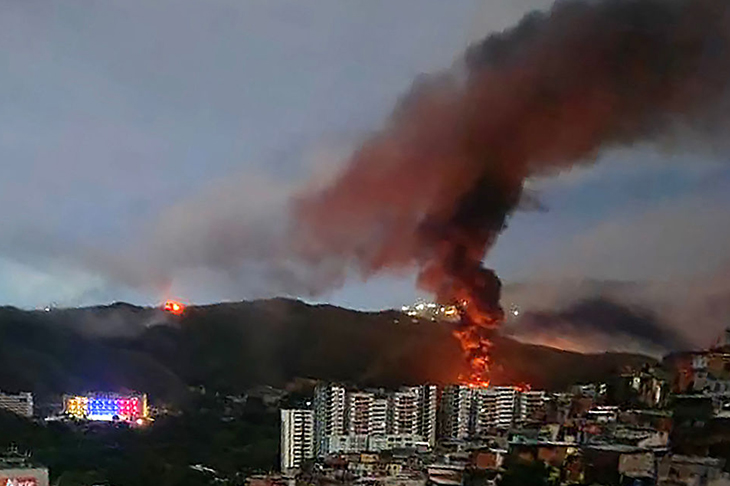
On the night of 3 January, the US acted audaciously, decisively and to stunning effect to seize President Nicolás Maduro and his wife from the presidential palace in Caracas and spirit them away to New York. A great power used its armed forces with extreme speed and violence to kidnap the president of a sovereign state and put him on trial under its own criminal justice system. Those who are reflexively anti-American or anti-Trump have criticised the US. Others who habitually back the US or Trump have been supportive. Both groups are immune to evidence and reason. Those who support or condemn actions based on the nature of the act, not the identity of the actor, are in a shrinking minority. I offer three arguments to explain why the US deserves one, but only one of the traditional three cheers; an amber warning light instead of the second cheer; and possibly even a jeer as the final reaction.
Maduro was a tinpot dictator from central casting. Yet, unless the US is going to hunt every bad guy in the world, that is insufficient to justify the coup. Despite the initial elation and celebrations, additional justifications look increasingly dubious. Maduro, his wife and son are charged with conspiracy to traffic cocaine and colluding with cartels designated as terrorist groups. Drugs are more of a demand problem in the US than a supply problem from outside. The US narcotics epidemic is driven by fentanyl, little of which originates in Venezuela. The former president of Honduras, a convicted narco-president who was serving a 45-year sentence in a US federal prison, was pardoned by Trump.
Official justifications have used the shifting language of law enforcement, strategic objectives, and control over Venezuela’s energy sector and economic future. Maduro’s ouster and kidnapping are unquestionably a violation of international law and the UN Charter. The only exceptions are Security Council authorisation or self-defence against actual or imminent armed attack, neither of which applies. This is the most powerful normative shield for every minor and middle power in the world against the natural predator instincts of every major power. Unfortunately for Maduro, however, US courts have long recognised that even if a defendant has been abducted and brought to the US forcibly, that is not sufficient to toss out the case. But is the rest of the world comfortable with the thesis that any state can domestically legalise violations of foundational norms of the international order?
Second, ‘attack and hope for the best’ is not a strategy. There is little evidence of a coherent long-term plan for what comes on the morning after. In sharp contrast to the well-oiled efficiency of the stunningly successful strikes in which all mission objectives were achieved with no loss of American life, the day-after statements on what comes next have been bumbling and confusing. The history of previous US destabilisations of Latin American countries – Chile, Haiti, Nicaragua, Dominican Republic, Guatemala – does not inspire confidence that the outcome is a flowering of freedoms and stable, well-run democracies.
There is no humanitarian crisis so grave that an outside intervention cannot make it worse. State tyranny can collapse into state failure. Venezuela, mired in corruption and riven by factions, has been brutalised by decades of dictatorial misrule by Hugo Chávez and Maduro. The Chavista apparatus is deeply entrenched in the country’s principal institutions. The downfall of Maduro could well be followed by violence and instability. As the late Secretary of State Colin Powell put it, you break it, you own it. And indeed, Trump said initially that a US team would ‘run’ Venezuela. Although the administration later walked back that objective, it cannot shed the responsibility for assembling an interim governing structure and ensuring law, order and stability for a vast country of 28 million people.
With the decision to manage Venezuela rather than liberate it, stability has been prioritised over democracy. A classified CIA assessment projected Vice President Delcy Rodríguez as the safest post-Maduro bet. Consequently, there’s a change of leadership but no regime change. Rodríguez is a hard-core socialist. Suspicions will linger as to whether she might have collaborated with Trump to oust Maduro. Combined with the US controlling the oil, it’s hard to see post-intervention domestic or international legitimacy and acceptance if she continues to rule as a de facto US imperial viceroy. Her continuance instead of a transfer of power to the opposition party whose candidate Edmundo Gonzalez won last year’s presidential election in a landslide undermines claims of democratic transition.
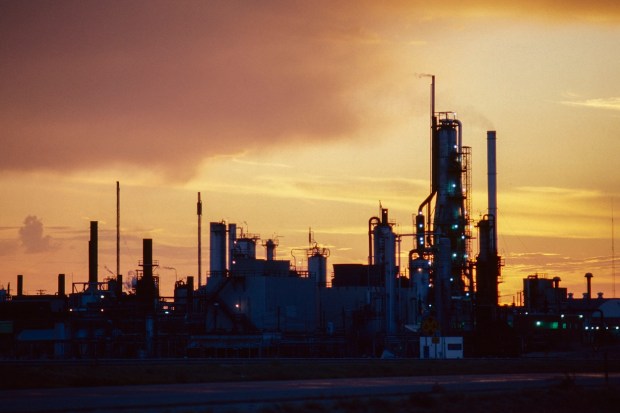
Will Venezuela become an American resource colony? Trump’s team is reported to be working on an ambitious plan to control Venezuela’s oil ‘for years to come’. But an abundance of oil reserves does not give a magical solution to the economic, logistical and other risks of exploiting energy resources in an unstable and hostile environment. Trump’s post-coup sales pitch to two dozen American oil executives received a lukewarm response, with Exxon CEO Darren Woods saying Venezuela is currently ‘uninvestable’.
Third, the National Security Strategy 2025 stated: ‘The outsized influence of larger, richer, and stronger nations is a timeless truth of international relations’. The requirement of non-interference in the internal affairs of states has been frequently violated. What is new under Trump is the abandonment of any pretence in favour of a naked declaration that the US intends to act as it sees fit, even against friends and allies, and global norms and institutions can go take a hike. Markets have opened betting on the next target to be struck by the US: Colombia, Cuba, Mexico, Canada, Iran, Somalia, or Greenland? Although Greenland has closer historical, cultural and political links with Europe (especially Norway and Denmark since the ninth century), geographically it is part of North America. It may thus be argued that it falls within the Trump Corollary to the Monroe Doctrine, which holds that the US exercises dominance over the Americas. However, a coercive takeover of Greenland could mark the final rupture between the North Atlantic allies and break Nato, which has managed to stay afloat despite repeated charges of freeloading and scepticism about its value to the US.
This is a validation of the Xi-Putin thesis that the world is an international jungle, that the rules-based international order was a self-serving myth propagated by the US-led West to disguise and institutionalise its hegemony, and that, henceforth, relations between the major powers will be conducted on the principle of unrestrained power politics and spheres of influence. There are reports that Putin has been pushing for a grand bargain whereby the US would trade Ukraine for Venezuela. The erosion of the normative restraint on a great power’s unilateral use of force is likely to cause greater alarm in Taiwan than in China. The precedent and template of a naval blockade followed by precision strikes and a lightning operation to decapitate the leadership is ready-made for use by China against Taiwan. The US will have zero moral authority to oppose it. And Australia had better hope that China never gains strategic ascendancy over the US. As already noted, however, hope is not a strategy.
Got something to add? Join the discussion and comment below.
You might disagree with half of it, but you’ll enjoy reading all of it. Try your first month for free, then just $2 a week for the remainder of your first year.