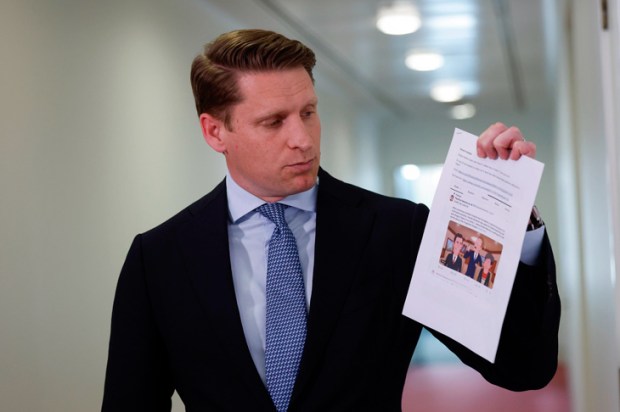

This week, the Prime Minister finally acquiesced to the broad outpouring of support across Australia’s political, professional and civic spectrum and agreed to establish a royal commission into antisemitism.
Yet he immediately devalued the undertaking in two ways. First, he named a commissioner who does not enjoy the Jewish community’s unqualified support, an appointment that is read as reassuring the government rather than those most directly affected. Second, he framed antisemitism not as a discrete ideological, religious or security problem to be fearlessly confronted but as a social friction to be managed in the interests of ‘national consensus’, with explicit warnings against outcomes that might ‘undermine social cohesion’.
In effect, the commission is invited to examine antisemitism only to the extent that it does not disturb the social arrangements that have allowed it to metastasise, or provoke a backlash from those inclined to deny or minimise it.
That constraint is explicit in the terms of reference. The commission must operate ‘in a manner that does not occasion prejudice to current or future criminal proceedings or national security or undermine social cohesion’. This is extraordinary. Royal commissions exist precisely to expose failures, even when they embarrass governments or agencies. Here, the commissioner is effectively instructed to self-censor where findings intersect with prosecutions, intelligence operations or politically sensitive communal tensions.
Nor is there clarity about ideology. Islamism, jihadism, Hizb ut-Tahrir, the Muslim Brotherhood and other transnational movements are referred to obliquely as ‘religiously or ideologically motivated extremism’. This matters because antisemitism is not merely a diffuse social prejudice. In certain Islamist traditions, it is a theological and political fixation; taught, justified and mobilised. To obscure this is to obscure the problem itself.
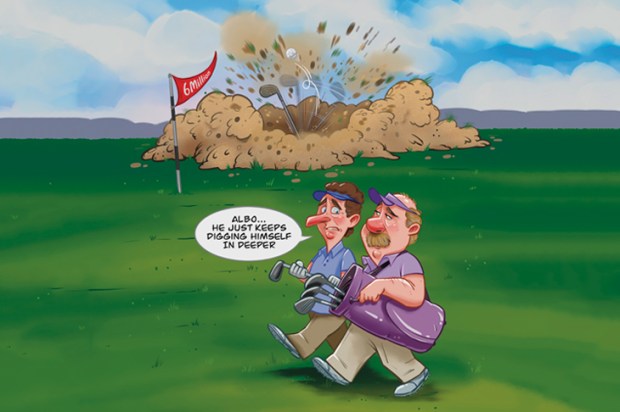
The consequence is an incentive toward opacity: closed hearings, redactions, and a sanitised report. Lessons may be learned without naming who failed. The result risks being heavy on process reform and light on accountability. There is, moreover, no guarantee of parliamentary debate. Taken together, these constraints suggest a process designed to relieve political pressure without offending the all-important Muslim vote. It is a Claytons royal commission: the one you have when you’re not having a royal commission.
That impression is strongly reinforced by what has followed. Even as the commission is being established, the Prime Minister has recalled parliament for an emergency session to rush through omnibus legislation on hate speech and gun control.
This is absurd. The whole purpose of a royal commission should be to determine the causes of antisemitism and devise proportionate responses, including carefully drafted legislation that should then be submitted to further scrutiny in the parliament. Instead, legislation has already been hastily drafted that appears to be designed principally to wedge the opposition by combining sloppily drafted hate-speech provisions with gun laws that will include a national firearms buyback. This latter probably makes about as much sense as Victorian Premier Jacinta Allan’s machete bins and is guaranteed to be deeply unpopular with responsible firearms owners.
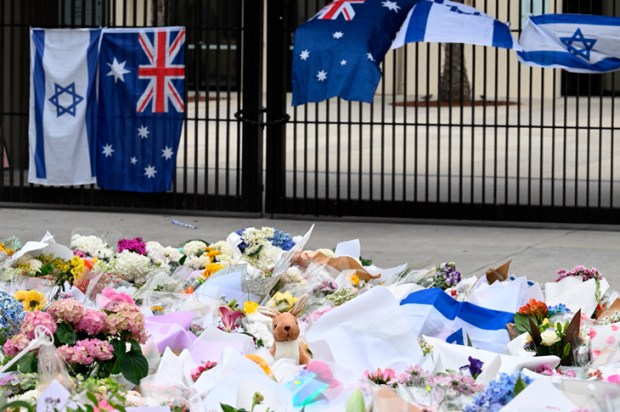
The flagship new vilification offence, framed as racial hatred and coupled with a broad ‘reasonable targeted person’ fear test, will inevitably be litigated and politicised. It is unclear whether it will meaningfully address antisemitism, but it is probably vague enough to invite expansive interpretations of ‘Islamophobia’, however defined. Meanwhile, the banning of named Islamist organisations seems to have been deferred to a future regulation-based listing scheme. After the worst Islamist terrorist attack on Australian soil, it is an insult to its victims that these laws are being framed with so little thought, and it is impossible to fix them in such a short timeframe.
A royal commission is meant to precede legislation, not be rendered moot by it. If the government already knows what laws it intends to pass, why bother with a royal commission at all? As T. S. Eliot warned, the gravest treason is to do the right deed for the wrong reason. This commission, and the legislation rushing to overtake it, risk betraying those they purport to protect, while protecting those who should be exposed.
Got something to add? Join the discussion and comment below.
You might disagree with half of it, but you’ll enjoy reading all of it. Try your first month for free, then just $2 a week for the remainder of your first year.