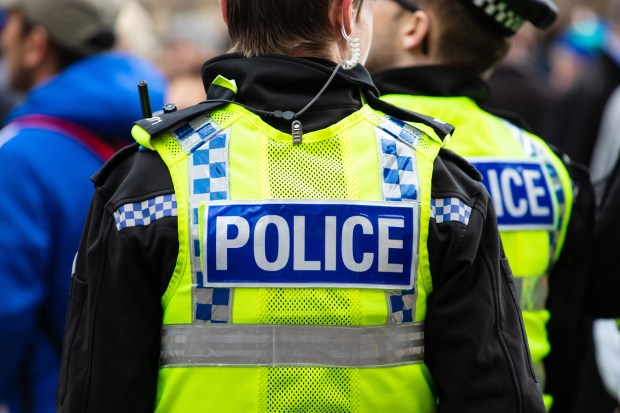
Mark Rowley, the head of the Metropolitan Police, has been discussing London’s crime rates. Rowley it seems, is eager to talk about London’s homicide rate – which fell last year. During one interview he told listeners that he ‘is about facts and evidence cos I’m a copper’, before going on to provide some highly selective statistics to support his claim that ‘London is getting safer’.
Rowley shared what he clearly felt was a reassuring fact, that ‘well over 80 per cent of Londoners feel safe in London’. It did strike me that a city in which a fifth of the inhabitants don’t feel safe might have some issues with crime and policing, but the Met Commissioner seemed very satisfied with this figure.
The problem for Rowley is that the homicide rate is a poor indicator of how safe Londoners feel. While it is true that London’s homicide rate did fall last year, and that there are more murders in other cities around the world, thankfully almost no one is killed in the capital in the 21st century. There were 97 homicides last year, compared to 109 in 2024 and 153 in 2019. Of course, every such killing is a tragedy, but really they don’t happen anywhere near often enough for the typical Londoner or visitor to spend time worrying about whether they’ll be murdered in the city.
What people worry far more about is crimes which they are likely to be victims of. There were 837,826 ‘victim based’ crimes recorded by the Metropolitan police in 2025. These crimes include robberies, phone snatching, sexual assaults and rapes. Such victim-based crimes have soared in London in recent years.
A decade ago, in 2015-16, there were 16,147 recorded sexual offences. Last year saw the Met receive reports of 27,694 such offences, and year-on-year reported rapes are up somewhere between 8 per cent and 12 per cent. Phone theft too is at endemic levels, with 117,211 stolen handsets reported to the Met last year. This morning Rowley was insistent that phone theft at least is falling, and I understand the official internal data supports this.
The Met Commissioner also tried to encourage listeners to ignore reported crime in favour of ‘crime surveys’ which try to estimate the overall level of crime. Many politicians and senior police officers prefer these figures, perhaps because they have generally shown that crime is falling. The Crime Survey of England and Wales (CSEW) has a number of weaknesses, not least that it tends to ‘oversample’ from low crime areas and ‘undersample’ from high crime areas. Even then, it has shown some crimes becoming dramatically more prevalent, with ‘selected knife offences’ up from 26,370 ten years ago to 53,047 in 2024-25.
The Met doesn’t police all of London. British Transport Police are responsible for mainline trains terminating in the capital, and for the underground network. Their last annual report described ‘an overall challenging environment of increasing crimes ranging from higher reports of anti-social behaviour to our highest ever number of homicides’. That report also states that sexual offences increased by 10 per cent compared to the previous year. Meanwhile the City of London Police, responsible for the Square Mile, reported an increase in thefts, violence, public disorder, criminal damage, sexual offences and robberies.
Of course, whether crime is rising or falling is not the only measure of whether London, or Britain is becoming lawless. We also want the police to catch criminals, gather evidence and bring them before a court. Unfortunately the Met, like police forces across the country, have become really bad at this.
Since 2013, the Home Office has reported ‘crime outcomes’ data. In that first report, we learned that almost 22 per cent of crimes resulted in either a charge or a caution. That is to say that almost 80 per cent of crimes were effectively going unpunished. That statistic was bad enough, but things have become far worse since 2013. According to last year’s crime outcomes data, a mere 6.3 per cent of crimes with a victim resulted in someone being charged.
The picture for the Met, unfortunately for Rowley is even worse. The force doesn’t publish data in quite the same format, but I discovered that of the 837,826 victim-based offences they recorded last year, 54,945 (6.6 per cent) were recorded as a ‘positive outcome’. This includes charges, cautions, offences ‘taken into consideration’, penalty notices and community resolutions. I was unable to establish the charge rate, but it seems to be well below the national average. It is almost certainly much lower than that achieved by City of London Police, who report 18.5 per cecnt of crimes with positive outcomes in their most recent report.
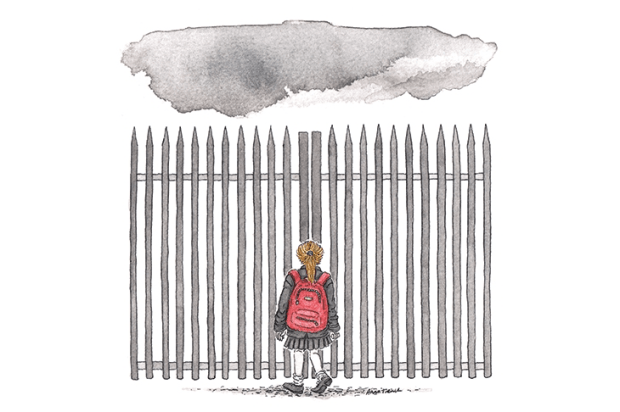
The impact this failure has on people’s sense of safety, and their belief that London is lawless can’t be overstated. Almost all crimes with a victim do not result in someone being charged. No wonder people feel their capital is lawless. The Met Commissioner should take another look at the ‘facts and evidence’ before gaslighting Londoners again.