After a long wait, the government’s Islamophobia definition has finally taken form. There has been plenty of criticism of the idea, and many warnings of the dangers it would pose to freedom and our ability to fight crime. But fear not, the state has come up with a brilliant solution: rebranding. Instead of ‘Islamophobia’ we are to be given a definition of ‘anti-Muslim hatred’.
The draft text, apparently submitted to the government in October, reads:
‘Anti-Muslim hostility is engaging in or encouraging criminal acts, including acts of violence, vandalism of property, and harassment and intimidation whether physical, verbal, written or electronically communicated, which is directed at Muslims or those perceived to be Muslims because of their religion, ethnicity or appearance.
It is also the prejudicial stereotyping and racialisation of Muslims, as part of a collective group with set characteristics, to stir up hatred against them, irrespective of their actual opinions, beliefs or actions as individuals.
It is engaging in prohibited discrimination where the relevant conduct – including the creation or use of practices and biases within institutions – is intended to disadvantage Muslims in public and economic life.’
There is much to be concerned with here. What exactly is ‘the prejudicial stereotyping and racialisation of Muslims’? Might it include accurate descriptions of reality, which some Muslims might find upsetting, or which they might choose to weaponise?
We can’t trust our institutions to respect lawful speech, so why would we hand them more weapons to use against us?
Although these rules won’t be statutory it’s very easy to see how they might prevent councils, the police and other public bodies from being honest about the religious aspect of crimes committed by Muslim men, such as the rape gangs. We’ve already seen the harm done by the fear officials had of appearing racist. Another definition, another set of behavioural rules, will only make this worse.
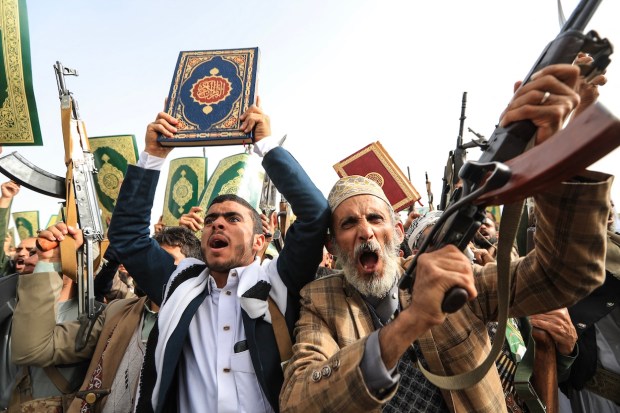
Similarly, as we’ve seen this year with Hamit Coskun’s ongoing persecution by the CPS for burning a Quran, the state will absolutely abuse speech laws. The state was happy to attempt to prosecute Coskun for the invented crime of ‘offending the religious institution of Islam’, and it is very easy to imagine them prosecuting people for ‘Anti-Muslim hostility’ in short order.
Even if the courts and free speech lawyers are able to hold the line against such abuses, being labelled as having exhibited ‘anti-Muslim hatred’ will no doubt have many other consequences. Just look at the recent case of former Royal Marine Jamie Michael. In the aftermath of Axel Rudakubana’s horrific killings in Southport, Jamie posted a video in which he described the murderer as a ‘creature’ and called for protests against high levels of illegal migration.
A Labour party employee reported Jamie to police and he was prosecuted for inciting racial hatred, before being acquitted by a jury after just 17 minutes of deliberations. Despite this, Jamie has now been banned from working with children, including coaching his daughter’s football team. The Welsh FA have even warned him that he will be ‘monitored’ if he watches her play. This decision was apparently taken after the local council claimed children ‘are at risk of harm’ due to the ‘dehumanising language’ Jamie used, and that he breached Axel Rudakubana’s human rights because he is ‘non-white’.
Councils, sporting associations and other public bodies are already going far beyond the law. If ‘anti-Muslim hatred’ is defined by the government it will soon become a part of their arsenal. Might those of us who accurately state that Muslim men are disproportionately overrepresented when it comes to the rape gangs, or agree with MI5’s assessment that Islamists are the greatest terrorist threat we face, soon find ourselves banned from teaching, coaching, or even watching our children play sport? We certainly can’t trust our institutions to respect lawful speech, so why would we hand them more weapons to use against us?
The final section of the guidance is even more sinister. The ‘creation or use of practices and biases within institutions’ will very quickly come to include all kinds of ‘indirect discrimination’. What this means is workplaces will be expected to ensure they comply with Islamic cultural and religious preferences. An organisation which doesn’t offer Halal food or which allows staff to express thoughts which Muslims believe to be blasphemous might quickly find itself labelled as exhibiting ‘anti-Muslim hatred’. The effect will be public spaces increasingly bending to the preferences of a group which is less than 10 per cent of the population.
Similarly, might efforts to honestly investigate and challenge harmful, predominantly Muslim cultural practices such as FGM or cousin-marriage find themselves deemed to create an ‘anti-Muslim’ environment? Many British institutions are already bending to Islamic preferences. In September the NHS published an article which described ‘benefits’ of first-cousin marriage, and this week the BMJ has published an article opposing the word ‘mutilation’ when describing female genital mutilation.
The aggregate effect of all these new rules would be dangerous. As Toby Young, director of the Free Speech Union, told me, ‘the government thinks free speech campaigners should be grateful that the definition’s not worse – forgive me if I don’t start opening the champagne. Even in this diluted form, the definition will have a chilling effect on free speech. The entire point of the exercise is to fetter criticism of the religion of Islam and its followers that’s a feature, not a bug.’
We have enough limits on free speech, and enough caution about honestly describing Islam in this country. This definition is dangerous, and needs to be rejected.