Allow me offer you a sobering thought before you reach for the Esky. The social cost of alcohol in Australia amounts to $75 billion a year.
That would be more than our annual defence budget if the figure were actually accurate, rather than a random number in a quixotic report weaponised by the Foundation for Alcohol Research and Education, Australia’s peak body of professional wowsers.
The Foundation is a perennial contender for the Ignoble Prize in Fictionomics, awarded to the most imaginative, inflated and statistically acrobatic claims of the past year.
The exponential growth in mathematical misinformation, amplified by the credulity of incurious journalists, made 2025 a busy year for the judging panel whose esteemed names have been withheld to protect their integrity.
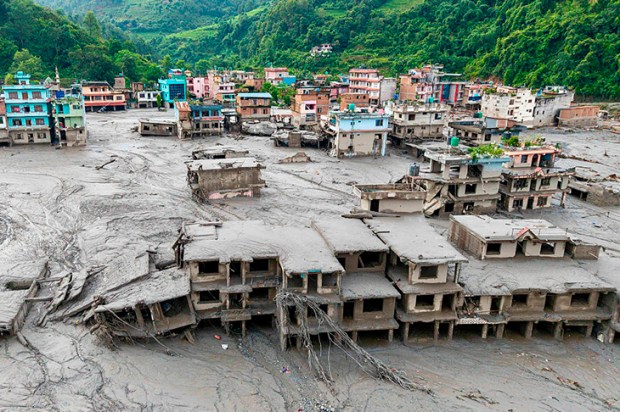
The Climate Council was once again a strong contender for its revelation that extreme weather fuelled by climate pollution is costing the nation $13.5 billion a year. The solution to this wanton wastage, we are told, is to spend more borrowed money. The Climate Council celebrated the federal budget’s allocation of $3 billion in subsidies for green iron and aluminium, $2 billion for the Clean Energy Finance Corporation, and $3 billion for rail projects in Western Sydney and Melbourne and $1.8 million to provide bill relief for whingeing householders too thick to understand that renewable energy is cheap.
Economic sticklers who fear that we are past the point at which the marginal cost exceeds the marginal benefit can take comfort in Bowen’s Law, articulated by the Energy Minister in September: ‘The cost of inaction will always outweigh the cost of action.’
In October, the Climate Council warned that extreme weather would knock $42 billion off the value of houses. Homeowners were paying a ‘disaster penalty’ of about $75,000 for a typical three-bed, two-bathroom house as climate-driven floods become more frequent and severe.
The Council’s pioneering work in banking improbable future weather patterns as present-day liabilities is recognised with a lifetime achievement award.
The Business Council of Australia deserves an honourable mention this year for proving that the right can play the bullshit number game as adroitly as the left. Its claim that red tape costs the country $110 billion seems ridiculously high, but it is lower than the $165 billion figure the BCA quoted five years ago, which suggests that things have improved under a Labor government, which they haven’t.
The BCA is right on one thing, however: excess fat in the system is expensive, as we learned this year in a report on obesity by the sprawling Big Four consultancy EY.
EY’s creative modelling revealed that obesity is costing the country $39 billion a year, or 1.3 per cent of GDP. Succumbing to a third Tim Tam turns out to be not a minor lapse of personal discipline but a macroeconomic shock.
The inability to control one’s own food intake is one of the least expensive human vices, however. Cancer Council Victoria claims Australia’s 2.1 million smokers are costing the country $137 billion a year.
No journalist thought to ask how the socialised cost of smoking could be 40 per cent higher than the nation’s total hospital bill ($96 billion) before running the story.
Since only five per cent of the cost of smoking is attributed to health care, might it not be unreasonable to query where the other $131 billion comes from?
The answer is that 85 per cent of the cost is intangible; that is, it is not a real economic transaction. Intangibles, like the theoretical value placed on a human life, are unverifiable, arbitrarily constructed and routinely misused to inflate headline numbers far beyond anything that resembles real-world economic loss.
The Cancer Council conveniently ignores international studies that show that smokers put lower demands on health services than non-smokers. Early deaths may be a tragedy, but they reduce future demand on ambulances, reduce waiting times in surgeries and free up hospital beds.
As Sir Humphrey Appleby explained in Yes, Minister: ‘We’re saving many more lives than we otherwise could, because of those smokers who voluntarily lay down their lives for their friends. Smokers are national benefactors.’
The failure to balance benefits against costs is far from the only methodological blunder in the Cancer Council’s study.
Twenty years ago, when there were 3.6 million smokers, the social cost of tobacco consumption was estimated at a mere $31.5 billion in a study by David Collins and Jennifer Lapsley, widely quoted at the time. We’re asked to believe that the per capita cost of smoking adjusted for inflation has tripled since 2005 without any explanation as to why.
The stigma rightly attached to smoking means the anti-tobacco lobby’s estimates are seldom scrutinised.
The report’s authors also fall for the single-cause fallacy: the assumption that complex matters like human health can be reduced to a single factor. Smokers in general tend to take less care of their own health. How do we know that the underlying cause of their health problems isn’t obesity, drinking, salad-dodging or gymphobia?
Smoking is 50 per cent more common in the LGBTI community. Should we combat ill-health by imposing a punitive tax on glitter?
For its heroic inflation of intangible costs, tireless double-counting of dependent variables, and turning hypothetical futures into present-day liabilities, Cancer Council Victoria is a worthy runner-up.
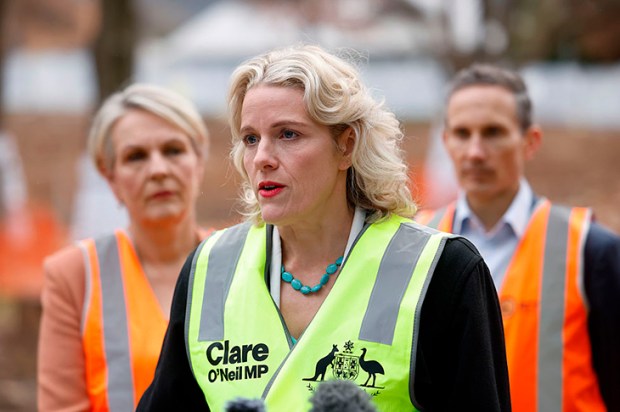
Which brings us to the winner of this year’s Ignoble Prize for Fictionomics: Chris Bowen.
Bowen was a joint winner of the prize in 2021, together with RepuTex – the outfit responsible for the quick-and-dirty modelling Labor leaned on to sell its fabled $275 annual cut to household electricity bills by 2025.
For the setting of his latest statistical fantasy, Target 2035, Bowen once again ascends to Cloud Cuckoo Land, that charming, pastel-tinted realm where residents spend their days lovingly tending wind farms to the sound children’s laughter rising from the shade of photovoltaic solar panels.
In the distance, a waterwheel spins backwards, pumping rivers uphill in accordance with AEMO’s road map. At night, villagers gather around the warm glow of lithium-ion batteries to tell tales about the Bad Old Days, when engineers wandered the earth scavenging for dispatchable power, and financiers swooped from the treetops insisting on a return on capital.
All was changed forever under Good King Albanese and Global President for Negotiations Chris Bowen, who shattered the Rod of Fiscal Discipline, abolished the laws of physics and banned the teaching of arithmetic.
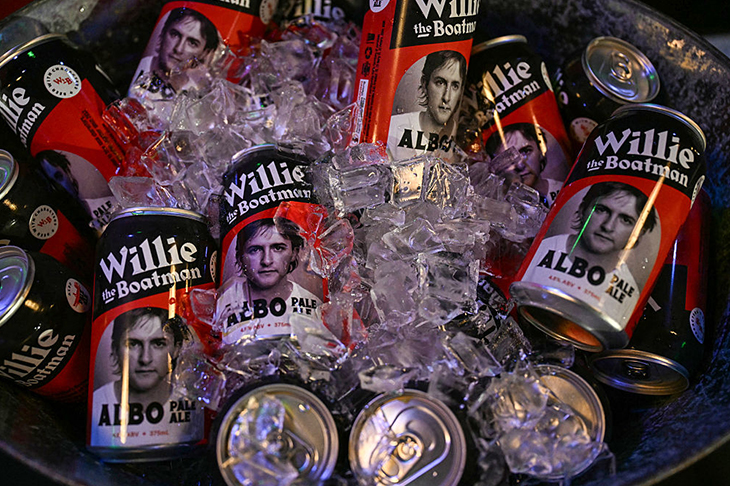
Thus, the grateful populace was freed from any doubt about the reliability of Reputex’s latest modelling that tells us that every day will soon be Christmas, and thanks to renewable energy, we’ll never run out of cold beer.
Got something to add? Join the discussion and comment below.
Nick Cater publishes Reality Bites on Substack
You might disagree with half of it, but you’ll enjoy reading all of it. Try your first month for free, then just $2 a week for the remainder of your first year.