There is an expression that is now quite common in America, although I don’t think I’ve heard it used in Australia. It’s the phrase ‘a come-to-Jesus moment’. And it is used, in the US at least, without any reference to Christianity or anything remotely spiritual or religious. It is used to mean when someone has to make a decisive and significant direction-changing decision. It’s often seen as a business or workplace cliché. For example, in an American business magazine in 1999 there was a statement that, ‘Most retailers remain in denial about the power of e-commerce. There will be a “come to Jesus” moment when the people owning bricks and mortar will realise they’re stuck.’
The Oxford English Dictionary puts it this way: ‘a significant shift in the current way of thinking about or doing something’. So why is the expression ‘come-to-Jesus’ used in this way? The answer is to be found in the 1870s when the phrase was coined to mock 19th-century Christian evangelists who invited individuals to find personal salvation by coming to Jesus. The famous Billy Graham crusades of the second half of the 20th century were much the same – although Billy invited his hearers to ‘make a decision for Jesus’. So this ‘come-to-Jesus’ phrase began life as a mocking expression, and has remained a mocking expression ever since. When used in a context that has no reference to Jesus Christ (or any claims he might make on a person’s life) it remains a mocking, dismissive phrase. Is it blasphemy? My guess is that, strictly speaking, it is. If you look at the Ten Commandments, blasphemy makes number three on the list: ‘You shall not take the name of the Lord your God in vain.’ From the 16th century to the mid-19th century, blasphemy was held to be an offence under English common law. In fact, in England blasphemy laws were only officially repealed in 2008. (2024 in Scotland!) The point about blasphemy these days is that you run the risk of offending any believer who is in earshot. I suspect the casual, secular, mocking, derisive use of ‘come-to-Jesus’ in America is intended to do exactly that. So, perhaps it’s good it’s not commonly used in Australia.
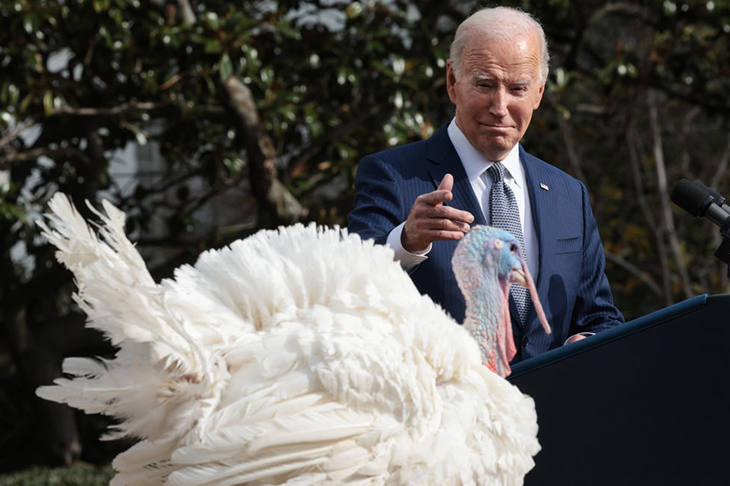
Speccie reader Valerie asks why when we start talking frankly, or bluntly, we are ‘talking turkey’. The story is that it’s a US term, first recorded in 1824. To start with, it meant to speak agreeably, or to say pleasant things; nowadays (as Val noticed) it usually refers to discussing hard facts, or getting down to serious business. The most prosaic answer is that the ‘to talk pleasantly’ meaning came about through the nature of family conversations around the Thanksgiving dinner table. It’s also suggested that it may have been influenced by the first contacts between Native Americans and settlers, which often centred on the supply of wild turkeys, to the extent that Indians were said to have enquired whenever they met a colonist, ‘You come to talk turkey?’ The later, blunter shift in meaning seems to have arisen in the early-20th century. Perhaps Thanksgiving table discussions had become less civilised? (Remember all the talk about whether it was okay to share Thanksgiving dinner with a family member who had voted for Trump?)
Callum’s football team won its match, and he was described as being ‘cock-a-hoop’. Puzzled, he has written to this column to find out where this comes from. These days (as Callum discovered) it means being pleased with some success – and is recorded from the mid-1500s. The original meaning, however, was slightly different. Back then it referred to drinking: ‘to make good cheer with reckless prodigality’. And the original phrase may have been longer: ‘to set the cock on the hoop’. This meant to turn on the tap on a barrel of ale because cock has the double meaning of both ‘rooster’ and ‘tap’. And a hoop is a loop or circle – so the notion was turning on the tap (or cock) and doing so again and again (around and around).
Got something to add? Join the discussion and comment below.
Contact Kel at ozwords.com.au
You might disagree with half of it, but you’ll enjoy reading all of it. Try your first month for free, then just $2 a week for the remainder of your first year.