When keffiyeh-clad Greta Thunberg has given up banging on about climate change, you know that the jig is up. She’s now more interested in siding with Palestinian terrorists and denying Israel the right to exist. When she screams ‘How dare you!’, she is no longer referring to climate inaction by developed countries.
Mind you, it has taken a long time for climate stupidity to peak. When future economic historians come to study this period – it’s akin to the Tulip mania of the 1600s – there will be a variety of answers. The money trail will be a central explanation, but weak-kneed politicians have also played a role. Why would anyone of sound mind take policy advice from an uneducated Swedish teenager on the spectrum?
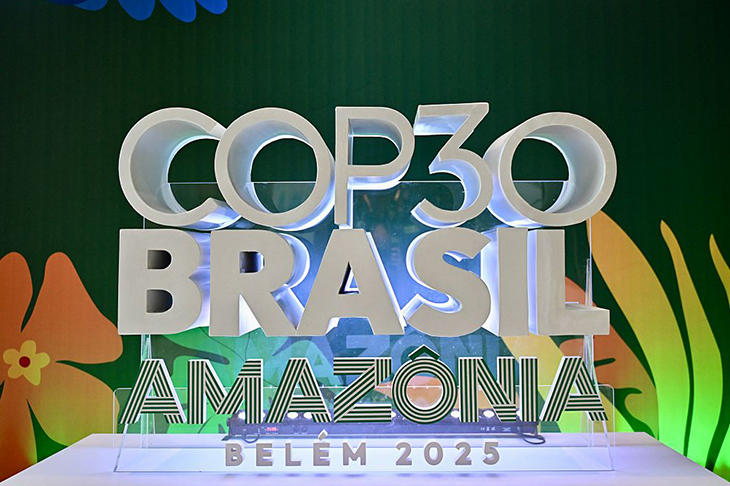
But the fact that the annual climate shindig, Cop 30, being held this year in some out-of-the-way place in Brazil called Belen, still attracts media attention tells you the madness might be receding, but it’s not over. (I did love the story about the road that had to be constructed through the Amazon forest to enable the massive conference to go ahead. You know this makes sense.)
The stench of hypocrisy of these gatherings is, of course, overwhelming. Literally thousands of green grifters, politicians and bureaucrats travel thousands of kilometres by air to reach these Cop gatherings. What’s wrong with an environmentally sensitive Zoom meeting or two? Surely, there would be a strong message there that the attendees really care about the climate and the environment.
Do we really have to put up with the incoherent Secretary-General of the United Nations, Antonio Guterres, telling us that the world is not doing enough, that we are ‘failing the planet’? Give us a break, mate. You need to find some new material.
At least the beleaguered Prime Minister of the UK, Keir Starmer, was prepared to concede that ‘consensus has gone’. Mind you, he was probably happy to spend a few days out of the country given the constant flow of disastrous stories tearing down his government.
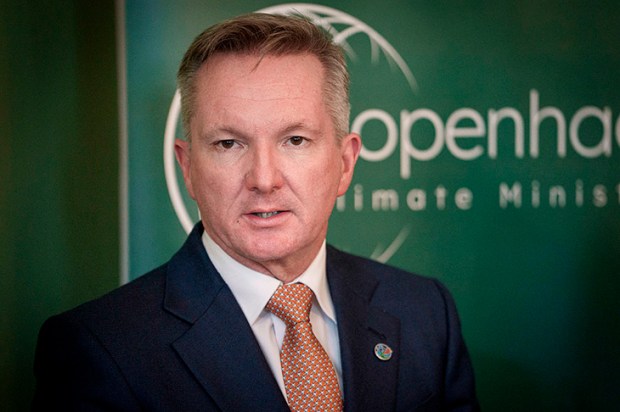
We know that B1 (Chris Bowen) will only be attending Cop 30 in the last week. By that stage, the decision will have been made whether the next Cop will take place in Adelaide or Turkey. If the deadlock cannot be broken, Bonn is the patsy that will be the next host.
If B1 had a half a brain – I know, I know – he would be handing the ‘privilege’ to Turkey and be done with it. How is it possible to justify spending a billion dollars on a two-week conference which is really nothing more than a trade fair for rent seekers? Gosh, that sort of dough would go a long way to refurbishing some of our ageing coal-fired power plants, return some stability to the grid and possibly even lower electricity prices. That really would be a good outcome.
This brings me to the role that Matt Kean (the Keanster or Keanoa to his ‘pals’) is playing by trying to keep alive the enthusiasm for the energy transition. Of course, his appointment by the Albanese government to the Chair of the Climate Change Authority should have raised more alarm bells than it did. He is clearly conflicted given his commercial interests in the renewable energy space. By rights, this should have ruled him out. These conflicts of interests simply can’t be managed through occasional recusing at meetings. But good governance and transparency are not regarded as important by Labor – it’s all about the politics.
Now I know I’m a stickler for facts – after all, I’m just an old-fashioned economist – but when the Keanster claims that 84 per cent of the world’s GDP is covered by net zero commitments, I smell a rat. To be sure, this lie is pushed by B1’s department.
But just think about it. The US does not have a net zero commitment and there’s a quarter of world GDP just there. The other big emitters, China and India, utter a few vague messages but they don’t amount to net zero commitments. And Russia?
And just when I think I might be going nuts, I come across this statement of fact from the Organisation for Economic Cooperation and Development, run by our old ‘friend’, Mathias Cormann. ‘Only 17.7 per cent of global emissions are covered by legally binding net zero pledges’, according to the OECD’s annual Climate Action Monitor. Moreover, ‘the expansion of international climate policy commitments increased by just 1 per cent in 2024’. The report concludes that ‘momentum behind emissions reduction has slowed significantly since 2021. The world is still well off-track to meet its declared climate commitments by the end of the decade.’
My advice to Keanoa is to stop telling us about the global pervasiveness of net zero commitments because this statement is simply wrong and not just a little wrong. Local developments are also unhelpful for his fanatical messaging about the need for aggressive ‘CLIMATE ACTION’.
It’s like watching ducks fall off the wall. The managers of more and more energy-intensive plants – smelters, refineries, steelworks – are raising the white flag. Unless the federal and state governments hand over great wads of money, they are out of here, with the loss of thousands of well-paid jobs. And the common factor is the rising cost of energy, which in Kean’s world is on the point of becoming cheaper but hasn’t yet. We all know the line – renewable energy is the cheapest; yeah, right.
The big one here is Tomago, the largest aluminium smelter in Australia, and located in the Hunter Valley. It uses around 10 per cent of all the electricity in the state. With its energy agreement due to expire in 2028, the managers have been informed that the unit price will double next time around. This will immediately tip the plant into the red – and significantly so – because electricity makes up 40 per cent of total costs.
And the Keanster’s response – he clearly thinks he is something of a wordsmith – is that ‘the plotline about the endangered potlines has become distorted by critics who are ill-informed – by choice or ignorance – about the causes behind Tomago’s woes’. We must all understand that it’s got nothing to do with renewables. Increasing renewable energy penetration, along with higher electricity prices, must be overlooked.
In any case, Tomago exports most of its product – is that a bad thing? – the plant is relatively old – it’s not – and aluminium is made elsewhere in the world, all of which together mean, in Kean’s bizarro world, that the closure of Tomago will be unfortunate, but these things happen.
If that hasn’t been bad enough, Kean has had to confront the reality of his beloved Liberal party potentially turning its back on the net zero by 2050 quest. After all, the Climate Change Authority ‘cautions against abandoning 2050 as the target time for reaching carbon neutrality’. Only this will ‘deliver a lower-cost decarbonisation’ – pause for laughter.
The Keanster tells us to read the preposterous National Climate Risk Assessment report if we are not convinced. Mate, that piece of invented catastrophism wouldn’t persuade anyone with half a brain.
In any case, the ‘physics of the atmosphere’ will convince us, according to the man under pressure. I’d recommend he get back to his day job but that’s also part of the problem. Sigh.
Got something to add? Join the discussion and comment below.
You might disagree with half of it, but you’ll enjoy reading all of it. Try your first month for free, then just $2 a week for the remainder of your first year.