If Australians want to improve the quality of government, now at its lowest ebb, we can start by using the tools our founders gave us.
I was reminded of this recently when I was invited to an evening harbour cruise for a visitor to Australia
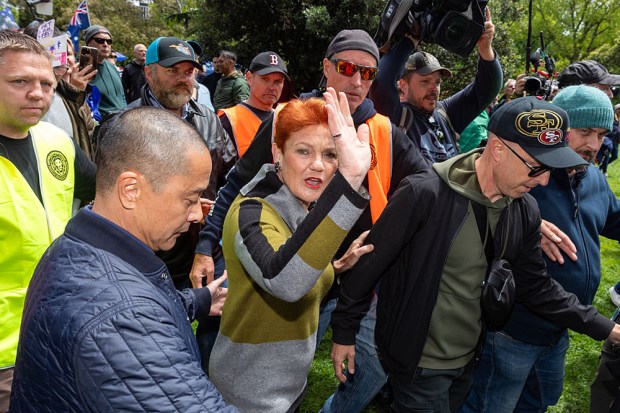
Once aboard, and chatting with those who had already arrived, I was distracted by a noisy greeting to a fellow guest about to walk onto the gangway near the Opera House.
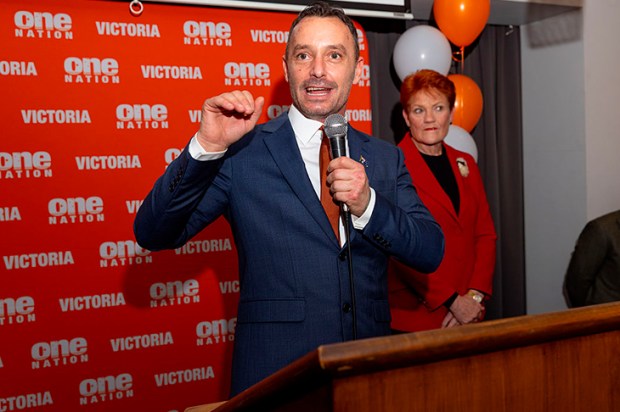
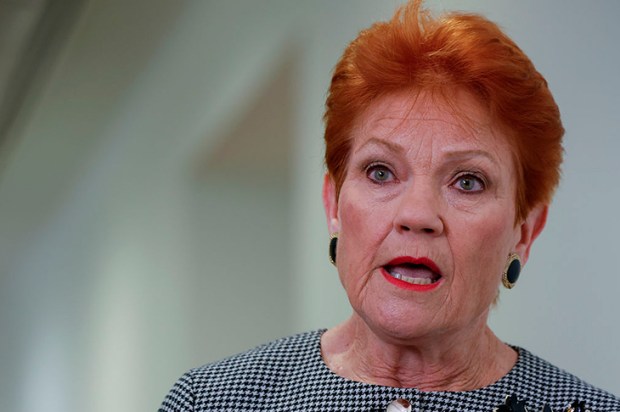
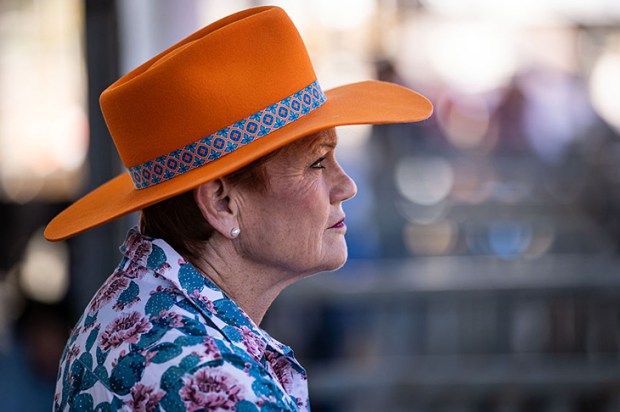
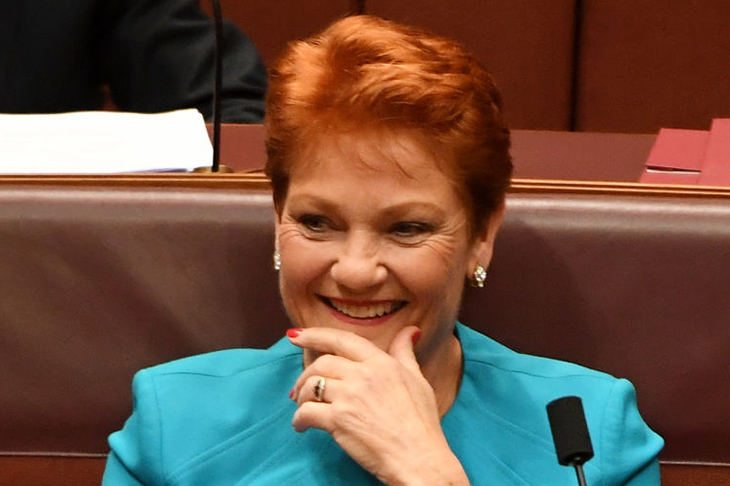
Even in the fading light, it was impossible not to recognise the slim and elegant figure, particularly after a young crowd identified her.
‘Pauline, Pauline, Pauline…’ they chanted, only encouraging more people to join in.
So, I was surprised that while Nick Dyrenfurth admitted in the Australian that while One Nation’s support is rising, ‘its populism is still stuck in 1996’, with voters overwhelmingly remaining ‘older, whiter and less urban’.
He predicted that ‘without Pauline’, their base could expand among younger men.
However, from what I saw near the Opera House, their base has not only expanded with Pauline, it is expanding exponentially.
Further, Dyrenfurth forgets that Pauline alone gives One Nation that quality rare among small parties, and so important in securing preference flows, brand identification.
Real receptions for politicians are usually as hostile as the one PM Whitlam received when Senator McAuliffe took him onto a major Brisbane football field. Gough’s comment is still remembered: ‘Comrade, never invite me to a place where you’re so unpopular!’
Today, with a hopelessly delinquent federal government, an impotent opposition, and too many in the media acting as the establishment’s propaganda arm, as well as indoctrination having long replaced education, well-informed Australians are looking for ways to save their nation.
It is a sad fact that people, who should know better, nowadays seem to fall for every disastrous fashionable theory brought into the country by the communist/Islamist alliance, which was first formed to take over Iran from Shah Reza Pahlavi.
It is interesting to recall that an early manifestation of such a theory, the politicians’ republic, was strongly supported in seats now held by Teals, funded by the prophets, as well as the profits, of climate catastrophism.
As always, follow the money. The fact remains today that if an idea is stupid enough and destructive enough of civilised values, it is certain to prevail among the elites.
However, what we know in Australia is that there is one party that will oppose it immediately and without equivocation ─ One Nation.
That is why, seeing the Coalition lose this year’s election, this column argued that people should vote strategically in the Senate.
As we noted recently, with the 50th anniversary of the dismissal of the Whitlam government approaching, Australians should be aware that our constitution was designed to allow precisely that.
There are, of course, many things which would improve the quality of government now. One would be to make information more available.
However, despite promises, the Albanese government has proven more secretive than any of its predecessors. Improving this requires legislation, and you cannot legislate unless you have the numbers.
We could go even further, as in Switzerland, and allow the people to directly control the politicians by making their own laws and repealing the politicians’ laws.
That would require a referendum. And who holds the keys to that?
What we can do, at the very least, is to use what we have.
As research at UTS by Dr Karena Viglianti-Northway demonstrates, our founders ensured that, unlike other Westminster constitutions, the Australian government is accountable to both Houses. This allows us to vote strategically, something this column called for in the last election .
Now, the next selection for the House and half-Senate must be held by 20 May, 2028. Apart from exposing the communist-Islamist alliance that is emerging throughout the West, Australians who care should vote strategically. This means two things.
First, voting, as you usually do, for your preferred choice of government. Second, voting in the Senate to control whatever government emerges from the election.
What wasn’t mentioned in the last election is that Labor is planning to create many more politicians, preferably where they can control them, that is, in the House.
However, there is a constitutional rule which the judges say means the House must be twice the size of the total number of state senators.
The people, mainly at the call of the former Democratic Labor party, refused to change this, and rightly so.
Stand by then for confected surprise when a parliamentary committee recommends the size of the House (and thus the size of the Senate) be increased.
It is likely each state, now represented by 12 senators, will, from the 2028 election, enjoy 14, 16, or even 18 senators.
Each territory, now represented by two senators, will likely have four.
The price the government will pay is that the quota of votes necessary to elect a state senator will fall from 14.3 to as low as 10 per cent .
In a double dissolution, the fall would be from 7.69 to as low as 5.26 per cent.
This could at least triple One Nation’s Senate presence.
What then should be the qualities present in a prospective senator?
In my view, integrity and loyalty is the first quality.
This must involve bearing true allegiance to our ‘Federal Commonwealth under the Crown… and under the Constitution’, seeing Australia as one nation under one flag and believing that the first duty of government is the defence of the realm.
Second, a senator should possess a level of common sense sufficient to seek to ensure the best performance of government in all relevant matters, including spending, tax, energy, water, immigration, development, biological women and men, and education.
Got something to add? Join the discussion and comment below.
You might disagree with half of it, but you’ll enjoy reading all of it. Try your first month for free, then just $2 a week for the remainder of your first year.