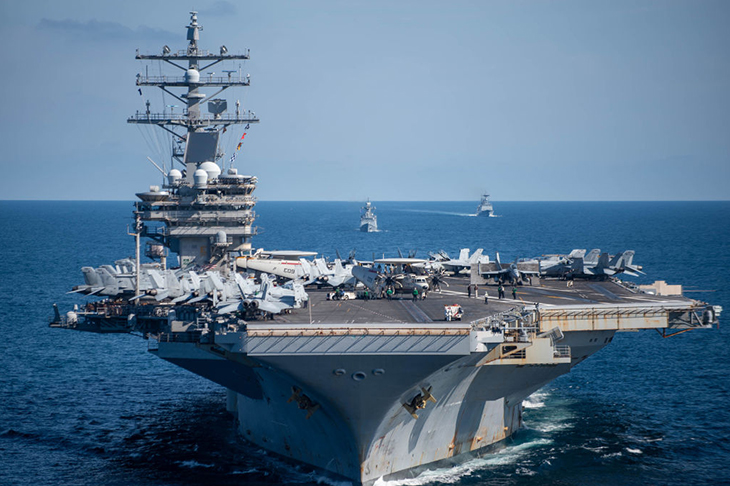
The US Navy is blowing up cocaine boats in the Caribbean. Not intercepting, not arresting – blowing them up. Fibreglass speedboats vanish in white spray; the Pentagon footage is broadcast with the routine frequency of a hurricane alert. The modern equivalent of a dreadnought, the USS Gerald R. Ford – so new she’s yet to fire a shot in anger – is en route, daring Maduro’s Monty Python-inspired Bolivarian Armada of Venezuela to respond. Some call it madness. To me, it looks like a civilisation remembering how to mean what it says.
Colombia calls it murder. Brazil offers to mediate. Legal scholars reach for maritime law. None of that explains why the footage lands less like horror than relief. Because for once, someone is saying no: if you play stupid games, you might just win serious prizes.
Mexican cartels might dominate distribution, but without Colombian farms and labs they’re nothing.
You can trace the descent that made this moment inevitable. Heroin entered American life as the price of genius. Charlie Parker and Billie Holiday destroyed themselves, and the culture called it tragic genius. The beatniks turned it into philosophy. Kerouac and Ginsberg made dissolution a rite of passage. Then the professors took over. Timothy Leary at Harvard told a generation to ‘Turn on, tune in, drop out’, and the university became the dealer. What began as tragedy became curriculum. Vice turned respectable.
The law followed. Between 1957 and 1973, the US Supreme Court decided pornography was free speech. A civilisation that once seized Lady Chatterley’s Lover began defending blue movies as constitutional sacrament. Shame became oppression. Feminism learned to critique everything yet struggled to replace what it dismantled. Crime soared not because people grew poorer but because no one believed in judgment. Defund the police? We had already defunded judgment.
Culture dissolved into the same indifference. Bach became background noise and Cardi B the poet of the age. Borders became feelings. ‘Undocumented’ replaced ‘criminal alien trespassing’ in polite speech. Television discovered decay could be monetised – Love Island as a business model, stupidity as content. Every cop show featured a five-foot female detective who could flatten a cage fighter with one raised eyebrow. TV producers rewrote the past so that Tudor and Georgian queens are, well, of course, black.
Marriage itself became suspicious. When Biden’s press secretary, Jen Psaki, joked recently that J.D. Vance’s wife – the daughter of Indian immigrants – should ‘blink four times if she needs help’, the implication was obvious: how could an educated woman of Indian heritage willingly marry a conservative Appalachian from Ohio unless she were being controlled? In the name of tolerance, progressives managed to reinvent class snobbery and racial condescension in a single breath.
The reparations movement represents the logical endpoint: demand payment from people who never owned slaves to people never enslaved. Treat Western history as one uninterrupted crime requiring eternal penance. Make guilt the only acceptable relationship to the past.
All of this – drugs, pornography, radical feminism, reality-denial – stems from one source: the refusal to judge. The conviction that personal autonomy outweighs civilisational survival. For half a century this culture won; crime soared, families collapsed, communities dissolved. But at least we weren’t judgmental.
That era is ending. The same moral timidity that mocked discipline, re-branded crime as structural inequality and made marriage ironic enough to be frowned upon now meets a harder reality: an America rediscovering the word no. Beijing bans drugs, pornography and prostitution with puritan zeal – yet looks away as its chemical firms flood the world with fentanyl precursors. The contrast tells its own story: one civilisation polices vice at home and exports it abroad; the other markets it as freedom and lives with the wreckage.
The missiles obliterating drug boats are not foreign policy so much as punctuation – a full stop to an era of apology. They announce that consequence exists again. The legality is murky, the morality uneasy, but symbolism counts.
That’s stage one – eradicating supply. Stage two will hurt more: rebuilding what decay replaced. You cannot bomb vice and keep the culture that glamorised it intact. You cannot destroy cartels abroad while schools teach that judgment itself is oppression.
The universities, where the teachers are formed, will be the first proving ground. They once produced statesmen; now they manufacture statements. Two of the greatest English-language historians are finding it tough to work in woke academia. Stephen Kotkin left Princeton for Stanford, joining Niall Ferguson at the Hoover Institution where there is, like at the University of Chicago, a model of free inquiry in which the university does not shield its community from ideas it finds unwelcome. The Heritage Foundation’s Project 2025 aims to restore order by draining bureaucracies and renewing institutions. If Trump’s team adopts the blueprint, the real test will be rebuilding universities that tell the truth without apology and form citizens, not curated identities.
Missiles destroying drug boats is the easy part. The real work needs to happen stateside and involves rediscovering structure. No more ‘chest-feeding people’ thought bubbles from the nomenklatura – just homes that hold together and a clampdown on those who want to portray fatherhood as pathology and motherhood as oppression. Standards that don’t apologise for existing means teaching taste as discernment, not algorithm; restraint as dignity, not repression. It means accepting that civilisation is a discipline before it is a feeling. China fears drones less than proud fathers and operational factories. Strength, not sentiment, deters.
None of this will please the corporations that profit from the permanent adolescence that has resulted from the drift into sentimental nihilism. They’ll discover urgent ethical objections to anything that endangers quarterly earnings. Decay is good business –atomised consumers swipe more, medicate more, replace more than citizens anchored to family and meaning. Expect a moral panic about moral clarity.
Which is why these missiles deployed against these boats matter. They say the state can still draw a line, however clumsily. Moral neutrality – toward drugs, borders, families, beauty – is not sophistication; it’s surrender.
Dozens of men are dead in the water, some likely hardened traffickers; some, sadly, were just desperate. No trials means no truth. But the shock has purpose. It forces a choice between restoration and managed decline, between reality and ritual empathy, between a civilisation that enforces boundaries and one that dissolves in its own compassion.
Another historian, Jacques Barzun, who lived to 105, and watched the West grow weary of its own brilliance, wrote that decadence is not ruin but exhaustion – when institutions function painfully and possibility fades. Yet he believed boredom, fatigue and despair can also summon their opposites: effort, imagination, renewal. The question is whether America still has the will to turn fatigue into purpose.
Destroying the cartels clears more than sea lanes. It clears the mind. The next campaign needs to be against the confusion that made the wreckage possible.
Got something to add? Join the discussion and comment below.
You might disagree with half of it, but you’ll enjoy reading all of it. Try your first month for free, then just $2 a week for the remainder of your first year.