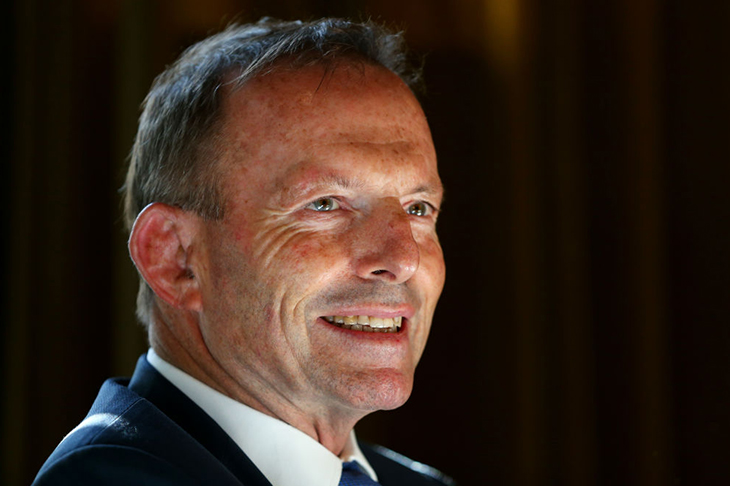
Tony Abbott’s documentary Australia: a History makes for enjoyable rather than compelling viewing. Still, a worthwhile initiative. Abbott is a genuinely decent man and a considered thinker. No one can doubt his commitment to Australia and the values that underpin it, nor his admiration for Aboriginal people and his sincerity in wishing the best for them.
There is one point upon which I wish to disagree with Abbott. His refrain that Australia is a nation with an ‘indigenous heritage, a British foundation and an immigrant character’ rolls glibly off the tongue. In fact, you could say the same thing about the USA, Canada and New Zealand. So, it hardly uniquely describes Australia. But what does it mean?
Let’s begin with ‘indigenous heritage’. In his documentary, Abbott does not offer much in the way of evidence for this proposition. We see a fair bit of footage of rock art – not a genre that plays a big part in the cultural life of our nation. We do learn that the colonists had access to sunlit plains just ripe for cultivation thanks to thousands of years of Aboriginal ‘firestick farming’. And there is coverage of the Myall Creek massacre – a worthwhile inclusion as part of our warts and all history. History not heritage.
Australia as a nation does not have an Aboriginal heritage. In this sense, heritage means something of value that has been inherited or adopted. It suggests Australia was built on something bequeathed us by the Aborigines. A nation comprises distinct territory, a unified population that acknowledges the nation in which it lives and a set of institutions. The British did not inherit the continent of Australia, nor did they invade it. They colonised it. We should not shy away from that. In this case, colonisation was an inevitable thing. And it was an indisputably good thing, not least for Aborigines, that it was Britain that did the colonising. And they included Aborigines in the new governance. When they created local institutions such as parliaments, courts and so on, they did not borrow from any facet of Aboriginal culture. The Australian constitution is based entirely on the Westminster system and owes nothing to Aboriginal tradition. Aboriginal people, or some of them anyway, have, primarily for their own edification, preserved benign tradition such as language, hunting practices, folklore and myths. And that is fair enough – all cultures do it. However, where traditional Aboriginal governance culture has survived in practice, it has had disastrous effect.
Which brings me to immigration. Immigration is a good thing and without it we would not be where we are today. And that it involves multitudes of non-British people is also a good thing. But in what way does it define us? What is this migrant character? If it was a good thing after, say, the second world war, is it still a good thing? What special quality does it bestow upon Australia, apart from increasing wealth and security?
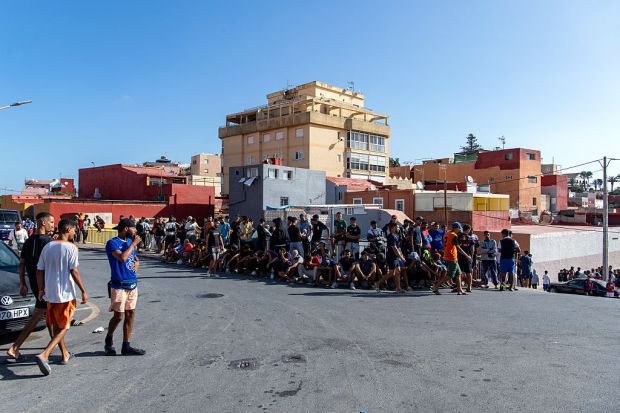
Most Australians would be feeling quite conflicted about today’s immigration regime, recognising that, yes, immigration has enriched us and is needed, but on the other hand feeling increasingly, as Andrew Hastie suggests, strangers in their own land. That is because what we are witnessing now is less immigration and more ‘colonisation’. In this case toxic colonisation.
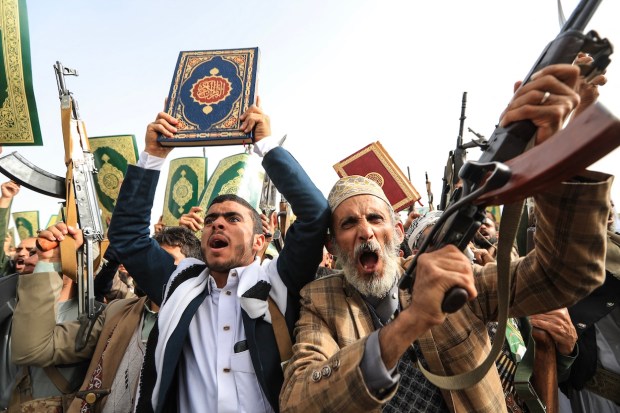
Most of us are repelled by the continuing wave of anti-Israel protests in which Israel is routinely castigated as a ‘colonising’ power, on the spurious basis that Jews don’t belong in the Holy Land. Following the Balfour Declaration of 1917, the Zionist movement encouraged Jews to return to their traditional homeland, from which they had been expelled two millennia earlier by the Romans, to re-establish the state of Israel. The imperative for this was that in no place where they had settled were Jews fully accepted, and were often persecuted – the Holocaust being just the worst example. This charge of colonisation against Israel by Arab communities in the West is hypocrisy on steroids considering the waves of Muslims now flooding into every country in the world stupid enough to accept them. Jews have created an oasis of democracy in the Middle East. These Muslim immigrants are creating ghettoes in European countries. If Jews have no place in Israel, by what right do Arabs claim a place in, say, Britain or Australia? Are they not colonising Europe? Are they not colonising Australia?
It is notable that in his documentary, Abbott profiled ballet dancer Lee Cunxin and politician Dai Le as successful immigrants who are committed to Australia. Strange that he could not find one representative of our more than 800,000 Muslim population. It’s not as if there are no candidates. NSW government minister Jihad Dib, for example. Or former Canterbury Bulldogs star fullback Hasem El Masri. Or Dr Jamal Rifi.
The difference is that Dai Le represents almost the entirety of our 300,000 strong Vietnamese community. On the other hand, for every Jamal Rifi, there are a hundred keffiyeh-clad clowns chanting ‘Gas the Jews’, a dozen or so ‘elated’ Sheikh Ibrahim Dadouns, several Nasser Mashnis, a faculty of Randa Abdel-Fattahs, a cartel of Alameddines, a bouquet of Isis brides and half a potential Man Haron Monis.
Abbott’s trifecta – prior occupation by Aborigines, British colonisation and the subsequent waves of migrants – comprise our history. Our heritage is British.
But, ironically, that heritage is being squeezed and bent out of shape by two malevolent forces – Aboriginal activism (encouraged by governments of all persuasions) on one hand, and uncontrolled immigration on the other.
On the Aboriginal front, the emergence of the Victorian ‘treaty’ is the most obvious, but not the only, example of what Keith Windschuttle described as the ‘break-up of Australia’. Orders of magnitude more extreme than the Albanese Voice, which was so resoundingly rejected by all Australians, including Victorians, this proposal provides a vision for activists in every state to aspire to. Given the state of Victoria’s opposition, it is likely to come into effect in the very near future. It is not designed to rectify Aboriginal disadvantage (which does not effectively exist to any appreciable extent in Victoria) and then depart the scene once its mission is complete. It is there for eternity, entrenching division by race. Given that, in 1967, Australians overwhelmingly gave the Commonwealth government the power to make laws in respect of Aborigines. This was done in order to remove the last vestiges of discrimination against them. This ‘treaty’ represents a major step backwards. I would have thought it unconstitutional. It should be able to be nullified by Commonwealth legislation under Section 51 (xxvi) of the constitution. Failing that, a responsible Commonwealth government would carve out the enormous cost of this boondoggle from Victoria’s allocation of the GST. If Victorians want it, let them pay for it.
On the immigration front, the Liberal party says it is proud to support a non-discriminatory immigration policy. Let me suggest that what we need is a discriminating immigration policy – one based on the tenet of enlightened self-interest. Sure, let’s not discriminate against individuals based on their race. Let’s do it on the basis of the national culture from which they emerge. Let’s do it on the basis that some cultures are so susceptible to violence and intolerance that they are incompatible with ours. And let’s consign the pernicious concept of multiculturalism to the dustbin of history.
Nigel Farage’s ‘distasteful’ populism is paying off because Britons are waking up to the fact that, over there, ‘from the river to the sea’ refers to the Thames and the North Sea. Unless we, or rather our putative leaders, take heed, we too will wake up one day to find that Tony Abbott’s Australia is history.
Got something to add? Join the discussion and comment below.
You might disagree with half of it, but you’ll enjoy reading all of it. Try your first month for free, then just $2 a week for the remainder of your first year.