JK Rowling is one of the most successful authors in human history – a person whose works of fiction saw millions of children lining up outside bookstores at the height of the digital age.
It is impossible to explain the body of work her Harry Potter series encompasses beyond Rowling’s immediate circle of novels, movies, and plays.
The fandom, where people contribute their own stories to the Harry Potter world, is massive. One website has 850,000 works. To put this in perspective, your average library holds 15,000 books. The Sydney Library has 300,000.
Harry Potter also made a lot of people very rich, including the child actors from the movie adaptations.
By all rights, she should be a feminist hero and darling of the Woke.
Unfortunately, the generation of actors associated with the franchise grew up during the frenzy of trans activism. Actors in this political and social environment were just as likely to champion the trans cause as people from previous generations were to fund starving children in Africa.
JK Rowling is famous for refusing to bend to the ideological whims of the industry, even daring the UK government to arrest her at one point when she refused to back down from tweeting out the truth to her 14.4 million followers.
This is the woman who has received years of sustained abuse and credible threats of violence from the so-called peaceful and tolerant trans activist community.
The friction between JK Rowling, who has done nothing wrong, and many of the franchise’s young stars has been difficult to watch. Notorious amongst these interactions are those from Emma Watson who played Hermione Granger.
Ms Watson has been a vocal advocate for the trans movement, posting in 2020:
‘Trans people are who they say they are and deserve to live their lives without being constantly questioned or told they aren’t who they say they are. I want my trans followers to know that I and so many other people around the world see you, respect you, and love you for who you are. I donate to Mermaids and Mama Cash.’
JK Rowling falls down on the side of biological reality and the need to ensure that sex-based rights remain in place, even if it interferes with the feelings and self-identification of trans people.
Acknowledging reality is often described, wrongly, as being transphobic. Within this framework, arguing in favour of protecting children from permanent medical and chemical intervention is deemed hateful by activists, the powerful medical industry, and many who loosely describe themselves as allies.
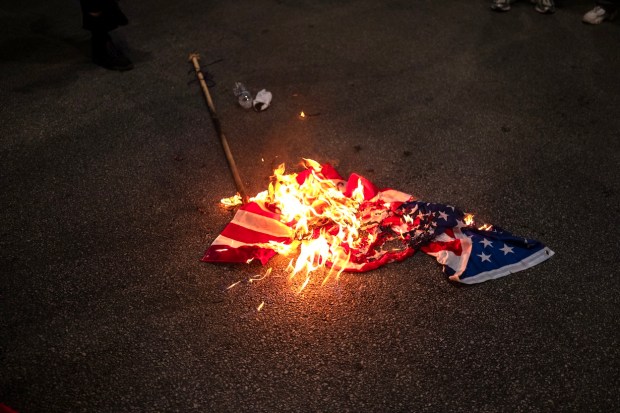
Pressure mounted on those involved with Harry Potter to publicly denounce JK Rowling in 2020. It’s a weird sort of progressive feminism that demands JK Rowling’s name be removed from the books and then stages book burnings. Hard to believe, but that was the social media atmosphere…
The wrath of Christian groups upset about witchcraft turned out to be nothing compared to the trans lobby.
Thankfully adults remained in charge of publishing, and Rowling still makes somewhere between $50-100 million per year in royalites from the franchise, according to online estimates. She has made billions based purely on merit, not affirmative action.
Ms Watson is reported to be worth around $85 million with the bulk flowing in from Harry Potter. As JK Rowling has pointed out in a recent tweet, she occupies a position of privilege that leaves her ill-placed to understand the harms caused by transgender policy interfering in women’s spaces.
I'm seeing quite a bit of comment about this, so I want to make a couple of points.
I'm not owed eternal agreement from any actor who once played a character I created. The idea is as ludicrous as me checking with the boss I had when I was twenty-one for what opinions I should… https://t.co/c0pz19P7jc
— J.K. Rowling (@jk_rowling) September 29, 2025
JK Rowling wrote:
I’m seeing quite a bit of comment about this, so I want to make a couple of points.
I’m not owed eternal agreement from any actor who once played a character I created. The idea is as ludicrous as me checking with the boss I had when I was twenty-one for what opinions I should hold these days.
Emma Watson and her co-stars have every right to embrace gender identity ideology. Such beliefs are legally protected, and I wouldn’t want to see any of them threatened with loss of work, or violence, or death, because of them.
However, Emma and Dan in particular have both made it clear over the last few years that they think our former professional association gives them a particular right – nay, obligation – to critique me and my views in public. Years after they finished acting in Potter, they continue to assume the role of de facto spokespeople for the world I created.
When you’ve known people since they were ten years old it’s hard to shake a certain protectiveness. Until quite recently, I hadn’t managed to throw off the memory of children who needed to be gently coaxed through their dialogue in a big scary film studio.
And also:
Like other people who’ve never experienced adult life uncushioned by wealth and fame, Emma has so little experience of real life she’s ignorant of how ignorant she is. She’ll never need a homeless shelter. She’s never going to be placed on a mixed sex public hospital ward. I’d be astounded if she’s been in a high street changing room since childhood. Her ‘public bathroom’ is single occupancy and comes with a security man standing guard outside the door. Has she had to strip off in a newly mixed-sex changing room at a council-run swimming pool? Is she ever likely to need a state-run rape crisis centre that refuses to guarantee an all-female service? To find herself sharing a prison cell with a male rapist who’s identified into the women’s prison?
I wasn’t a multimillionaire at fourteen. I lived in poverty while writing the book that made Emma famous. I therefore understand from my own life experience what the trashing of women’s rights in which Emma has so enthusiastically participated means to women and girls without her privileges.
The greatest irony here is that, had Emma not decided in her most recent interview to declare that she loves and treasures me – a change of tack I suspect she’s adopted because she’s noticed full-throated condemnation of me is no longer quite as fashionable as it was – I might never have been this honest.
JK Rowling called the Cass Report a watershed moment that ‘lays bare the tragedy’ of a society that allows children to begin the process of gender transition. She also said:
‘Celebs who cosied up to a movement intent on eroding women’s hard-won rights and who used their platforms to cheer on the transitioning of minors can save their apologies for traumatised detransitioners and vulnerable women reliant on single-sex spaces.’
Since then, many prominent figures have come out to support JK Rowling. Australia’s Katherine Deves told Rowling her voice ‘shone a light for so many of us when it felt like the entirety of society was consumed by darkness’.
Sall Grover said, ‘This is hard to read, and no doubt was hard to write, in part because it never should have gotten to this point. Simply listening and/or doing some independent critical thinking was all it would have taken to avoid it.’
The tides of culture are certainly on the turn, moving in JK Rowling’s favour.
Within a few years, we might even expect that trans activism will be dropped entirely from the Hollywood conversation, with its branding quietly dropped from social media accounts and disinvited from swanky parties.
Still, it remains sad that politics interfered with one of the greatest works of fiction put to pen.