Papua New Guinea’s energy provider slid into the headlines this week with a shock revelation: it’s over $1.5 billion in debt.
A sizeable chunk of PNG Power’s debt is owed to the Asian Development Bank, along with an assortment of companies.
When PNG gets itself into financial trouble, it has a habit of glancing in China’s direction before the Australian government rushes in on a white horse promising salvation at the expense of our own debt-ridden Treasury.
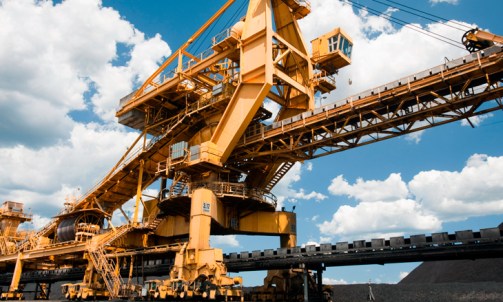
PNG’s energy story has been a tale of failure, instability, and descent into dereliction. Energy infrastructure is a puzzle of band-aids and buzzwords.
The ABC engaged in a six-month investigation into the crisis which has been plagued with blackouts and power fluctuations.
According to the ABC, one of these companies said:
‘What used to be a thriving organisation … it’s literally crumbled to its knees.’
The PNG Minister for International Trade and Investment boldly announced:
‘We cannot pretend, we can’t keep talking about providing for other countries in the world, talking about their energy security when we have serious issues at home … this is the reality … we have a crisis. I’m not blaming anyone. We all have to take responsibility. We can talk all we want at this conference, but the fact is that PNG is facing an energy crisis, and we need to properly address this energy crisis before addressing other sectorial challenges. Energy is key to development.’
The question is, why?
There is plenty of money pouring in from offshore loans and gifts, along with highly-skilled international assistance.
In 2021, PNG was described as ‘one of the least electrified countries in the world’ with ‘only 13 per cent of the population’ being able to access the centralised power network. Many residents have had to purchase private energy sources, such as solar, to survive. In other words, the majority are forced to live off-grid.
Mind you, if Australia’s Climate Change and Energy Minister Chris Bowen persists with Net Zero targets and renewable energy rollouts, we may be facing an off-grid future as well.
It probably hasn’t helped that China went sniffing around PNG with its famous Debt Trap Diplomacy.
This has included 99-year leases on agricultural land, water asset acquisitions, and controversial items such as:
…the agreement for the Pacific Marine Industrial Zone to be governed by and construed in accordance with the laws of China rather than PNG and irrevocably waived any sovereign right for PNG in the event of loan disputes.
What followed is the alleged exploitation of PNG’s natural resources by China and its commercial entities often conducted under the heading of greening the Belt and Road.
After steady growth under Australia’s watch following PNG’s independence, China’s influence has triggered a rapid decline obscured by feel-good injections of money. Foreign Chinese workers have taken many of the jobs promised to the people of PNG while others feel as if their sovereignty is slipping away with the government heavily indebted to Beijing’s interests.
Early in 2022, PNG secured a loan from China for a PNG Power grid project which was estimated to be somewhere near $US223 million, (by that time, it was suspected that China had spent over $US1 billion in various projects).
It’s clear China has seen PNG’s energy woes as an opportunity to dig-in a strategic presence in the nation. Earlier at a 2018 Asia Pacific Economic Cooperative (APEC) conference, Western allies, including Australia, were tripping over themselves to pledge $US1.7 billion into the PNG Electrification Partnership. The purpose was to bring 70 per cent of PNG online by 2030.
‘Budget shortfalls in PNG have already driven the Australian government to extend loans totalling hundreds of millions of USD to the country, meaning that Australia is largely paying for PNG debts to China.’
Talk about a frustrating waste of Australian money in the middle of a financial crisis.
It’s a lot of money, too. $3.1 billion in loans since 2020 and $600 million for an NRL team. Most recently, Anthony Albanese signed off on a $570 million loan in February on the promise it would ‘tighten foreign investment screening and block economically unviable or high-risk projects’.
Seems like one hell of a leap of faith for a nation with a dreadful economic track record.
The ABC reported:
‘In 2018, the federal government effectively blocked Huawei’s bid to build a 4,700km cable network that would connect PNG and Solomon Islands to Australia by agreeing to fund an Australian company to build the company instead.’
How nice for them. Many regional areas in Australia still don’t have phone reception but they’re not plotting under the table with China so the government isn’t interested in their basic services.
‘PNG has asked us for these loans. If we don’t give them, you know, we’re worried that … PNG will go to China,’ said one commentator.
And let’s not forget, PNG was the first to sign its name on the Belt and Road Memorandum of Understanding in the South Pacific.
So much for spending Australian cash to buy influence. Do we get a refund? We should.
China wasted no time attaching political propaganda to its debt-trapping, constructing the six-lane Independence Boulevard.
The power split in PNG is interesting. Roughly 20 per cent comes from hydropower, 57 per cent from fossil fuels, 19 per cent from gas, and then a small amount from geothermal energy and solar. Solar and other non-hydro low-carbon energy entered the scene roughly around 2003 and then began a period of decline in 2018. Coincidentally, perhaps, the input of hydro has been dropping. PNG has six hydropower plants, all but one of them owned by PNG Power and a few with the aid of China. Some of this hydro decline can be put down to a dry season and low water levels in 2022, but it does not account for the overall long-term fall.
Considering PNG Power was founded in 1963, people are wondering why it has experienced a rapid decline in 15 years.
Yes, Western grids are suffering, but that is thanks to the well-known negative impacts of expensive, unreliable, and short-lived renewable energy projects which have categorically failed to replace conventional power sources. This is not the case in PNG.
So far, one of the most interesting comments in the ABC article came from ‘PNG Power insiders’. They said of the upcoming 50-year celebration of independence:
‘What are you going to celebrate? As a nation and as a company we’re still struggling to provide the reliable power to the people. We have never improved. All our state institutions that are there to fight corruption, they’re dead. They’re not functioning. So, the onus is on us, the people, now. We need to rise up and fight corruption in this country.’