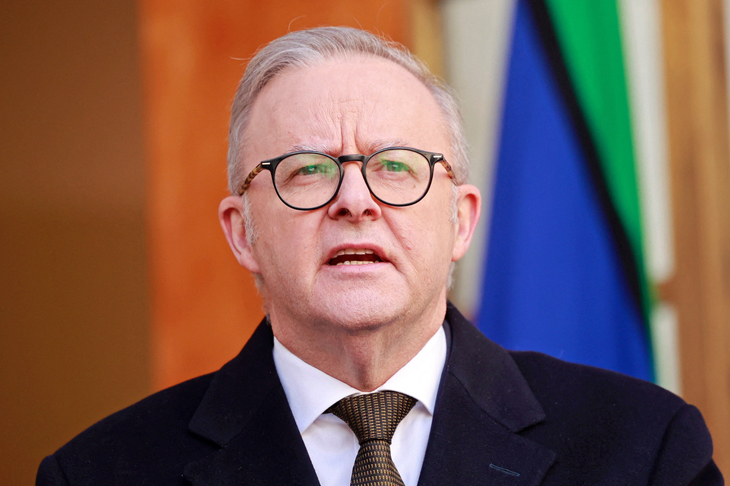
I still remember walking into the New South Wales Young Labor Conference of 1986, representing a Western Sydney Labor party branch with idealism to burn and a conviction that politics could deliver fairness, equality and principled government. What I found instead was a theatre of chaos – half student union farce, half Stalinist re-enactment society. The air was thick with slogans and factional intrigue, the atmosphere more about the thrill of control than the dignity of service. On the stage, among the rising machine men, stood Anthony Albanese: not the figurehead he would later become, but already fluent in the gestures of power without responsibility, already at home in a politics that held little regard for liberal democracy while cloaking itself in the language of progress.
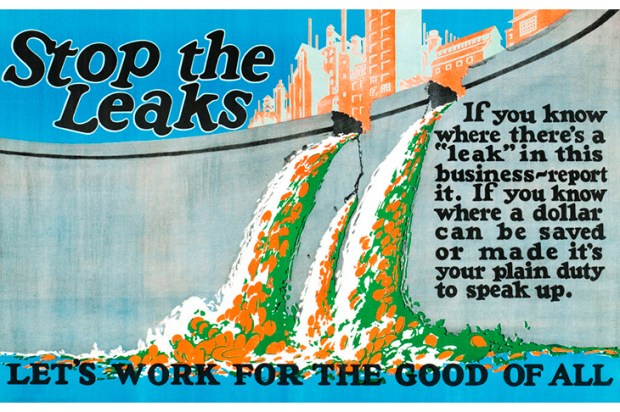
To me, coming in with the wide-eyed belief that Labor still carried the courage of its wartime leaders and the decency of its working-class roots, it felt less like a movement for working people and more like a ship of fools – lurching on a sea of ideology, steered by backroom captains with no compass except their own ambition. The mood was sectarian, suspicious, and deeply cynical. I saw instantly that the corruption was not incidental but structural; that principles were negotiable, but power was not; and that democracy itself was the unspoken enemy.
Decades later, Albanese has perfected the role he first rehearsed there. In recent months, his government has imposed sanctions on Israeli ministers, wavered on Israel’s right to defend itself, and announced recognition of a Palestinian state under conditions so vague as to be meaningless. Foreign Minister Penny Wong has gone further, issuing public denunciations that sound less like sober diplomacy and more like ideological sermonising.
The pattern is familiar: a democracy under constant attack is held to standards no authoritarian regime would ever meet, while those regimes are indulged or quietly appeased. Israel is scapegoated because it is safe to scapegoat – because condemning the Jewish state earns applause from activist networks at home while avoiding uncomfortable confrontation with China abroad. This is not principled foreign policy; it is the politics of cowardice dressed as moral clarity.
Consider the contrast. Albanese’s six-day visit to China this year was a tour of smiles and staged images: pandas, the Great Wall, glowing trade rhetoric. Human rights concerns – from Hong Kong to Xinjiang – were brushed aside. China, a regime that crushes dissent and menaces the Indo-Pacific, was treated as a partner to be cultivated.
Israel, by contrast, is treated as a problem to be disciplined. A liberal democracy that has endured wars, terrorism, and now a resurgence of antisemitism at levels not seen in generations is lectured by Canberra with all the arrogance of a government that has never faced existential threat.
Respected historian Timothy Snyder warns that democratic societies become fragile when they refuse to see threats clearly, when they allow ideology to dictate whose suffering counts and whose does not. The Holocaust, Snyder reminds us, was not simply the product of madness but of political cowardice, of leaders who thought that aligning with the strong while denouncing the vulnerable was the safer path. Albanese and Wong, perhaps unwittingly, walk in these footsteps when they appease Beijing while singling out Jerusalem.
What is most galling is the historical ignorance. Australian leaders once understood that the Shoah imposed responsibilities on all free nations: to defend Jewish self-determination, to recognise the singular evil of antisemitism, and to ensure that ‘never again’ was more than a slogan. Albanese appears to think those lessons optional. He talks of international law while forgetting that the Jewish state was created precisely because international guarantees failed when Jews most needed them.
Holocaust historians – from Raul Hilberg’s monumental studies to Deborah Lipstadt’s analyses of denial – have shown that antisemitism flourishes when respectable leaders signal that Jewish lives and Jewish institutions are expendable for political convenience. Albanese’s rhetoric does not cross into denial, but it does participate in a softer form of forgetting: a willingness to treat Israel as just another troublemaker in the Middle East, rather than as the living testimony of a people who endured the Shoah and will not be left defenceless again.
At home, the hypocrisy deepens. Albanese’s Labor speaks the language of multiculturalism, but what it practises is cynical pandering. Muslim Australians are treated as voting blocs, not as fellow citizens whose religious seriousness deserves respect. The Albanese government does not share their commitment to family, to moral discipline, to the sacredness of raising children in an ethical environment. It merely calculates that by appeasing activist leaders, it can harvest votes.
The same is true of Jewish Australians: their safety, their synagogues, their sense of belonging have been sacrificed to Albanese’s search for cheap moral capital abroad. This is not respect; it is exploitation. True multiculturalism means listening across difference and defending pluralism. Albanese offers instead a hollow rhetoric of ‘inclusion’ that in practice pits communities against one another.
History offers brutal warnings about where this pattern leads. From Savonarola’s mobs in Florence to Robespierre’s terror, from Stalin’s Holodomor to Mao’s Great Famine, societies have been torn apart when leaders imagined themselves tribunes of the people while serving ideological cliques. They cloaked cowardice in moral rhetoric, struck at easy targets while appeasing real threats, and trusted history to absolve them. Snyder reminds us that when institutions collapse, ideology fills the vacuum with hunger, fear, and death. Albanese is not Robespierre, and Australia is not revolutionary France. But the logic is recognisable: a leader who mistakes fashion for principle, and who forgets the first lesson of democracy – that its enemies are bred from cowardice within.
The real Australia, the one that celebrates the achievements of its Jewish citizens – from General Sir John Monash, who led Australian forces to victory in the first world war, to Sir Isaac Isaacs, the first Australian-born governor-general – deserves better. It deserves leaders who respect the traditions of work, family, and faith that Labor prime ministers Curtin, Chifley, and Hawke carried into politics. It deserves leaders who will defend liberal democracy by standing with allies like Israel rather than undermining them for applause at home. It deserves leaders who remember that the Holocaust is not a distant episode but a warning etched in living memory – that democratic societies fall when leaders believe appeasement is safer than truth.
Anthony Albanese has chosen the opposite path: pandering instead of principle, scapegoating instead of solidarity, cowardice instead of courage. Israel – and the Jewish people of Australia – deserve to know that principled people still stand with them. ‘Never again’ still binds us; appeasement of tyranny still shames us; and Israel, imperfect like any democracy, is still our ally and friend. Australia’s Prime Minister may ignore these truths. The rest of us will not.
Got something to add? Join the discussion and comment below.
You might disagree with half of it, but you’ll enjoy reading all of it. Try your first month for free, then just $2 a week for the remainder of your first year.