In China in 2020, an ambiguous economic plan emerged from a Politburo meeting. The ‘dual circulation’ strategy was confusing because it aimed to marry the ‘external circulation’ of global demand with the ‘internal circulation’ of domestic demand.
Later pronouncements made more sense. The dual-circulation strategy was a vision to make the world need China but China less dependent on the world. Beijing sought to reduce China’s reliance on imports and the US-dominated global financial and trading systems by prioritising innovation and self-sufficiency. The means to these goals included export controls, data restrictions, subsidies and dangling China’s consumer market to attract foreign capital and technology. The strategy was the latest example of Beijing practising the economic statecraft known as ‘geoeconomics’. The term, which US author Edward Luttwak coined in 1990, is defined as using economic tools to achieve political goals.
Economics, a social science that aims to boost living standards, morphs into geoeconomics when it becomes a means to gain relative power. Economic tools for political ends include aid, currency regimes, energy, fiscal and monetary policies, industry policy, intellectual property, investment, lending, regulation, research, resources, sanctions, technology and trade.
The rise of China, the growth of the state within national economies, and the greater trade and financial links associated with globalisation have elevated the importance of geoeconomics.
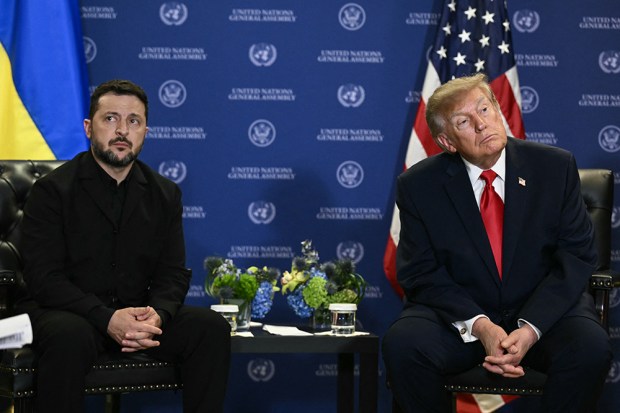
China’s Belt and Road Initiative that shackles developing countries to China is classic geoeconomics. US President Donald Trump in his first term ended the US’s three-decades-long absence from geoeconomics when he imposed tariffs on China for political motives. His ‘Liberation Day’ tariffs of 2 April are hyper-geoeconomics. Japan’s threat to use US Treasury holdings to force a better trade deal with the US is geoeconomics too.
Amid the revival of geoeconomics, the worry for the West is that China is better placed to win the geoeconomic battles of coming years.
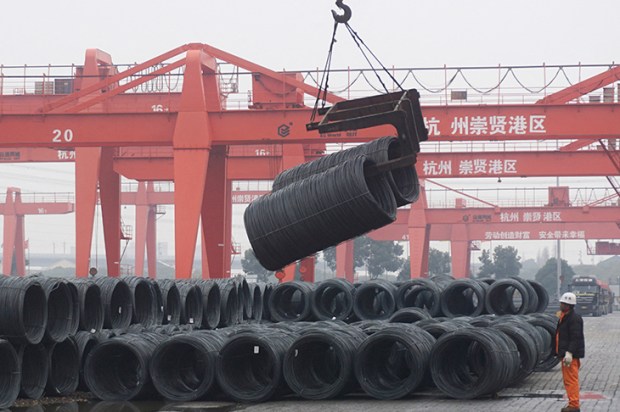
China can wield economic power for political purposes thanks to its recent industrialisation. The country is the world’s second-largest economy, the world’s biggest exporter, the largest trading partner of more than 120 countries, the global leader in key industries, and dominates global manufacturing. China’s record trade surplus of US$992 billion in 2024 shows how other countries depend on its wares.
The US’s record trade deficit of US$918 billion last year – that included a bilateral deficit of US$295 billion with China – reveals the opposite. This was among US geoeconomic weaknesses that forced Trump in mid-April to exempt Chinese smartphones, semiconductors and other electronics from tariffs and led to his ‘Capitulation Day’, or 90-day partial trade truce with China, on 11 May.
A second Chinese advantage is Beijing has a strategic vision, while Washington seems confused about the extent it wants to decouple from China, if at all.
A third advantage for China is its authoritarian system appears better insulated in the short term from citizen gripes and investor punishment. Politicians atop liberal democracies have legal constraints and are vulnerable to voter angst and investor disapproval. Investors have coined the acronym Taco to describe the implicit limits on US geoeconomic campaigns. It stands for Trump Always Chickens Out.
A fourth, and the main, geoeconomic advantage for China stems from the US error to rely on foreign rivals for the critical minerals, especially the rare-earth elements, needed for advanced technologies, infrastructure and military uses. After the USSR collapsed in 1991, the US, mesmerised by the efficiency gains of globalisation, sold its stockpiles of key minerals and switched to just-in-time sourcing of foreign supplies.
Beijing exploited this US naivety by investing in mines at home and abroad and subsidising refining plants that, by ignoring the pollution produced, can process these minerals cheaper than can others. China thus controls 90 per cent of the world’s processing of key materials and can manipulate pricing.
In retaliation against Trump’s tariffs, Beijing restricted the export of rare earths to the US, a weapon Beijing used against Japan in 2010 during a dispute over islands. Trump is seeking to combat this weakness. But nullifying China’s dominance will take years.
As the processing of dirty rare earths shows, a fifth Beijing geoeconomic advantage is its willingness to abandon climate concerns when it suits. That’s harder for Western governments.
Beijing’s sixth advantage covers it capabilities to impede US businesses. Its regulatory investigations bully US companies, even thwart their takeovers as occurred in 2023 when Beijing effectively blocked Intel’s swoop on Israel’s Tower Semiconductor. Another impediment are blacklists such as the ‘unreliable-entity list’ that bars certain US companies from selling to China. Another ploy is to force US businesses in China to surrender intellectual property.
Washington’s disadvantage is there aren’t enough Chinese companies in the US to intimidate. Those visible to Americans such as online marketplace Temu and video-based platform TikTok are protected by their popularity. Washington’s technological embargoes on Chinese companies have backfired, as Chinese start-up DeepSeek’s leap in artificial intelligence shows.
A seventh geoeconomic advantage for China is the US lacks the means to enforce trade agreements. The ‘Phase one’ deal of 2020 where China agreed to spend US$200 billion on US exports collapsed due to the US’s lack of enforcement power.
The danger for the West is Beijing’s geoeconomic edge translates into military capabilities. China’s industrialisation has allowed Beijing to create a military that rivals the US’s. China dominates the components in drones that are changing warfare. China has secretly embedded ‘kill switches’ – cellular radios capable of turning off equipment remotely – in renewable-energy infrastructure installed in the US. No one knows the extent to which China can sabotage Western power supplies.
In Trump-speak, the US has ‘few cards’ to immediately play against China because it ignored geoeconomics over the decades when free-market neoliberalism dazzled. But Washington and its allies are regrouping. Hopefully the damage of the clash between Chinese and US geoeconomic strategies will be contained to prosperity foregone, rather than end in hostilities.
China, to be sure, has geoeconomic weaknesses. The country’s debt-laden economy is fragile, its export- and investment-led economic model spent. The Chinese are poorer for Beijing’s geoeconomic plays. While the US has economic challenges too, the country has natural and institutional advantages (rule of law, property rights) that mean it can outshine China longer term. For now, however, China’s geoeconomic advantages help it in relative terms.
But in absolute terms, everyone loses. The world will enjoy less of the growth that lifts living standards and more instability as it forks into China- and US-dominated blocs – a dual circulation of sorts.
Got something to add? Join the discussion and comment below.
You might disagree with half of it, but you’ll enjoy reading all of it. Try your first month for free, then just $2 a week for the remainder of your first year.