
Long-term readers of this magazine are familiar with a strange tingling sensation that frequently runs up and down the spine, a symptom of the peculiar phenomenon known as Speccie Déjà Vu Syndrome. This is where the reader observes current political or cultural events and has that eerie feeling: didn’t I read this months ago in The Spectator Australia? To pluck a few random examples, readers of this magazine were alerted to the perfidious corruption and duplicity of Unrwa literally years before the rest of the world woke up to how sinister that organisation is. Or take any aspect of Covid currently in the news, from the ineffectual nature of the mandates, lockdowns and masks to the spike in deaths widely now attributed to the vaccines, and you will recall reading all the relevant information in these pages up to five years ago. Similarly, we were advocating for nuclear power back in the Morrison years when the Coalition was still implacably opposed to it. So it will come as no surprise to readers that Peter Dutton’s commitment to a referendum to allow for the deporting of immigrants was canvassed in his weekly columns earlier this year by Professor David Flint.
Voters are rightly confused, and even alarmed, by the prospect of another referendum so soon after the oxygen-draining Voice campaign. Worse, for many of those not familiar with the intricacies of the High Court’s rulings on deportations (in other words 99.99 per cent of the population) the idea of a referendum on migration sounds a lot like a referendum on foreigners versus whites so is either immediately appealing or extremely worrying. And certainly divisive.
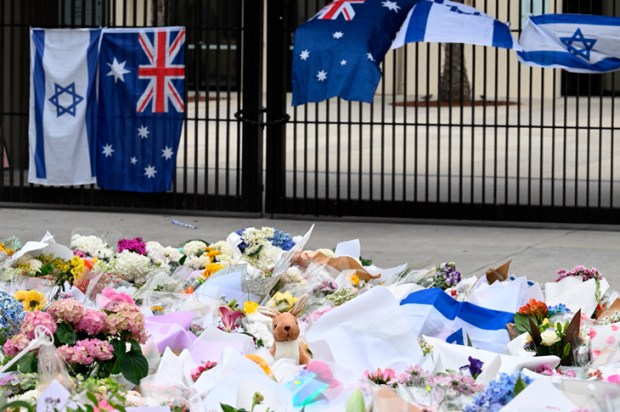
In essence, the problem revolves around the grey area exacerbated by recent High Court rulings as to whether or not the government can deport people, and under what circumstances. The High Court believes that power rests with the High Court, not the government. Therefore Mr Dutton is simply being honest and prudent in recommending a referendum to resolve the matter in the government’s favour. This would give the government the ability to guarantee it could deport certain individuals if they failed to live up to their citizenship obligations, especially in the light of the recent outburst of antisemitism fuelled largely from within the Muslim community.
As David Flint wrote in his 8 March column, ‘Despite the requirement since 2007 that potential immigrants sign an Australian Values Statement and potential citizens pass a citizenship test, the emergence of antisemitism is an indictment, especially of the Labor and Greens parties. This column recently suggested that where deportation is blocked constitutionally, a government should immediately go to the people. This would best be through an elected constitutional convention.’
In advocating for a referendum on the issue of deportations, Mr Dutton is guilty of putting the technocratic cart well before the emotional horse. The public is only vaguely aware of the High Court’s activism in this area, despite its recent rulings. A better approach would have been for Mr Dutton to propose a suite of measures to tackle antisemitism, including, for example, an immediate halt to all immigration from countries where antisemitic beliefs are either taught or practised and a ban on the publishing of material containing antisemitic verses – along with the promise to deport any individuals guilty of antisemitic incitements to violence.
Mr Dutton could also suggest to Muslim leaders that rather than the government acting through legislation, they themselves deal with the problem of preachers delivering antisemitic sermons. Islamic preachers who have been found to have engaged in antisemitic teaching or incitement could be sanctioned appropriately, for example, by a suspension from preaching. In the case of repeat offenders, suspensions would increase in severity.
But back to Professor Flint, from February this year:
‘What can be done?
First, the police should always apply the existing criminal law immediately whenever there appears to be a breach.
Second, proceed with mandatory minimum penalties, stripping any power not to impose a conviction. If deportation is blocked constitutionally go immediately to the people.
Third, do not legislate, as Canberra did, to introduce hate laws which do not require incitement to violence. They will only be abused.’
Mr Dutton has been an inspirational leader on the issue of tackling antisemitism, and should be praised for his commitment and rewarded at the ballot box.
But ultimately, antisemitism can only be conquered by recognising and acknowledging its primary source in this country: immigrant communities. Yes, the hard left and the Greens have jumped on the pro-Palestine bandwagon, to their eternal shame. But the lynch mobs almost instantaneously armed with printed placards and flags such as have repeatedly sprung up at scenes like the disgraceful Opera House protests and others have clearly been well organised and well funded. The presence of such material in the western suburbs of Sydney and Melbourne gives a clear indication as to the source of this activism.
Our politicians are not only kidding themselves but betraying our democracy if they claim, as does NSW Premier Chris Minns, that it is necessary to curtail the free speech of everyday Australians in order to have a peaceful, multicultural society. No. The way to ensure a peaceful, democratic society is to refuse entry to those cultures who do not espouse and adopt our values of freedom and democracy.
Got something to add? Join the discussion and comment below.
You might disagree with half of it, but you’ll enjoy reading all of it. Try your first month for free, then just $2 a week for the remainder of your first year.