With a new generation devoted to TikTok, X/Twitter, Instagram, and Snapchat, Australia is poised to become the first country to impose a national social media ban on children under 16. The law, which is set to take effect at the end of the year, will rely on age-verification software to enforce the restrictions and will hold big tech companies accountable for fines up to AU$ 49.5 million if they fail to prevent children from registering accounts.
The woman in charge of enforcing the ban is Julie Inman Grant, the e-Safety Commissioner. On paper, she offers a wealth of experience, having worked at Microsoft for two decades. Nevertheless, as is often the case with embracing censorship, she is unsure how to do so. Her determination to implement what she refers to as ‘this dang legislation’ was fuelled by the findings of a nationwide survey conducted by her organisation last month. Apparently, and make sure you’re sitting comfortably for this groundbreaking discovery, children lie. Kids regularly give a false date of birth when creating a social media account. In general, social media platforms require users to be at least 13 years old; most require users to enter their date of birth when signing up but do not require any additional checks. The watchdog discovered that 84 percent of children aged eight to twelve in Australia – roughly 1.3 million children – had used at least one social media platform since the beginning of last year.
Some of the concerns seem genuine. Sonya Ryan is among those who support the Bill. Her daughter, Carly, was murdered by Garry Francis Newman on a beach in 2007. The 15-year-old thought she was meeting her boyfriend for the first time: an 18-year-old whom she had been chatting with on MySpace for a year and a half. She was deceived. Newman was a fifty-year-old paedophile. While my heart goes out to the poor girl’s family, I feel the response is heavy-handed. A lot of bad legislation can come from the best of intentions.
Australian children appear to be willing to accept censorship. According to Deloitte research, 91 per cent of Australian Gen Z want stricter limitations on social media usage, and more than a third support a complete ban. In a way, I don’t blame them; social media is a distraction that shortens attention spans and can exacerbate mental health issues. While there are concerns to be addressed regarding young people and the amount of time they spend online, bans do not work. It’s reason number 88 why children should not vote.
I’m always wary of the ‘think of the children’ response. While I agree that social media is a cesspit populated almost entirely by perpetually outraged activists and influencers, I’ve always thought it was preferable to be exposed to this type of poisonous narcissism. Then you know what your stroppy, hormonal kids are up to. That way, parents may do the most unfashionable thing and talk to their children about their new internet idols. Instead of banning people, wouldn’t it be better to figure out what draws children to certain online celebrities? These folks do not simply appear out of nowhere. Personalities like Andrew Tate are frequently the symptom, not the cause.
Inman Grant’s mission is to protect children from violent and sexual content that is widely available online. She became a household name after clashing with Elon Musk last year over forcing X to remove all worldwide footage of Bishop Mar Mari Emmanuel being stabbed by a teenager while giving a sermon in a Sydney church in April. Musk refused, instead blocking the content for Australian users.
If Inman Grant is concerned about hordes of bloodthirsty teenagers suddenly deciding to recite the shahadah on Facebook and declare allegiance to the Islamic State, she need not be. In 2022, the Global Network on Extremism and Technology published the results of a major study. The report documented every known Islamic terror attack between 2014 and 2021 in eight Western countries. The findings revealed ‘that the primary threat still comes from those who have been radicalised offline’, the authors concluded. ‘[Offline] individuals are greater in number, better at evading detection by security officials, more likely to complete a terrorist attack successfully and more deadly when they do so’. It suggests that people are more prone to be radicalised via face-to-face interactions and offline relationships.
If you restrict access to the sites, young people may seek out smaller platforms where their extreme beliefs and views can be reinforced by others who are banned from larger platforms. Going unchallenged generates a powerful echo chamber in which controversial ideas can take hold. Furthermore, it creates a narrative of victimhood and suppression, which breeds distrust in Western liberal democracy and promotes extremism.
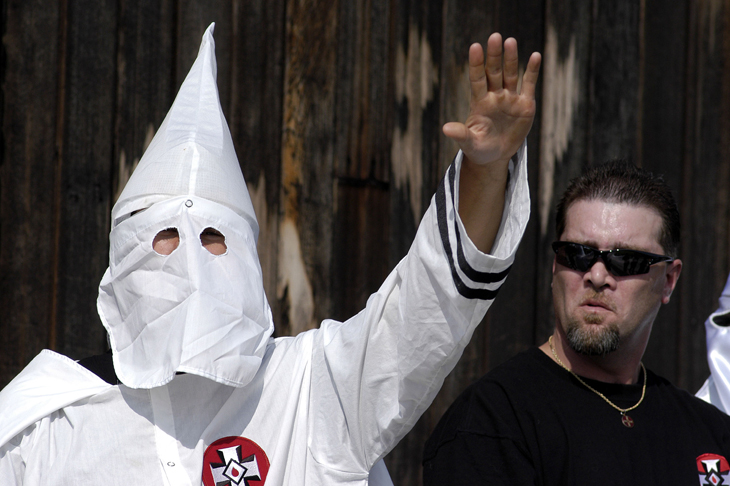
Ironically, blocking access to certain websites may cause more harm than good. Radicalised individuals have been deradicalised via these same platforms. Daryl Davis works to improve race relations by bringing white supremacists on his show for an open debate about race. The Chicago-born musician presents the Changing Minds podcast. Some of his most controversial discussions have been with members of the Ku Klux Klan. Over the years he has persuaded dozens of Klan members to quit and denounce the KKK.
It raises an important question: how can we define what is and what is not social media? What about websites that allow you to write comments and interact with other users online? How should we classify popular platforms such as Substack? I fear this will become another catch-all term like ‘racist’ for companies elites dislike and disagree with. This has less to do with protecting vulnerable young people and more with the state’s ability to link your online identity to your real identity. It is a Trojan horse, with a thousand government bureaucrats hiding within.
This ban is the equivalent of urinating in front of a high-speed fan and complaining that you are getting wet. Now, scrap this dang legislation!
Got something to add? Join the discussion and comment below.
You might disagree with half of it, but you’ll enjoy reading all of it. Try your first month for free, then just $2 a week for the remainder of your first year.