The slew of recent articles and commentary about President-elect Trump’s proposed executive team has raised again questions about his political ideology. Looking back on his first term, there were similar debates, with different commentators arriving at a variety of conclusions about both the President and his team. In the end, many chose the characteristic they approved of, and overlooked other aspects of the man.
The search for the ‘perfect’ candidate is futile. In the end, a political contest – especially in an essentially two-party system –involves a choice between candidates with both strengths and flaws, identified according to the viewpoint of those making the judgments. The same occurs in Australia: people often judge the prime minister and the opposition leader against some standard of perfection. In a political contest, indeed a sporting contest, the victor only has to win, not break the world record!
Many have asked, ‘Is Trump a conservative?’ They observe this executive selection or that and wonder. They like his Supreme Court nominees, for example, but question other decisions.
Part of the difficulty arises from the notion of ‘conservative’ itself. To a large extent, conservatism defies definition.
There are also many aspects to it: the economic, the social, the cultural and so on. There are security conservatives and family conservatives. There are neo-cons and paleo-cons. Americans in particular seem adept at describing new brands of conservatism on a regular basis. Media fixated on simplistic descriptions and explanations compound the confusion.
Nor does the expression hold from nation to nation, or time to time. French Gaullists, Japanese pacificists, and Australian free-marketeers have all been described as ‘conservative’ on occasion. ‘I am a fiscal conservative,’ proclaimed Kevin Rudd when he was campaigning to become prime minister in 2007. It was a statement intended to create the impression that he could manage the national economy. It was also intended to appeal to the broader conservative instincts of Australians. It was a reference to a branch of conservatism in which capitalism is linked. Rudd subsequently described it as ‘neo-liberalism’. Indeed, it was Adam Smith who observed that Edmund Burke’s views on economics were similar to his own, although there were areas in which they differed.
Conservatism is not an ideology. It is Protean in nature, changing its application according to circumstances and times.
The popular left caricature of conservatism is of a stubborn resistance to change and a clinging to things of the past. It adopts as mainstream conservatism the words of the 19th-century Duke of Cambridge: ‘It is said I am against change. I am not against change. I am in favour of change in the right circumstances. And those circumstances are when it can be no longer resisted.’ This is a caricature of modern conservatism. At best, it is one manifestation of the theme.
This is the concept that Anthony Albanese adopts when he rails against ‘Tories’.He uses the term as an insult, according to one of the word’s original meanings. But it is as dated as the Tories and Whigs themselves!
The intellectual descendants of Edmund Burke – perhaps best illustrated by William F. Buckley in the United States – could be described as romantic conservatives (rom-cons?). Others are social conservatives for whom marriage, family and strong communities are a central concern.
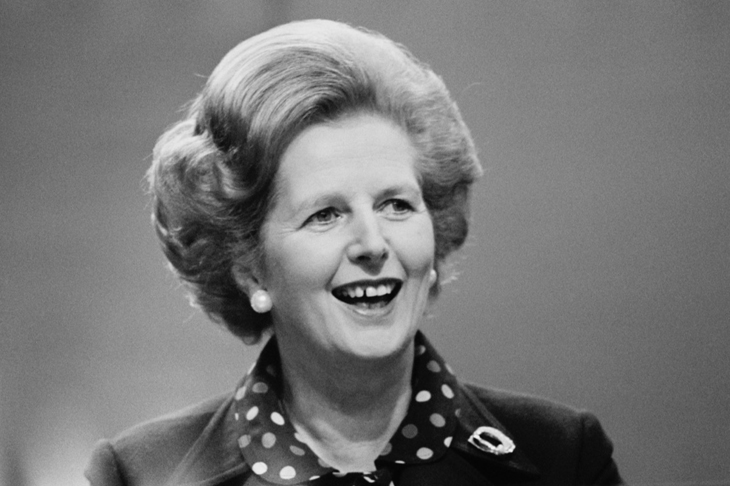
Consider Margaret Thatcher, whom many describe as an ‘arch-conservative’. The historian, Paul Johnson describes her as a reactionary conservative: ‘She did not agree with Winston Churchill’s principle that Labour’s nationalisation program – introduced in the post-war period of 1945-51 – could not be reversed. She simply reversed the program, privatising British Airways, steel, water, electricity, gas, and other business.’
Despite its Protean nature, there are some guiding principles of conservatism: an enduring moral order; distrust of utopians; a belief in custom and convention; the importance of prudence; limited government; individual freedom; the centrality of families and communities; and a social contract across generations. As Yuval Levin has written, ‘The premise of conservatism has always been that what matters most about society happens in the space between the individual and the state….’
So where does Donald Trump stand? A difficulty is that he appears to cross the various categories of conservatism. He doesn’t easily fit into a category. ‘Make America Great Again’ is an aspiration. It is a practical approach that seeks outcomes not dictated by the entrenched elites or past solutions.
In his 2015 book, Crippled America, Trump responded to the criticism that he is not a conservative, a Republican or even a politician! ‘By nature, I am a conservative person. I believe in a strong work ethic, traditional values, being verbal in many ways and aggressive in military and foreign policy. I support a tight interpretation of the Constitution, which means judges should stick to precedent and not write social policy. I represent traditional conservative values. I get up every morning and go to work. I work hard, I’ve been honest and I’m very successful. The billions I have? I earned every penny…. I am a strong, proud conservative. The biggest difference between me and all the do-nothing politicians who are all talk, no action? Those people constantly claiming they are more conservative than anyone else? I don’t talk about things, I get things done.’
Trump is a disruptor. He is surrounding himself with many disruptors. But there are also others nominated for the new administration who represent the more usual strands of conservatism, Marco Rubio being one. I suspect that the charge that Trump is not a conservative is a product of narrow conceptions of the notion, and personal dislikes about his style. The attitude is also influenced by the perceptions of the left who, having failed to defeat Trump, now don’t want him to implement his agenda. As part of this, they are painting a picture that his administration choices are inappropriate or unqualified. The test will be whether President Trump can recreate the space between the individual and the state which the so-called ‘progressives’ have been eagerly obliterating for decades.
Got something to add? Join the discussion and comment below.
You might disagree with half of it, but you’ll enjoy reading all of it. Try your first month for free, then just $2 a week for the remainder of your first year.