Jean-Baptiste Colbert, King Louis XIV’ s minister of finance, once pithily observed that, ‘The art of taxation consists of plucking the goose so as to obtain the most feathers with the least hissing.’ With this challenge in mind, it may sound appealing for President Donald Trump to impose an across-the-board tariff hike. The revenue generated could help lower corporate tax rates to as little as 12 per cent. However, before President Trump puts the Chalice from the Palace to his lips, he should consider an alternative path; a brew that is true.
The cards are stacked in President Trump’s favour. A significant mandate from an electoral college and popular vote majority and a Republican party with comfortable majorities in the Senate and Congress.
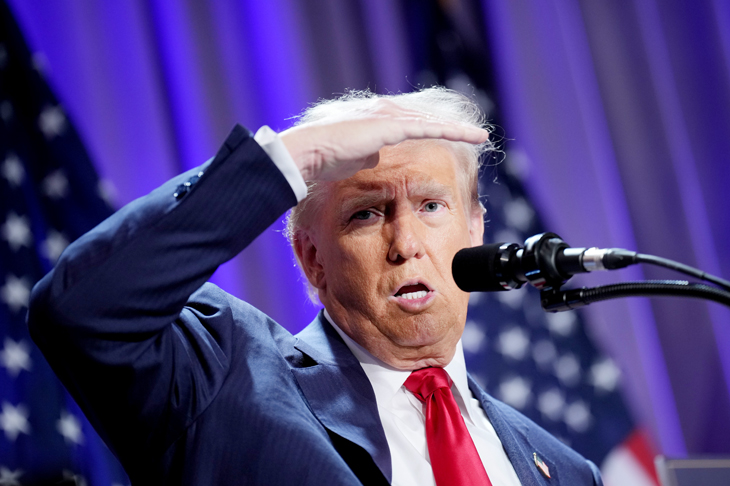
As the Chief Executive of the United States, President Trump has far-reaching powers, but these powers are not unlimited. He is constrained by the Constitution, the electorate, and the market. And equally important, he understands the art of the deal.
Trump’s extravagant threats add situational uncertainty which assists bargaining. The ‘pals with dictators’ image makes dialogue possible and draws closer hostile leaders, such as Russian President Vladimir Putin and Chinese President Xi Jinping.
Trump cannot afford to damage the US economy. A major across-the-board tariff would decimate US manufacturing and the US economy because not only would it attract retaliatory tariffs, but it would also significantly increase the costs of inputs.
All variety of crucial inputs to US manufacturing would be impacted by tariff hikes, raising costs, destroying businesses and jobs, reducing manufacturing capacity and lowering productivity. Even more importantly, it could threaten Trump’s legacy which includes a successor in J.D. Vance as president for eight years.
A selective and non-strategic tariff regime on crucial Chinese exports such as electric cars, while perhaps providing a short-term benefit to Elon Musk, could potentially invite serious Chinese retaliation, including a military response. It would not be lost on those around Trump that Japan’s assault on Pearl Harbour was in large part a response to US attempts to constrain Japan’s Pacific expansion, including the imposition of an oil embargo by President Roosevelt.
Apart from denying the US crucial manufacturing inputs, a heavy-handed tariff regime targeting China could also encourage an invasion of Taiwan. Hence, Trump’s threats are likely just bargaining positions to get the best possible deal.
A key opportunity for Trump to boost the US economy and productive capacity is through corporate tax reform.
In his first term, Trump succeeded in reducing the US corporate tax rate from 35 per cent to 21 per cent but only until the end of next year. An even lower rate is promised this time around.
The first round of tax cuts did not result in the promised investment boom or the repatriation of the trillions parked in offshore tax havens. This time an illusory tax hike rather than a tax cut would make a lot more sense.
The US runs significant current account deficits, the converse of which is that it runs significant capital account surpluses. This means that a significant proportion of US investment capital is sourced from overseas. A corporate tax cut simply puts more money in the hands of foreign investors while exacerbating the US’s rising and unsustainable debt levels.
Instead of cutting corporate taxes, Trump should instead raise the rate, for example to 40 per cent, while exempting US taxpayers from corporate tax altogether by adopting Australia’s franking credit/dividend imputation system.
Removing the double tax on Americans at the personal and corporate level would actually raise more tax revenue. Companies would be financially incentivised to repatriate cash stashed overseas to pay it out as dividends to attract franking credit benefits. Tax havens would largely become a thing of the past.
The US and Australia could then enter into a mutual agreement to invest in each other free of corporate tax.
Various commentators claim that Australia’s apparent high rate of corporate tax at 30 per cent is uncompetitive, especially if Trump further lowers the US rate. Complete nonsense. No Australian pays a cent in company tax as all payments are routed back to Australians via franking credits. All dividends paid to Australian shareholders attract a franking credit or cash benefit equal to the Australian tax paid. How can a tax rate of zero be too high?
Under current arrangements, only non-Australian investors pay company tax in Australia as they are ineligible for franking credit benefits because they don’t pay personal income tax in Australia.
Companies paying company tax in Australia can only pass on these enormous benefits to their Australian shareholders by paying dividends. This is why the Australian dividend payout rate is by far the highest in the world.
Proponents of the US double taxation system point with pride to the low rate of US company tax as Donald Trump reduced the rate from 35 per cent to 21 per cent. What they don’t tell you is that this rate is still effectively substantially higher than the Australian rate because Americans are taxed twice – once on their personal income which includes dividends and capital gains, admittedly at concessional rates, and again on their company income from which dividends are paid.
Contrary to claims, the US system places a sizeable burden on capital growth due to this double tax on productive assets whereas in Australia taxpayers invest entirely free of the Australian company tax impost.
This is why the cost of capital is so low for Australians investing domestically at only around 10 per cent to 11 per cent per annum, whereas those who invest offshore require 50 per cent higher at 15 per cent per annum. This is because foreign income gains no imputation relief and is double taxed.
President Trump will be cautioned by his advisors against implementing economically damaging policies that may serve a short-term purpose.
His Maga legacy is all-important and one he cannot afford to lose by self-destructive action.
Got something to add? Join the discussion and comment below.
You might disagree with half of it, but you’ll enjoy reading all of it. Try your first month for free, then just $2 a week for the remainder of your first year.