Progressivism is reshaping our politics, society and economy. Are these changes evolutionary or revolutionary? Are they a passing phase or do they represent something fundamentally new?
Confronted with disconcerting change, we understandably look to history or theory for guidance. It is tempting, therefore, to see progressivism as merely a new form of something familiar, like socialism, corporatism or managerialism These received models provide insights, to be sure, but might also be limiting our perspective. They could even be blinding us to what is genuinely new, and indeed shocking, about what we are witnessing.
Is it possible that a coup of sorts has been staged by progressive elites? To answer this question, we need to go back to Aristotle and Hannah Arendt.
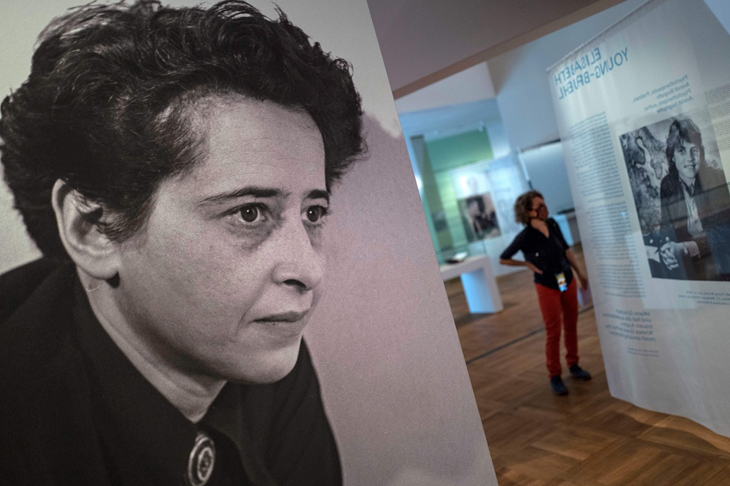
In her 1950 book The Origins of Totalitarianism, Arendt considered the nature of communist and fascist regimes. She took as her starting point Aristotle’s familiar political typology. His classification of governments as either democracies, monarchies, aristocracies or tyrannies. For Aristotle, each system was characterised by a particular principle of political action unique to it. In democracies, it was virtue. In monarchies and aristocracies, it was honour. And in tyrannies, fear.
Arendt felt that Stalin’s and Hitler’s governments did not fit neatly into any of these categories. To her, they represented something entirely new. In her typically provocative way, she argued that totalitarianism was the rule not of the one, or even the few, but of nobody: government by interlocking bureaucracies.
Its principle of political action, she argued, was not fear like traditional tyrannies (although this featured strongly in them) but slavish adherence to an ideology. In Stalinist Russia, the pseudo-science of Marxism. In Hitler’s Germany, a perverted form of social Darwinism.
How should we think about ‘progressive’ political systems? They draw on elements of socialism, corporatism and managerialism, yet they are democratic. And while they are deeply ideological, they eschew totalitarianism’s brutal methods (although it is no accident that our response to Covid-19 was directly borrowed from Beijing).
In forcing progressivism into one or more of these boxes, I think something important might be lost. We fail to credit its essential novelty: the break it represents from our past; and how it may be changing the world we live in. This not only makes it hard for us to understand progressivism, it weakens our ability to persuade others, including progressives themselves, of the particular dangers it represents.
So, taking our cue from Aristotle, how should we characterise this new dispensation? Who rules it? What is its defining principle of political action?
Progressivism, as we know, is the rule of the political, bureaucratic, academic and media elites. A social stratum of people who are educated (although typically in the social sciences or the law), occupy powerful positions in their fields, and are convinced of their moral superiority.
The ruling method of the progressive elite is ideology, but with an important twist. Unlike totalitarian regimes, progressivism leaves existing political and economic institutions, and the freedoms they embody, in place. The scope of these freedoms, however, is narrowed. Not by the people themselves, but by the elites.
In progressive regimes, elites determine what forms of speech, association and debate are acceptable, and brand dissenting views as misinformation and disinformation. And popular conformity is achieved by psychological rather than physical means, with the threat of cancellation taking the place of the gulag or the jail cell.
This is what makes progressivism such a radical departure from classical liberalism. John Locke famously argued that legitimate government must be based on the explicit consent of the people. This underpins the great democratic constitutions of the US, the UK and Australia. For progressives, the underpinning is reversed. The freedoms of the people – the views, aspirations and actions which can be tolerated from them – require the consent of the governing elites.
This inversion is why Australian progressives saw no contradiction between support for the Voice on the one hand and our existing democratic system on the other; a position which struck non-progressives as contradictory and ridiculous.
Aristotle argued that tyrannies, unlike other systems of government, contained the seeds of their own destruction. No regime based purely on fear could long survive, he thought. I think the same can be said for progressivism. I suspect its two basic elements, popular legitimacy conferred by elites and elite ideological conviction, will eventually cause its demise.
Elite ideologues, having detached themselves from reality, cease to recognise any limit, constraint or indeed uncertainty that stands in their path. In their absolute self-assurance, they are unable to understand the perspective of others, and as we know resort to lecturing rather than reasoned, and reasonable, argument.
On the other side, the people continue to inhabit the real world. They are highly attuned to the harm that ideological enthusiasms inevitably cause when taken too far. They appreciate the trade-offs and judgements that intelligent action requires.
As we have seen, many in our community have shown considerable trust in progressive elites, but it is obvious that this is being tested. The failure of the Voice referendum represented our elites’ first major defeat. Community opposition to wind and solar factories, and the 10,000 kilometres of transmission lines needed to link them, is growing. Women’s groups are no longer afraid to defend their sex’s traditional rights. And even Australia Day is being defended more vocally.
I suspect that both Aristotle and Arendt would recognise how hostile progressivism is to democracy. Progressive elites, having gained enormous power and, with a great deal to lose, will not give it up without a fight. This could get ugly, as the Voice referendum showed. But, like the great ideological movements of last century, the progressive movement might equally come to end, not with a bang but with a whimper.
Got something to add? Join the discussion and comment below.
You might disagree with half of it, but you’ll enjoy reading all of it. Try your first month for free, then just $2 a week for the remainder of your first year.