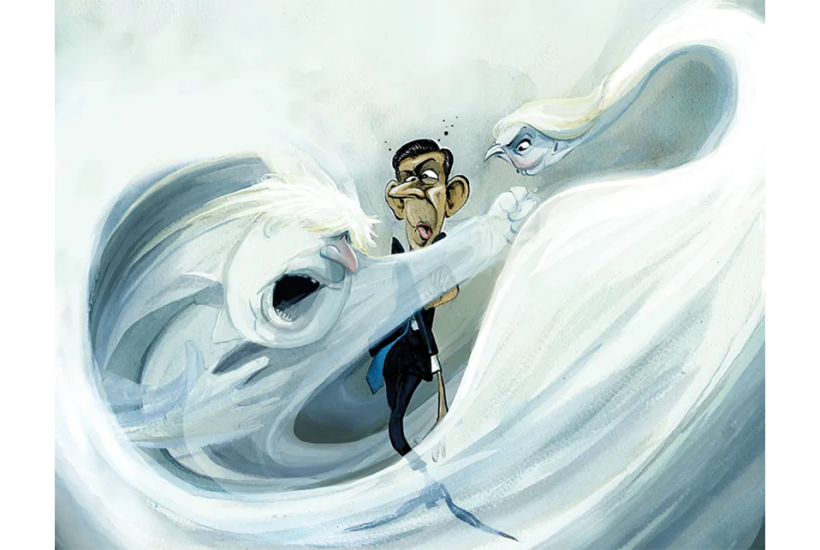
Any Conservative tempted to depose Rishi Sunak after the local election results should study the pantomime playing out in Holyrood. Humza Yousaf lasted 13 months in office – an improvement on the 49 days Liz Truss managed, but still a term that displays all the signs of a party in meltdown. A new first minister cannot remedy the root problem: that the SNP is a party committed to ending the United Kingdom, when most Scots wish to preserve it. Public opinion on this has not changed since the referendum ten years ago. The new SNP leader can admit to this hard truth or stay in denial. The facts will not change.
The Tories’ best chance is to fight the next election as best they can and build the foundation to recovery
Sunak is a long way from being a great Prime Minister, but he is not the author of most of the Tories’ current problems. He was installed in Downing Street to save what he could of a burning building after Liz Truss’s resignation following her disastrous borrow-and-spend mini-Budget. Sunak’s remit was to get through to the end of this parliament without any further economic drama.
He has succeeded in this mission. However, voters are left facing the consequences of big-government conservatism: a tax bill larger than Gordon Brown or Denis Healey ever dared impose. Add to this the NHS in meltdown, and full-blown crises in welfare and border control, and the Tories – like the SNP – will be judged not so much on their promises but on their record in government over several years. A new leader will not bring a new track record.
It does not matter what policy wheezes Sunak can muster – and there have been some decent ones, such as lowering National Insurance contributions to moderate some of the tax rises. The polls have shown little sign of recovery under his leadership. Neither are the markets cutting him any slack. Mortgage rates are rising again, and NHS waiting lists will probably follow. The public has all but made up its mind. As long as Rachel Reeves plays the same game Gordon Brown did before the 1997 election, constantly preaching fiscal prudence, the Conservatives will not win on the economy.
Sunak had opposed the Boris Johnson-era policies which are now rebounding so harshly on the Tories – from the spending splurge to the needlessly protracted lockdowns. Yousaf, in contrast, was a cheerleader for the wackier policies that led to his undoing. The big problem was a deal with the Scottish Greens, whose fringe philosophy was allowed, under the Bute House Agreement, to form the backbone of the SNP’s policy programme. Nicola Sturgeon thought the madcap Green policies useful, in that they drew a dividing line with Westminster: she didn’t care whether they worked.
As for the Greens’ obsession with trans issues, which led to the SNP adopting a policy of self-identification for anyone aged over 16 wanting to change their gender – it was always destined to explode in the SNP’s face, as it did when Sturgeon ended up tying herself in knots about a male rapist who had claimed the right to be housed in a women’s prison. It is extraordinary that Sturgeon and many around her never thought through the consequences of treating men as if they were women. Indeed, for years anyone who raised objections was told they were worrying about a minuscule problem – or worse, dismissed as a bigot.
Yousaf’s contribution to the SNP’s predicament was his illiberal Hate Crime Act, which he helped formulate as justice secretary. It then came into force during his time as First Minister. All too predictably, it resulted in thousands of vexatious reports from people trying to use the act as a political tool to smear or silence opponents. A new SNP leader will not undo it, just as a new Tory leader cannot undo the tax burden or fix the NHS. Voters will pass their verdict on this at the general election.
Sunak will be able to claim that he has left the Union more secure than it has been in a generation. Under his premiership, power-sharing was restored to Northern Ireland and the UK government intervened to veto the SNP’s gender self-ID bill. Brexit has raised the cost of Scotland leaving the Union, which would be a project so unworkable now that even the SNP no longer dares to make any economic case for separation.
But the PM had asked to be judged on economic growth (which has evaporated) and on stopping the small boats (which he has failed to do). He cannot even claim that his presence in No. 10 has calmed the markets and reduced borrowing costs. All of these are down to factors he did not create, but he has not been able to mitigate them effectively. Those failures will be reflected in the local election results this weekend.
It’s hard to seriously argue that any purpose can be served by replacing Sunak with Suella Braverman, Penny Mordaunt or James Cleverly, however. The Tories’ best chance is to keep their composure, fight the next election as best they can, and build the foundations for recovery when, as is inevitable, Keir Starmer’s government runs into trouble. Sunak, as the incumbent leader, remains the best option to achieve that.
Got something to add? Join the discussion and comment below.
You might disagree with half of it, but you’ll enjoy reading all of it. Try your first month for free, then just $2 a week for the remainder of your first year.