The ‘green’ energy industry knows it’s in trouble. Wind is woefully unreliable, looks terrible, and is starting to get on the nerves of European Greenies. When it comes to solar, it only works when the sun is shining, unhindered by clouds. Even in perfect conditions, both of these technologies have been catastrophically under-performing on their advertised outputs while their lifespans shrink in real-world conditions.
As the public grow bored of these failures and start thumbing their energy bills, something ‘exciting’ and ‘shiny’ has been flung in front of them to see if the industry can be sexed-up with new promises.
This time, it’s water to the rescue. After all, who could possibly hate water? It is a fundamental building block of life – just like carbon. (It’s also the planet’s most powerful greenhouse component that regulates heat… Sh! Don’t tell the climate activists or they might start taxing it.)
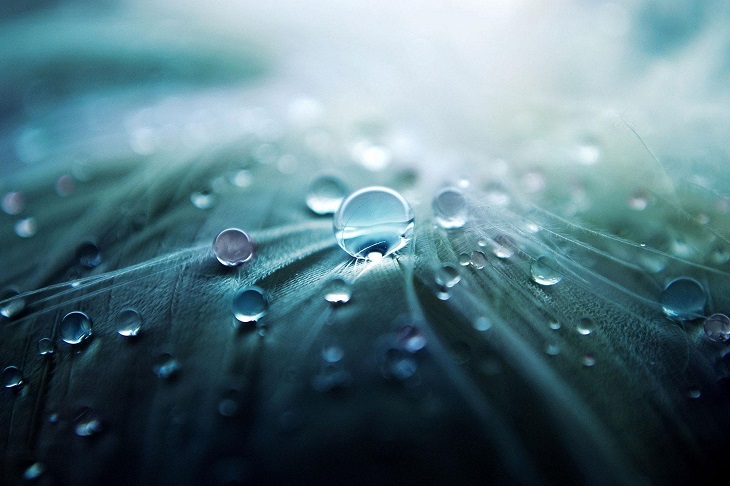
Flooding headlines this month is a technology that claims to ‘capture, store, and utilise the electrical power generated by falling raindrops’. This, they say, could lead to the creation of ‘rooftop rain panels’.
‘Raindrops contain abundant renewable energy, including both kinetic energy and electrostatic energy,’ began the abstract excitedly.
The technology is called ‘droplet-based TENG (D-TENG)’ which proposes using ‘solar panel-like bridge array generators (BAGs)’ to capture the energy of multiple drops.
A professor at the Tsinghua Shenzhen International Graduate School in China explained:
‘When the (rain) droplet falls on the surface of the panel, called the FEP surface, the droplet becomes positively charged, and the FEP surface negatively charged. After a long time on the surface, the charges on the FEP surface will gradually accumulate to saturation. At this point, the dissipation rate of the FEP’s surface charged is balanced with the amount of charge generated by each impact of the droplet.’
It comes with the claim from some over-excited publications that rain panels might be more popular than solar panels! That’ll depend on government grants. Australia has proved the point that people will put anything on their roofs if you pay them.
At least The Debrief admits the obvious:
‘Efforts to collect energy from falling raindrops have faced a technical hurdle that has made the concept inefficient and impractical. By using something called a triboelectric nanogenerator, engineers can collect the tiny but measurable amount of electricity generated by a falling raindrop, but as one might expect, the amount of power per raindrop is incredibly small.’
Scientists are spending a lot of time chasing the world’s least efficient means of generating power while nuclear energy is sitting there, literally glowing, rolling its eyes.
It’s a bit of a bummer that the rain panel technology struggles with downpours.
I’m imagining those East-Coast summer storms where metres of water fall from the sky as if the weather gods are drunkenly throwing buckets over the land to see which bits they can make flood first. The rain is so loud it may as well be hail. You’d have more chance capturing the kinetic energy of the drops than their faint electrical charges.
Speaking of hail, what happens to these delicate electrical panels when they are struck by the chunks of ice that frequently accompany rain?
There is a great deal of effort being spent talking about how renewable energy can be drawn from infinitesimal amounts of raw energy caused by the pitter-patter of raindrops, but the material point is – why? Why are spending so much time pursuing this? Is it so that China can manufacture the next generation of ‘rain panels’ once solar panels are crow-barred off our roofs? Are we going to start rationing water as a ‘renewable energy superpower’ instead of collecting it for agriculture and city water supplies?
Rain panels appear to be one of those mind-boggling engineering projects, like spraying the atmosphere to block out the sun to create an artificial ice age, embarked upon to avoid, at all costs, the natural solution sitting in Australia’s deserts waiting to be dug up.
Can we please find some adults, build a few off-the-shelf power plants, and go back to having cheap power?
The first politician to promise that is going to win the next election.
Flat White is written and edited by Alexandra Marshall