In all the fuss over the nuclear subs deal announced in mid-March observers seem to have overlooked a basic point – that the deal involves building nuclear submarines from scratch in Adelaide.
Never mind the city’s long history of cost over-runs, budget blowouts and required reworks in naval contracts, or that the region doesn’t have anything like the required skills base for such an endeavour, it is decreed that Adelaide will build these complex vessels as part of the $368 billion program.
Instead of a grand vision of a thriving naval industry, anyone who remembers the long history of problems in getting the Collins class of submarines into their present state of reasonable fighting effectiveness, not to mention problems with almost every other naval building project taken on by this country, the latest announcement conjures up visions of a financial and possibly military disaster, albeit one some years in the future.
As announced, the federal government intends to fill a military readiness gap by buying between three and five used (or new) Virginia class submarines, starting from 2032 or 2033 to be delivered three years apart. In the 2040s, or so it is hoped, the first of these nuclear submarines SSN-AUKUS designed by the British as the successor to the Astute class of subs and fitted with adaptions of US combat systems and weapons will start sliding down slipways in Adelaide.
The first part of the deal in buying proven, if used submarines ready to operate from day one shows some sense. The vessels will still be potent weapons platforms and help to train a new generation of Australian nuclear submariners. Even the Aukus part of the deal at least avoids the worst pitfalls of the Collins class saga, and that of the $90 billion deal between Australia and the French shipbuilder Naval Group which sank with all hands in early 2021.
The Collins class of submarines, the last of which was built in 2003, is an enlarged version of a design from Swedish shipbuilder Kockums to which a combat data system from the American company Rockwell was to be added. The modifications, different combat system, insistence on large local content quotas and construction in Adelaide caused endless problems. After repeated reworks the Collins class can now hold its own against other navies, but the saga was an expensive ordeal few governments should be willing to repeat.
Except that the government of Malcolm Turnbull wanted to do just that and add some new mistakes. As noted by this publication (‘Collins class all over again’, 6 March 2021) the French deal announced in 2016 was to build a conventional version of the nuclear powered Suffren class of subs operated by the French navy.
Scott Morrison torpedoed the French deal in 2021 then greatly simplified the choice of vessels for the navy by declaring that the next generation of submarines would be nuclear. Despite the often hysterical local opposition to nuclear power in all its forms, this declaration caused surprisingly little trouble, with the Labor opposition led by Anthony Albanese declaring its support.
Now Prime Minister, Albanese has taken the next step of identifying the submarine to be built, but the politically motivated choice in requiring much of the work to be done in Adelaide shows that some lessons are too hard to learn.
That decision means the project managers have to find and train more than 5,000 workers and build a massive facility, at an initial cost of $5 billion, all within the next decade to start building these vessels. The project at least avoids a host of major problems in that the vessels will be mature designs with the US combat systems and weapons already integrated (unlike the Collins class). The first vessels in the class will also already have been built by UK yards by the time the Australian facility gets into gear.
In other words, the dockyard and facility to be built at Osborne in South Australia, will follow assembly instructions while hopefully sourcing more of the components locally, and may be able to call on UK expertise when required.
However, building a nuclear submarine, even from an established blueprint, will not be easy especially as there is a very slender local skills base to build on.
The Australian Submarine Corporation, which built the Collins class subs, retains some expertise to service and maintain the six submarines, and to substantially rebuild the vessels, starting from 2026, so that they will give good service into the 2040s.
Preliminary work done by the French Naval Group has also resulted in a few hundred workers who can be put to use in the new project (they are now working on other naval contracts). South Australia, and Australia in general, has some innovative niche manufacturing and software companies, but that still does not add up to very much.
As was widely reported in 2020 the French group was surprised at the lack of expertise and manufacturing capacity available in Australia.
Given these problems, a reasonable compromise might have been for the UK ship yards to build the vessels to the point where they can be sailed to Adelaide under their own power. Once in Adelaide the vessels can be fitted with the weapons and combat systems, which may be hard enough to get right.
No one seems to want a reasonable compromise, however, with Prime Minister Albanese alarmingly comparing the subs deal to the creation of the car industry in Australia after World War II. That industry survived for many years by making the Australian consumer pay more than 50 per cent extra for cars than they would otherwise have done through a system of tariffs, part of a comprehensive system of industrial protection.
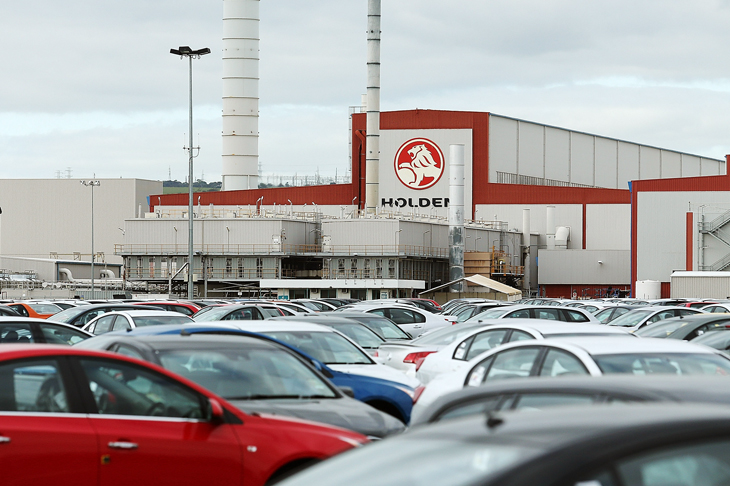
When that system was finally demolished by a succession of governments from the mid-1980s the car manufacturing industry, much of which was in Adelaide, went out of business. Cars became a lot cheaper, and the economy did not seem to be affected.
This time a Labor government is about to repeat the mistake of having an industrial ‘vision’ in an area where Australia has a proven track record of waste and inefficiency. A prime example of this is the endless problems with the British shipbuilder BAE Systems’ $45 billion contract to build nine Hunter class frigates in Adelaide close to the planned submarine shipyard. Construction was due to start in 2022 but now may not start in 2024, with problems including arguments over the details of the layout of the taxpayer-funded shipyard.
As matters stand the main use of the nuclear submarine project may be to torpedo tax dollars.
Got something to add? Join the discussion and comment below.
You might disagree with half of it, but you’ll enjoy reading all of it. Try your first month for free, then just $2 a week for the remainder of your first year.