The International Film Festival of India was held in Goa in November. The Kashmir Files, an Indian entry, deals with the emotionally charged story of the ethnic cleansing of Kashmiri Hindus by Muslim militants in the 1990s. Jury chair Nadav Lapid, an Israeli film maker, criticised it as ‘a propaganda, vulgar movie inappropriate for an artistic competitive section of a prestigious film festival’. As social media trolls launched a vicious counter-attack, Israel’s ambassador Naor Gilon tweeted an open letter in a lengthy thread, criticising Lapid for irresponsible comments that had abused the host country’s hospitality and complicated his mission. On 1 December, President Isaac Herzog inaugurated an exhibition of Indian sculptures at the Israeli Museum in Jerusalem. ‘India and Israel are natural allies, united by a fundamental commitment to the democratic ideals upon which both our nations were founded’, he said.
Gilon’s tweet and Herzog’s speech mark a sea change from the early decades after India’s independence and Israel’s creation in 1947/48. Then, Israel was Exhibit A for my thesis that India never let interests come in the way of principles. One of the earliest to recognise Israel, India did not establish full ambassadorial relations until 1992. The hesitation was rooted in pre-independence sympathy for the Arabs by the Congress Party, a perception of Israel as a settlement imposed upon Palestinians by outgoing colonial powers, the many Arab votes at the UN against the solitary Israeli vote, an attempt to undercut Arab support to Pakistan, and deference to the sentiments of the sizeable minority of Indian Muslims. Sometimes the non-policy degenerated into petulance. The Jerusalem Symphony Orchestra was scheduled to perform in Bombay and New Delhi in 1993. India, describing Jerusalem as a disputed city, insisted that the orchestra drop ‘Jerusalem’ from its name. The orchestra cancelled the visit instead.
The policy betrayed the centuries-old history of Indian hospitality towards the Jewish people. The Paradesi Synagogue in Kochi, Kerala, built in 1568 by Sephardic Jews exiled from Spain and Portugal, is the oldest active synagogue in the Commonwealth. Its most serious threat came not from Indians, but from local officials of the Inquisition after the consolidation of Portuguese power in western India in the 16th century. Unfortunately my desire to visit it some years ago was thwarted because the president of Israel was visiting on the day and it was closed to everyone else.
There is no history of hostility towards or attacks on Jewish communities living in India. The only significant attack on a Jewish site in India was on Chabad House by Pakistan-based terrorists who carried out the murderous assault on Mumbai in November 2008 in which 175 people were killed, including Rabbi Gavriel Holtzberg and his six-month pregnant wife Rivka. In his 2017 Israel visit, PM Narendra Modi made a point of meeting their orphaned son, Moshe Holtzberg who was helped to escape by his Indian nanny Sandra Samuels.
India began seeking military technology and counter-terrorism assistance from Israel in the 1990s. India and Israel share the predicament and policy dilemmas of facing the threat of serial terror attacks planned, organised and launched from neighbouring territories. Yet after the 2008 Mumbai attacks, India persisted in condemning ‘the ongoing incursion into Gaza by Israeli ground and other forces’ to take military action against Hamas. Discreet silence might have better served its long-term interests.
The scope for mutually beneficial cooperation is huge. Israel has much to offer in the areas of desalination, dryland farming, agricultural productivity, horticulture, science, technology, and food and energy security. India’s search for closer political, economic and security relations with the US has been helped by the establishment of similarly close relations with Israel. India is the only foreign country where one of six water experts with Israel’s Agency for International Development Cooperation is stationed. The bilateral Indo-Israel Agricultural Project has set up 29 centres of excellence in 21 Indian states. Around 800 Indian post-doctoral students are awarded research grants to study in Israel every year. In the five years 2016–20, India was Israel’s biggest arms export market taking 43 per cent of all defence exports, including air defence systems, drones, radar, cyber security and communications systems: an increase of 82 per cent from 2011–15. At 13 per cent, Israel is India’s third biggest arms supplier after Russia (a legacy equation) and France. On 26 February 2019, Indian jets fired 1,000 kg Israeli-origin glide bombs at an alleged terrorist training camp in Balakot, inside Pakistan’s international borders.
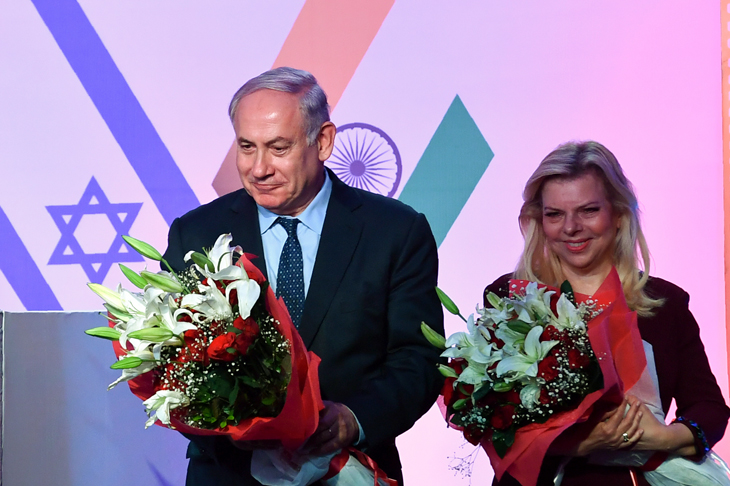
In July 2017, Modi became the first Indian prime minister to visit Israel. He called the three-day visit ‘ground-breaking’. PM Benjamin Netanyahu, who received Modi at the airport, described it as ‘historic’. Tellingly, Modi’s itinerary did not include a visit to the Palestinian Authority headquarters in Ramallah. After all, India is ultra-sensitive to foreigners hyphenating it with Pakistan. In a sign of intertwined cross-connections, Modi’s visit was accompanied by a two-dozen-strong delegation of Indo-Americans and Jewish-Americans. India has its Kashmir difficulties while Israel faces Gaza Strip challenges. The flaws of one democracy are no greater than those of the other. Relations between democratic countries can be strained on particular issues, but the underlying strength of the relationships is rarely questioned. Good relations between the US, EU, Israel, India, Japan and Australia could form an arc of democratic countries encircling the globe, a coalition that would be at once more stable over the long term and more compatible in political values.
Ties have continued to flourish through the turbulence of Israeli politics and leadership changes. The return of Netanyahu as PM will strengthen bilateral relations still further because of the personal rapport with Modi. Both countries also demonstrate exceptional maturity in understanding each other’s sensitivities and imperatives while accentuating the positives. Of course, there are differences in interests and policies, for example on Iran and the UN Relief and Works Agency. As an unnamed senior Israeli diplomat put it: ‘we share the same interests, not necessarily the same agenda’. Consequently, ‘no matter who is in power, our relationship will continue to thrive’. Amen to that.
Got something to add? Join the discussion and comment below.
You might disagree with half of it, but you’ll enjoy reading all of it. Try your first month for free, then just $2 a week for the remainder of your first year.