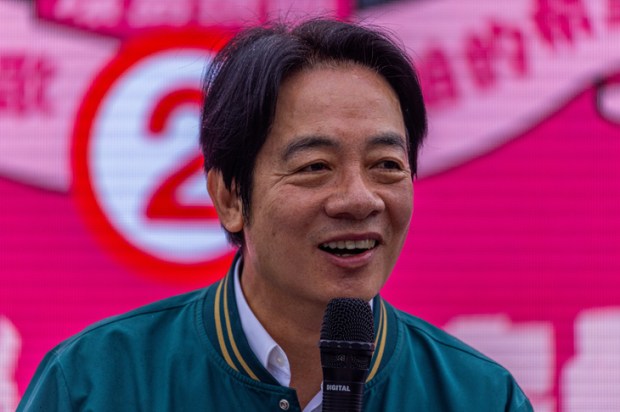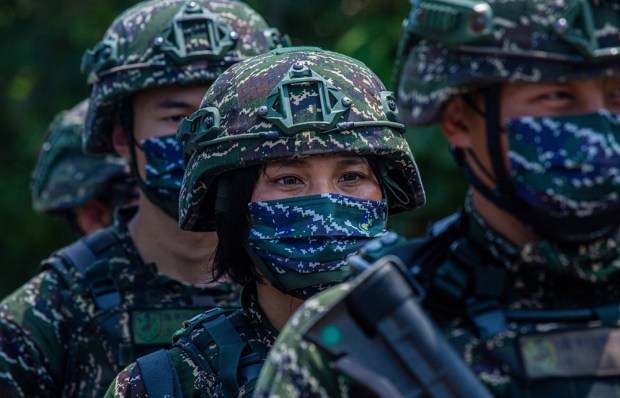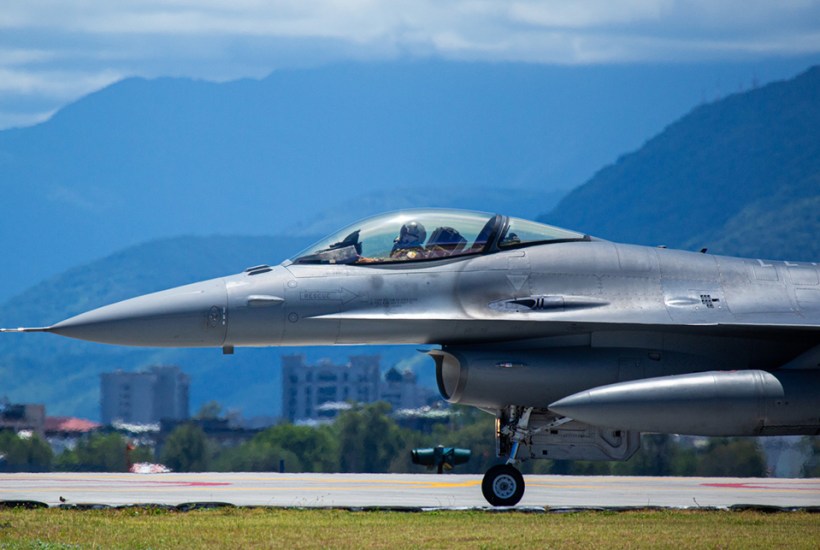
The Taiwanese government has been admirably restrained in its response to the unprecedented petulance of the Chinese Communist party as a result of the visit to Taipei by US Speaker Nancy Pelosi. While the CCP resorted to its usual wolf-warrior diplomacy and economic coercion, implementing previously planned military exercises and sending missiles over Taiwan, President Tsai Ing-wen responded with conviction and clarity saying:
This type of continued, deliberately heightened military threat, especially the dangerous launch of missiles into some of the busiest transportation corridors in the world, is irresponsible, both to Taiwan and to the entire international community. This not only undermines the status quo in the Taiwan Strait and encroaches upon our nation’s sovereignty. It also creates high tensions in the Indo-Pacific region, as part of which air and maritime transportation safety, as well as the normal functioning of international trade, are all coming under unprecedented threat. We solemnly call upon China to act with reason and exercise restraint. I want to emphasize that we will neither escalate conflict nor instigate disputes. But we will resolutely defend our nation’s sovereignty and security as a bulwark of democracy and freedom.
China’s reaction was deliberate. Its modus operandi is clear for all to see. Construe any action contrary to its demand for total obedience as a slight to its national pride and an offence against its claims. It could have simply ignored the visit by Nancy Pelosi, dismissed it as a whim of the octogenarian legislator, or denounced it as a domestic political gesture.
Pelosi’s visit to Taiwan was not the problem; it has been the craven refusal of many Western nations to send senior officials to the country regularly over the past few decades. What Pelosi has finally said and done should have been a regular occurrence. As she wrote in the Washington Post:
the Chinese Communist Party’s brutal crackdown against Hong Kong’s political freedoms and human rights – even arresting Catholic Cardinal Joseph Zen – cast the promise of ‘one country two systems’ into the dustbin. In Tibet, the CCP has led a campaign to erase the Tibetan people’s language, culture, religion and identity. In Xinjiang, Beijing is perpetrating genocide against Muslim Uighurs and other minorities. And throughout the country, the CCP targets and arrests activists, religious freedom leaders and others who dare to defy the regime. We cannot stand by as the CCP threatens Taiwan – and democracy itself.
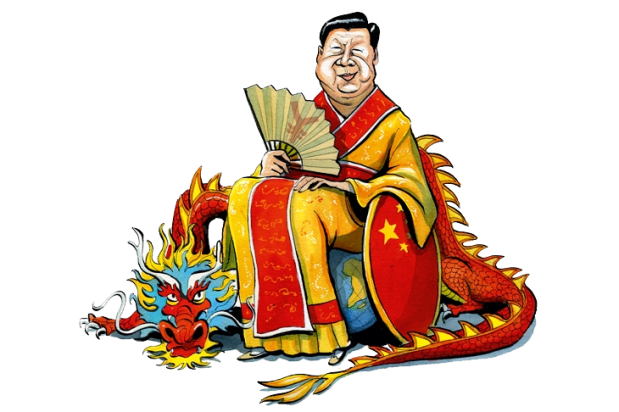
Why is the doctrinaire Xi so obsessed with Taiwan, a country which the CCP has never ruled? Simply put, Taiwan is a reminder of the falsity of Xi’s assertion that democracy is incompatible with Chinese culture, and that his Marxist polity is the highest form of government. It is why he had to crush all semblance of democracy in Hong Kong. He would do the same in Taiwan if he ever gained power there.
Recently, the CCP ambassador to France Lu Shaye asserted, ‘After the reunification with Taiwan, the Taiwanese population must be re-educated.’ Just ask Tibetans and Uighurs what that means! Whether you generally support Nancy Pelosi or not is immaterial: on this life and death issue for millions of people, she has had the courage consistently to call out the perpetrators of gross abuses of human rights.
The mood of the Taiwanese was displayed prominently in messages on Taipei 101, the building that dominates the city skyline; ‘Welcome to TW’, ‘US❤TW’ and ‘Thank you’. Privately, the government was pleased, knowing that support from a world leader is encouraging for the Taiwanese. The populace didn’t panic when the CCP chose to overreact. The Taiwanese have been living across the Strait from their bellicose neighbour for decades and recognise the difference between a diplomatic tantrum and an intention to invade their nation. As Taiwan’s Foreign Minister Joseph Wu told me during my recent visit: ‘We want to maintain the status quo which is that Taiwan has no jurisdiction over mainland China and the People’s Republic of China has no jurisdiction over Taiwan. That is the reality.’ It has been for 70 years.
Xi’s petulant display, contrary to his intended goal, displays his weakness and forewarns the world to properly prepare for possible conflict. When I asked officials and experts what had been learnt from Russia’s invasion of Ukraine, there was a common response. An invasion has to be short and quick; if not, the invading country needs to be able to withstand sanctions and pressure, economically and socially, to maintain political support. Neither of these prerequisites apply to China currently.
Each of the three most likely military scenarios to conquer Taiwan carry significant risks for the PLA. First, a full-scale invasion would be difficult to execute, and likely to drag on sufficiently to engender US engagement. A blockade would be difficult to maintain and would injure trading nations, including China itself. A third option, the invasion of an offshore island such as Kinmen or Matsu would be easier to achieve, but for what real gain? In Xi’s calculus, he would only declare war on Taiwan if he believes he can win. The primary audience of his fireworks display is domestic, especially in the lead-up to the party congress as he manoeuvres to be appointed General Secretary of the CCP for a third term. Having encouraged frenzied nationalism in China, even the CCP thought the call by the former editor of the Global Times to shoot down Pelosi’s plane a step too far, removing the offensive tweet.
This doesn’t mean Xi can be ignored. He will continue to prod the world, looking for any weakness in response to his quest to conquer Taiwan. The reaction of Quad nations is critical, particularly Japan. That China launched missiles into Japan’s waters – intentionally or otherwise – should strengthen the resolve of its leadership. But the Japanese are very cautious. While their self-defence forces are capable, their polity is dominated by a consortium of bureaucrats and business people. With a Cabinet reshuffle expected soon, and the loss of Shinzo Abe, its leadership could drift into a form of accommodation with the CCP. Hopefully this doesn’t occur as ultimately it would be disastrous for Japan and for the free world.
Got something to add? Join the discussion and comment below.
You might disagree with half of it, but you’ll enjoy reading all of it. Try your first month for free, then just $2 a week for the remainder of your first year.