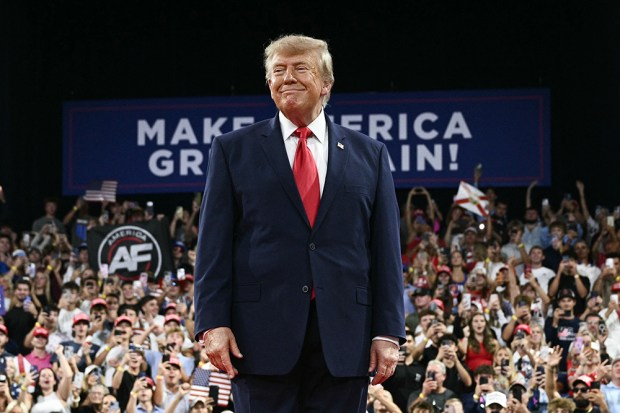
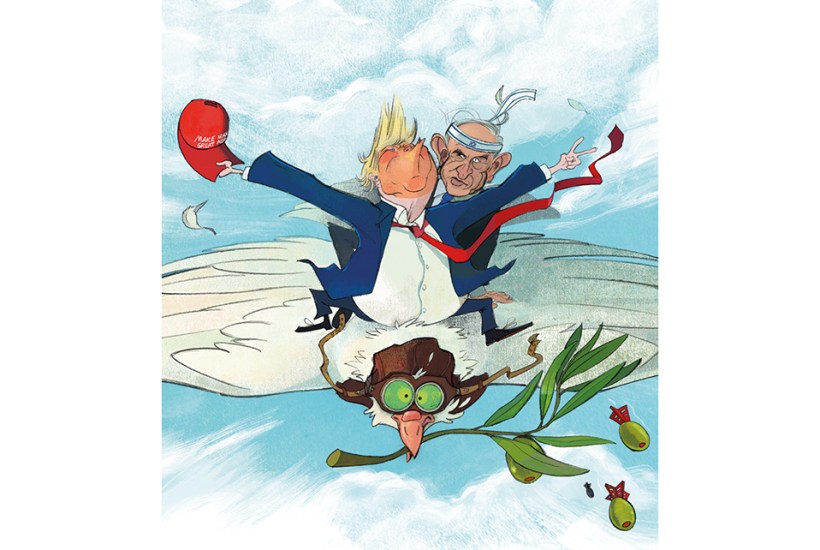
An American political operator contacted me last week, before the blue tidal wave swept aside Donald Trump’s Republicans in Congress, with his favourite quote from the 1997 movie Wag the Dog, about an American president starting a war to distract from domestic difficulties: ‘Change the story, change the lead,’ Robert De Niro’s character declares.
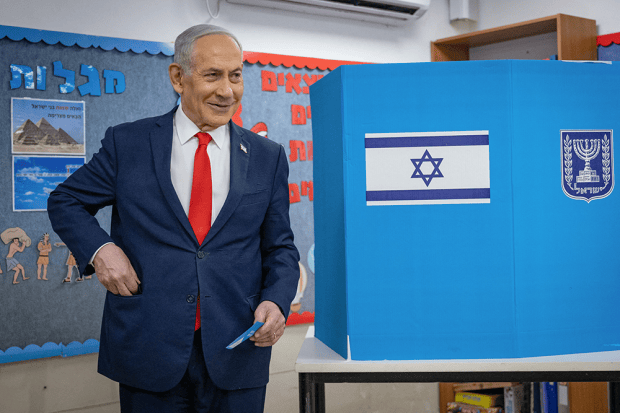
The politico, who once ran an abortive Democrat campaign for president, then predicted: ‘The bigger the defeat, the bigger the bombs Trump drops on Iran.’ At that point, the results of the Israeli elections had already eroded Benjamin Netanyahu’s chances of remaining Prime Minister and left two of the most dominant leaders of the last decade with their backs to the wall.
Fast forward to Tuesday and a British foreign policy expert with friends in the Trump administration was reporting: ‘There are people in the Pentagon who say the strikes will begin on Thursday.’ An Israeli official predicted: ‘I think Bibi will go for it.’ Yaakov Amidror, a former national security adviser to Netanyahu, adds: ‘He understands that it is now or never and he needs the legitimacy which can come only with an American alliance.’ A former British cabinet minister adds: ‘He wants an emergency while he’s transitional leader.’
The war with Iran is widely seen as one of Trump’s signature missteps, a conflict which failed to achieve regime change, closed the Strait of Hormuz and saddled the world with higher energy prices. So what is going on?
‘The bigger the defeat, the bigger the bombs Trump drops on Iran,’ says an American politico
Security sources in Washington, Tel Aviv and London admit the decapitation strikes against regime leaders and the bunker busters deployed against the Islamic Republic’s nuclear facilities failed to deliver a decisive outcome. But they also say the planned new strikes are evidence of a longer-term strategy to erode the strength of the mullahs and their Revolutionary Guard (IRGC) enforcers – and if that helps Trump distract from the worst midterm election results for years, all the better.
Insiders say any new wave of attacks would be predominantly aimed at Iranian economic and infrastructure targets, in a bid to degrade the regime’s grip on power. ‘The next strike will be on critical and strategic infrastructure, bridges, to put the Iranian economy on a standstill,’ says the first Israeli source. ‘If the economic structure fails, they can’t pay the Basij [the street-level regime enforcers] and the IRGC.’ A British source notes that Iran is already facing a squeeze because several of its tankers have been sunk away from the Gulf: ‘You’ve got to look at the percentage of Iranian oil that is coming out. There’s no hard currency going in.’
This approach does not come without risk, since it is not something which is likely to have an immediate effect on the regime and it’s difficult to see how Trump gets the kind of easy win he craves. Taking military action will also blow up attempts to secure a deal with Iran to reopen the strait. ‘You’re shutting down the possibility of an immediate agreement,’ says a Labour grandee with senior contacts in both London and Tel Aviv. ‘Though it’s clear that these talks that were allegedly going to bring a breakthrough have not brought a breakthrough.’ The Israeli official adds: ‘It’s a risky move because what you’re doing, you’re hurting the Iranian people as well.’
It is far easier to see what Israel gets from the deal than the US, where soaring fuel prices contributed to the Republican humiliation at the polls. Amidror, who is now a fellow of the Jewish Institute for National Security of America, says observers need to understand that there will never be an all-encompassing Middle East peace deal like the total victory imposed on Hitler’s Germany at the end of the second world war – and that anything which impedes the Iranian regime and delays its acquisition of nuclear weapons is beneficial.
‘We don’t have the illusion that by using kinetic force you can destroy everything,’ he says. ‘We will never reach a Berlin of the Middle East moment.’ But Amidror argues that every setback for the nuclear programme makes Israel safer. ‘Driving the [Iranian] economy to hell is an important part of [the strategy], but it’s not the only part. From our point of view, the most important job to finish in Iran is to damage as much as possible the infrastructure relating to the nuclear and the missile projects. There are facilities which are deep down under the ground and there it is not going to be easy, but all the others should be totally destroyed.’
He points out that Israel faced huge international criticism for bombing Saddam Hussein’s nuclear facility at Osirak in 1981, but when the Gulf War broke out a decade later, ‘You came to the war without facing a nuclear Iraq only because we succeeded to blow the reactor.’ While the world wants quick solutions, Israel will always play the long game for its survival. ‘What we now want to achieve in Iran is mainly to gain time by destruction of whatever facilities they have,’ he says. ‘The dream or the plan to have a regime change is not based on the ability of the air force of Israel and the United States of America, but on the ability of the Mossad and the CIA to make the opposition stronger in the future. And for this future we need time.’
The war planners in Washington apparently believe they can inflict meaningful damage to the regime in Tehran by the end of the month. ‘I’ve heard assessments which say that the economy could be crippled within three or four weeks,’ a source close to the White House says.
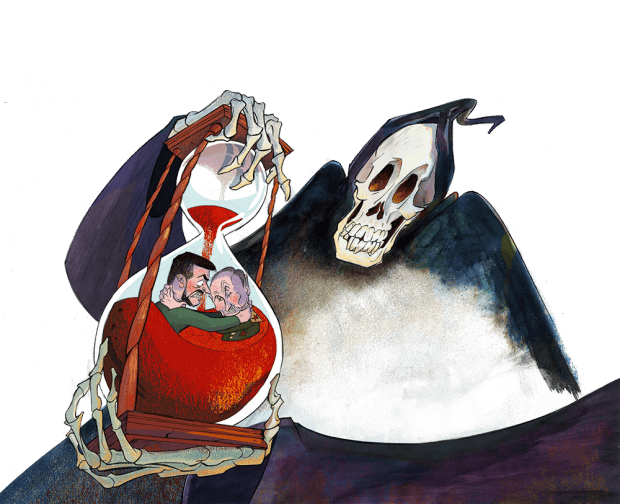
The story they are telling themselves in Tel Aviv is of the first revolutionary leader of Iran, Ayatollah Khomeini, and his war with Iraq in the 1980s. Israeli intelligence told the Knesset that Khomeini would never give up the conflict – one hour before he called what became known as his ‘poisoned chalice’ ceasefire. ‘You never know when the other side will be ready to take the poison,’ says Amidror.
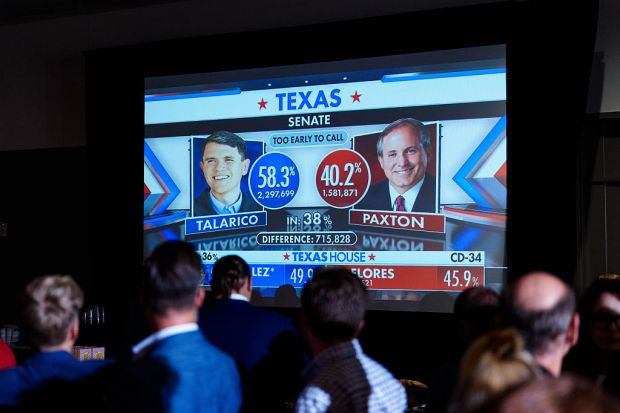
The scale of Trump’s loss will lead to major soul searching in Republican circles. Mark McKinnon, a former aide to George W. Bush and John McCain, noted drily on Wednesday morning: ‘Trump brought regime change to Texas faster than to Tehran.’ Ron DeSantis, the governor of Florida, appeared to be gearing up for another run at his party’s presidential nomination by blaming the Iran war for soaring gas prices.
There is now likely to be a short but very sharp debate about what to do. ‘There are three camps in Washington,’ says a Brit with senior allies in the administration. ‘There’s [Vice-President J.D.] Vance and [Middle East envoy Steve] Witkoff, who want a deal. There’s [Pete] Hegseth and [Marco] Rubio [the Secretaries of War and State], who want war. And there’s [Treasury Secretary Scott] Bessent who wants to bring the regime to its knees through the economy.’
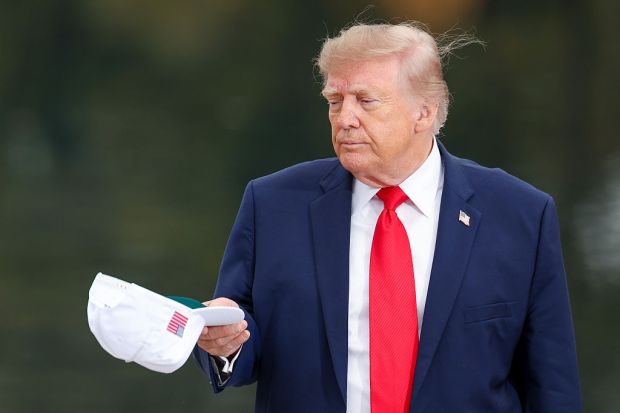
The President, however, is likely to be attracted to the grand gesture. In a telephone interview with Politico, as the electoral carnage unfolded, Trump said: ‘I am totally convinced that my decision on Iran, for the long-term good of our country and even the world, was absolutely the correct one – and continues to be.’
Asked whether he was about to launch a new wave of attacks, Trump replied: ‘We’re going to take a look and if we see any opportunity to do one thing or another, we’ll do what’s best for this country.’ He appeared to rebut claims that he was prepared to use battlefield nuclear weapons against a target such as the Iranian nuclear site at Pickaxe Mountain. ‘I don’t need it,’ he said. ‘We’ve knocked them out already 90 per cent. I don’t need that.’
A former aide to George W. Bush noted drily: ‘Trump brought regime change to Texas faster than to Tehran’
The British source adds: ‘It’s quite clear that Trump wants to move [on Iran] after the midterms. My friends in the White House are getting jumpy on that one. Some supportive, some hostile.’ Another British associate of Vance, whose hopes of succeeding Trump in the White House could be harmed by his association with the Iran conflict, says: ‘Vance dreads the consequence of a new war on his presidential run.’
The fallout from the Knesset elections will probably have little effect on Israel’s approach to Iran, since both Netanyahu and his possible successor, Gadi Eisenkot, support a tough line. The only scenario which would change that is if Eisenkot is forced to put together a coalition with Arab parties, who oppose new strikes.
A renewal of hostilities has Gulf Arab states under huge pressure, since many US allies have been hit by retaliatory missile strikes. In Saudi Arabia, the Crown Prince Mohammed bin Salman has faced criticism following reports that he privately encouraged the first wave of air attacks. Riyadh has recently come under attack from missiles fired by the Houthi rebels, who are backed by Iran. ‘MBS is really under pressure,’ says a British source in the Gulf. Qatar is ‘hurting economically but has taken a bet that Iran will prevail in some way’. Oman is playing both sides, opposed to new strikes but ‘extremely helpful’ to the Americans in keeping crude oil supply lines open. The UAE does not want to ‘weather more’ counterattacks.
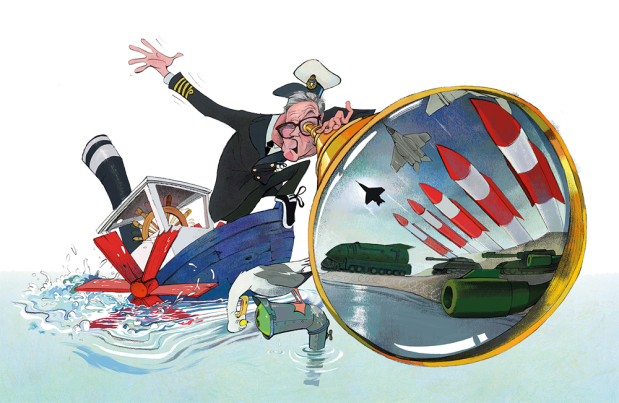
What seems to unite all sides of the debate – Americans, Israelis and Arabs – is disappointment, veering towards contempt, when it comes to Britain, which multiple sources say has rendered itself largely irrelevant. ‘The Americans don’t think we’re a factor and they know we’re not interested,’ says the former cabinet minister. The Labour grandee says: ‘The Gulf states have massively lowered expectations of Britain.’ Amidror adds: ‘As someone who was a great admirer of British capabilities in the past, I am so frustrated with the behaviour of the government in London that the truth is that I don’t have expectations any more.’
When the first raids were launched in February, Keir Starmer refused to let the Americans use British air bases for the initial strikes, though he then permitted them to be used to take out missile sites which were hitting the UK’s Arab allies.
It is unthinkable that Andy Burnham would go further than Starmer, not least because of a balance of power shift on foreign policy. Under Starmer, the dominant personality was Jonathan Powell, the National Security Adviser. But under Burnham, Powell lost an argument with Ed Miliband, the Foreign Secretary, over whether to sanction Israel. ‘Miliband is dominating foreign policy,’ says a Labour source. ‘He will have very sharp elbows on this.’ Powell was in Israel last week and is still rated highly by the security establishment there. But as a second former cabinet minister notes: ‘That is the first time a foreign secretary has got their way over Jonathan Powell. It has damaged Jonathan.’
Whether or not Britain backs strikes, the implications for the government, and UK taxpayers, could be profound. ‘John Healey left headroom of £15 billion in the Budget,’ a source close to No. 10 says. ‘That could all be gone in a fortnight.’ If that is the case, it will then be Burnham who needs to change the story, change the headline.
Got something to add? Join the discussion and comment below.
You might disagree with half of it, but you’ll enjoy reading all of it. Try your first month for free, then just $2 a week for the remainder of your first year.