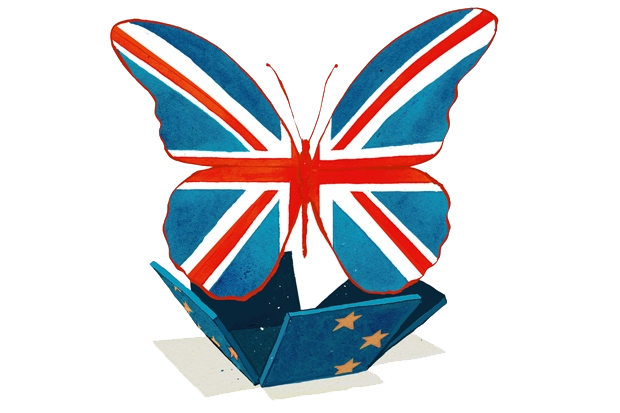
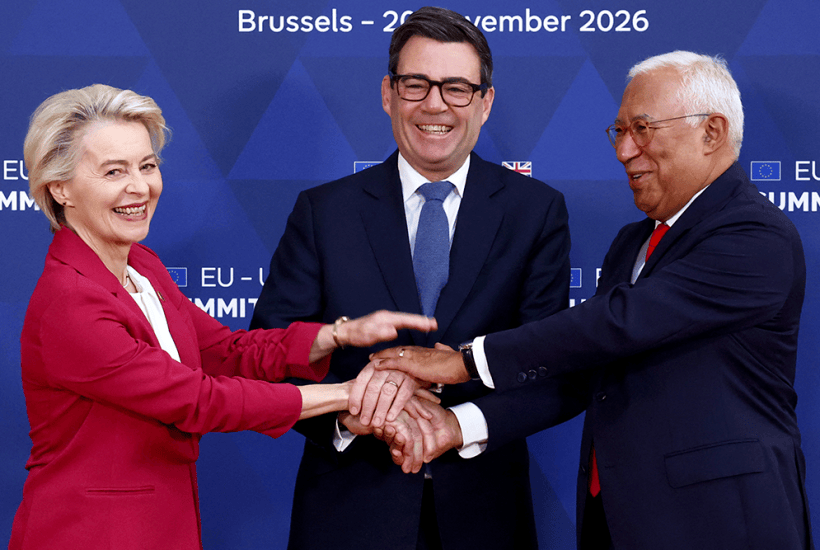
A Withnail and I fan in the Labour party reflected on Andy Burnham’s decision to reopen the Brexit wars this week – a move which has already transformed British politics. ‘It’s like we’ve come on holiday and unleashed chaos by mistake,’ the MP said. ‘And all so we can import the finest wines known to humanity a bit more cheaply.’ What began in Burnham’s speech to the Labour party conference as a gambit to drum up support from progressive voters who had switched to the Greens and the Lib Dems under Keir Starmer has taken on a life of its own – and it looks like the PM has already lost control of what he unleashed.
The gambit has led to six major developments – three of them wearingly familiar to students of the Brexit wars, the other three heralding significant changes in how British politics will play out until the next election.
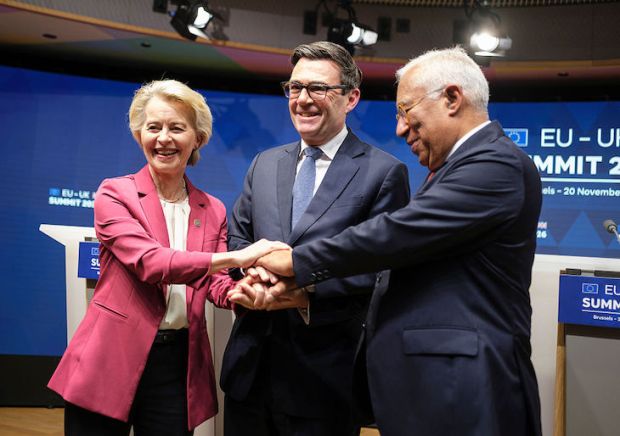
First, the EU played hardball and delivered a last-minute snub to the Prime Minister.Second, the government talked a good game and caved in. Having initially refused to countenance a youth mobility scheme in exchange for effectively joining the single market for food and animal products, Britain then offered 30,000 places for the under-32s, then 80,000 and finally 100,000. ‘They came, they saw, they keeled over,’ says one Brussels-based wit.
Just as the deal seemed done, the member states pulled the plug and said it couldn’t go ahead without a deal to slash the university tuition fees of EU students from about £38,000 per annum to the £9,700 paid by Brits. Even prominent pro-Europeans such as Anand Menon of UK in a Changing Europe and the podcaster Lewis Goodall expressed concern that the big prize of tying Britain in tight to the future of Europe was being sacrificed on the altar of ensuring that Ursula von der Leyen and her colleagues can send their kids to British unis on the cheap.
Burnham then proclaimed a year of ‘informal brainstorming’ with the EU. Yet, as EU officials have made clear to me and to others, there is no appetite on the continent for this. ‘Work out what you want,’ says one Commission insider, ‘then we can talk about the price.’ The PM dismissed warnings from multiple ex-PMs that revisiting Brexit was a mistake, but he would do well to listen to David Cameron and Theresa May about what it’s like to negotiate with Brussels.
A former senior mandarin who played a key role in a previous round of talks and still bears the scars observes: ‘I’m baffled. Clearly the PM is serious about wanting to go back in. It’s a refreshing change to have a PM with a view. But we don’t seem to be learning any of the lessons of the last ten years. How come the system fell for the last-minute-condition trap? It was entirely foreseeable because it’s what they always do. If I was the PM, I’d be furious. How come we are surprised that the EU are being tactical about current interests rather than the strategic future? How come we seem to think again there are all manner of bespoke options? Again, entirely foreseeable nonsense.’
‘We don’t seem to be learning any of the lessons of the last ten years’
Third, Leavers and Remainers responded by retreating into their respective bunkers and playing their greatest hits. Vote Leave regenerated as Stay Out and promptlyreleased a video warning that EU membership would cost £750 million a week and that millions of people would flock to Britain from accession countries in south-eastern Europe. Best for Britain and the European Movement formed Get In and announced a Brejoin march. Leading Remoaners like Mark English, formerly the Commission’s man in London, went around saying that this time the public would get over their false consciousness and respect their version of the facts.
The upshot of all this is that a combination of truculence from Eurocrats and polarisation on the home front is likely to mean that the choice at the next general election is not between the status quo and a closer relationship, but between full-fat Rejoin and full-fat Stay Out. Bismarck’s quote that ‘politics is the art of the possible’ is justly famous. Less well known is the rest of the sentence: ‘the attainable – the art of second best’. Just as it was between 2017 and 2019 – the peak of Brexit madness – no one in this game is prepared to accept their second-best outcome.
Fourth, recent events are a huge boost to Reform UK. Nigel Farage has had a difficult year trying to look like he leads a government in waiting. He has recently given every impression of not enjoying life at all, the saloon bar joker having given way to the angry old man, lashing out whenever he or his colleagues find themselves in the media firing line for their complex financial arrangements. Now, in the words of a colleague this week: ‘Nigel is like a pig in shit.’
More specifically, it is good for Farage himself. At Reform’s conference in September Zia Yusuf, the party’s home affairs spokesman, was openly offering himself for the leadership with a glossy video about his upbringing. Robert Jenrick arguably had a better media operation than the party; Matt Goodwin was quietly telling activists he could beat Jenrick in the next leadership contest; and Suella Braverman was telling non-white Brits they can’t be English, a debate the leader regarded as unhelpful.
Now Farage is back as the sole focus of the party and he’s stolen Jenrick’s media man to boot. His ‘shadow chancellor’ has been left so out of sorts that he denounced Mrs T, even though a few short years ago he gave his own daughter the middle name ‘Thatcher’.
Fifth, this is all bad news for Kemi Badenoch. The Tories’ explicit campaigning goal is to target wealthy voters in the south of England, the kind of people who voted for Blair and Cameron before going Lib Dem, who don’t like the smell of Reform or neo-Marxist tax rises. The party’s campaigning literature says these voters are predominantly Remainers. The only thing Badenoch can say about Brexit that won’t alienate these voters is that people don’t want to relive the last decade.
Sixth, the events of the last week have highlighted the shortcomings of Burnham’s vibes-based approach. Not even his aides are claiming he has a clever blueprint for securing a Rejoin vote. ‘I fail to see how giving the best campaigners of the last 20 years a free run is the answer,’ says a Labour strategist. ‘Political gravity is reflected by the numbers: Brexit failed, voters want something different, the team that defines that positive difference most effectively wins.’ But if Burnham leaves others to define the goals of his government, ‘then it is over before it begins’.
If so, the Prime Minister will probably need to smoke a full Camberwell Carrot to take away the pain.
Got something to add? Join the discussion and comment below.
You might disagree with half of it, but you’ll enjoy reading all of it. Try your first month for free, then just $2 a week for the remainder of your first year.