John Major’s time in government was fraught but, between the Maastricht wrangles, ‘Back to Basics’ and the cones hotline, one fundamental truth survived: prison works.
During Michael Howard’s tenure as home secretary in Major’s cabinet, a 40 per cent increase in the prison population coincided with an 18 per cent fall in crime. Correlation is not causation and it is true that incarceration was one of several measures introduced by Howard, including an expansion of CCTV and a national DNA database. But a 50-year trend of rising crime was reversed. Locking up offenders cuts crime.
Today, a small number of miscreants are responsible for the bulk of crimes: Tory MP Neil O’Brien estimates that around half of all crimes are committed by 10 per cent of offenders, and 4 per cent by 0.2 per cent. It follows, then, that locking up dangerous lawbreakers protects the public.
Confronted by this evidence and logic, though, our government is doing the opposite. Andy Burnham, possessed of a professional politician’s hunger for popularity and not burdened like his predecessor with a legal background, could have taken a more common-sense approach. When challenged about his inherited plans to release prisoners early, he made clear that ‘keeping the public safe will be [his] top priority’. But as Max Jeffery highlights in his article, under Burnham, Britain’s criminal justice system remains in a state of collapse.
Despite almost 80,000 prisoners having been released, the number of free cells has increased by only 1,000 places. Dangerous criminals are being let out without adequate supervision, putting additional pressure on a creaking probation service and overburdened charities. Violent and sexual crimes committed by ex-offenders have reached record levels. Meanwhile, as Lara Brown points out on page 11, the Ministry of Justice is scrapping parts of the system, such as the Unlocked Graduates recruitment scheme, which have reduced prisoner misbehaviour. If this is how Burnham treats his top priority, voters can hardly be confident about his other pledges.
Our prisons crisis mirrors broader fears about public safety. Some commentators point to the long-term decline of violent crime to suggest right-wing concerns about ‘lawless Britain’ are misplaced. But a sense of disorder has been created by persistent, low-level offending. Shoplifting has reached the highest level on record and around 80 per cent of cases result in no charge. Antisocial behaviour, phone theft and fraud are rife. The police appear to have retreated. Last year, 92 per cent of reported burglaries in England and Wales went unsolved.
Every headline about a violent thug being given a light sentence only reinforces the perception that too many within the justice system put criminals’ liberties ahead of public safety. Enduring failures to stop the boats raise fears not only about our inability to police our borders, but what those on the boats will do once here. Unsurprisingly, ministers are reluctant to publish the data around foreign offending.
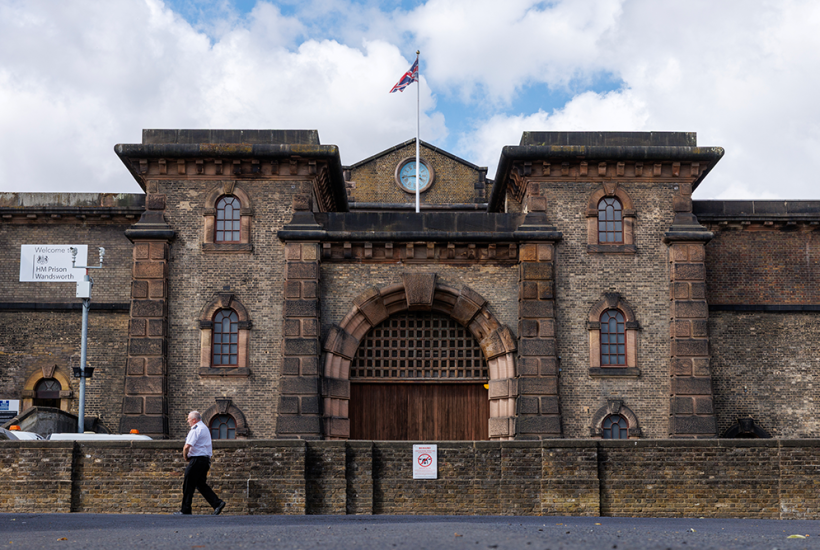
The prisoner-release scheme shows a reluctance to grip the issue: our failure to build enough prisons
Protecting the public is the fundamental responsibility of any government. Yet Shabana Mahmood, the Home Secretary once feted for her tough instincts, has been sidelined, as demonstrated by Monday’s watered-down immigration reforms. Alex Norris, the third Justice Secretary in two years, appears ineffective. The prisoner-release scheme shows a reluctance to grip the fundamental issue: our longstanding failure to build enough prisons. While Burnham opines on slavery and practises his cover drive in the Caribbean, this is yet another national challenge he is ducking.
Labour undoubtedly inherited a difficult situation from the Conservatives but while both parties are under new management, only the Tories have committed to building the prisons we need. Nick Timothy, the shadow justice secretary, has outlined a plan to remove foreign criminals and build 50,000 new prison places. This would represent the largest expansion of the prison estate in modern British history. Timothy’s promise is part of a broader compact: to reaffirm the fundamental covenant between the state and its citizens to ensure that the law-abiding can live unmolested, that victims receive justice and that criminals are punished.
Opposition building pledges are difficult to achieve in government. Hopes of Labour fulfilling Keir Starmer’s promise of backing ‘the builders not the blockers’ have disintegrated: we are hundreds of thousands of homes short of the party’s 1.5 million target, hampered by the same planning constraints, ministerial inertia and local opposition that have frustrated successive governments. If voters don’t want houses in their area, they are unlikely to prefer a prison. Moreover, increasing prison capacity will not fix Britain’s criminal justice system. Alone, it will not reverse inadequate detection rates, boost shattered probation services or restore public confidence. But to shrug and do nothing would be to surrender to an apathetic lethargy that has become our national norm.
As Major and Howard proved, lawlessness is not inevitable. If Burnham insists on burdening taxpayers further, he could at least use their money to keep them safe.
Got something to add? Join the discussion and comment below.
You might disagree with half of it, but you’ll enjoy reading all of it. Try your first month for free, then just $2 a week for the remainder of your first year.