EU negotiators were never going to go easy on Andy Burnham. Last week, the PM was stung by the EU for the first time. While he was singing the bloc’s praises in Brussels, assuring ministers back home that he’d managed what Cameron, May, Johnson and Starmer never had, reports emerged that there was one issue that the EU had no plans to concede so easily: tuition fees.
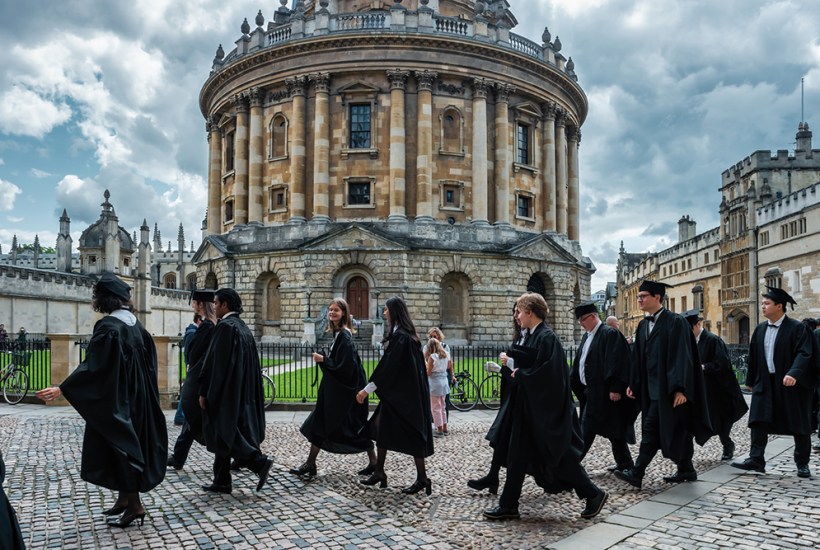
The loss of cheap world-class tuition for their children has always been a sore point for EU bureaucrats. Britain has four of the top ten universities in the world – Imperial, Oxford, Cambridge and UCL. The EU’s best university, the Technical University of Munich, is ranked 25th.
Where else could have produced Ursula von der Leyen but the London School of Economics? And what better destination for her daughter than Oxford? We might be outside the bloc but it’s our institutions that power Brussels.
Perhaps this is the soft power British policy-makers are desperate for. So, what could be the harm in giving European students a discount on fees? Universities survived back in 2020 when they were getting only £9,250 from EU students. Does Durham really need the £30,000 a year it charges foreign students to study English literature?
The short answer is yes. The university model has fundamentally changed in the past five years, and EU students paying high prices might be one of the only things keeping it alive.
Ministers are still traumatised by the increase in university tuition fees from £3,375 to £9,000 a year in 2012. Nobody has forgotten how the perceived betrayal of students left the Lib Dems politically moribund for the best part of a decade. Since then, home fees have risen by just £790 in the past 14 years.
The cost of educating a student has not stayed so still. By 2023 the average annual cost of teaching one undergraduate was £12,317. That number is no doubt higher now, following increases to employer national insurance, rising energy costs and the minimum wage. And of course, these costs don’t fall equally. The best universities, with high numbers of contact hours who refuse to take a ‘pile ’em high’ approach to student numbers, invariably spend even more than this. Cambridge estimates that each undergraduate costs £30,200 per year.
There is currently a £2 billion annual deficit on publicly funded teaching for domestic students across UK higher education. EU students offer one of the best solutions. They’re well qualified, likely to have strong English competency and are more likely than their British counterparts to obtain first-class degrees – suggesting they drag up standards rather than requiring universities to make academic compromises to bring in money. Without them, universities face a much grimmer trade-off. Reduce contact hours and sell off assets –or rely much more heavily on non-EU international students.
Without wishing to generalise, the unfortunate truth of non-EU international students is that, as a cohort, they add far less. The three most popular sources of non-EU students are India, China and Pakistan. This might be because many of these students attend university in the UK in order to capitalise on the graduate visa, giving them 18 months in the UK after graduation and a strong route to permanent residency.
Non-EU students are outperformed by both domestic and EU students. They are often relied on by our least impressive institutions, with widespread reports that basic standards for English fluency fall far below anything you’d expect from a world leading institution.
Vice-chancellors know how much of a disaster conceding to the EU would be. Professor Dame Sally Mapstone of St Andrews has warned that if Von der Leyen gets her wish, it would find itself £12 million a year poorer. That’s before you consider the ethics: why should students from Germany and France pay a third of what we charge Australians and New Zealanders?
Andy Burnham knows all this. But he also knows that saying no to the EU will derail his attempts at ‘realignment’. The great pity is that he seems to take far less pride in Britain’s universities than the European Commission President does.
Got something to add? Join the discussion and comment below.
You might disagree with half of it, but you’ll enjoy reading all of it. Try your first month for free, then just $2 a week for the remainder of your first year.