Bad education
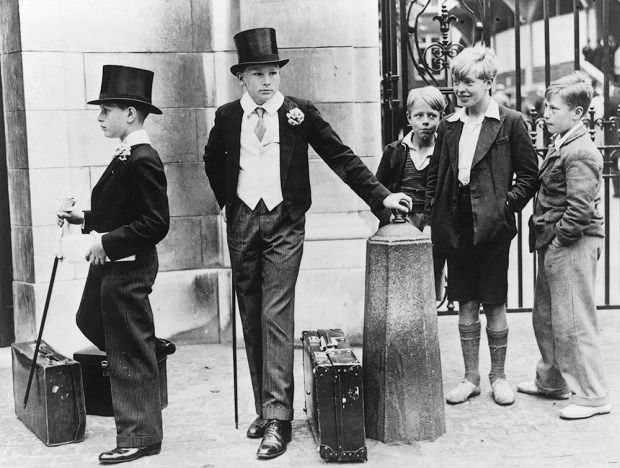
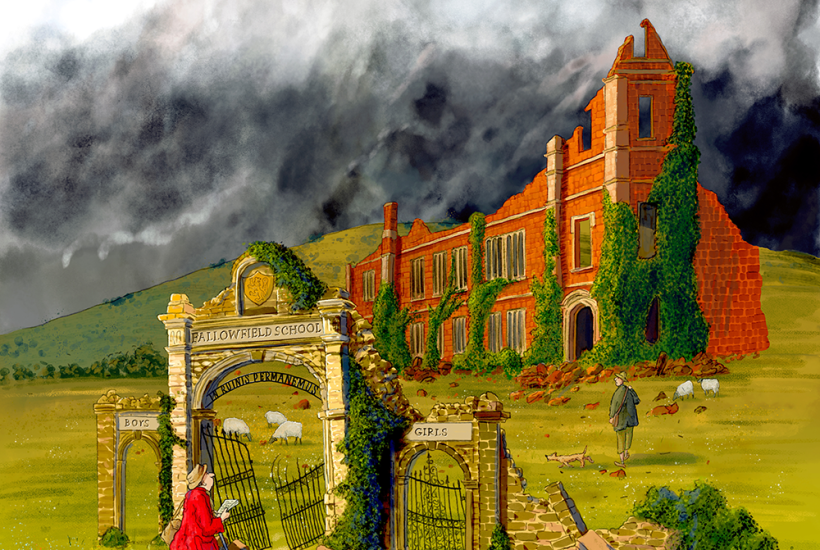
Sir: Lara Brown (‘Class warfare’, 1 August) lays bare the baleful consequences – intended and unintended – of Labour’s vandalistic attack on private schools. It borders on the insane for a government to seek to destroy a sector which is a world leader. An administration genuinely committed to economic growth would champion industries where the country retains comparative advantage. Consumed by an outmoded class ideology, and seemingly unconcerned about the effects of its policies on the educational prospects for many young people, Labour seems determined to do the opposite.
Jeff Green
Bath
Punishing pupils
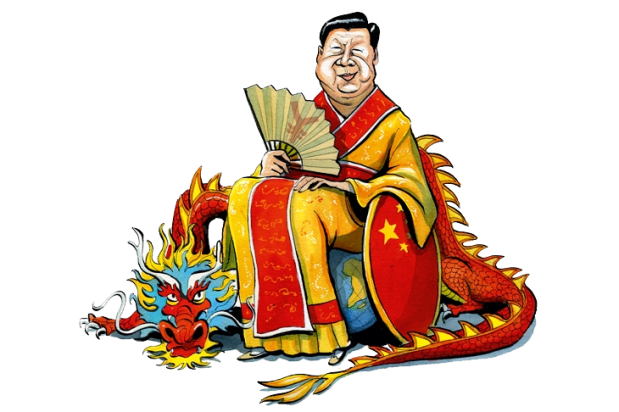
Sir: Labour’s preference for waging class war against independent schools contrasts with my experience of communist Chinese attitudes more than 20 years ago.
In 1999, as national director of the Independent Schools Information Service, I led a UK delegation to the first-ever international conference of private schools in Beijing. In the then ‘socialist market economy’, there were 50,000 private schools in the People’s Republic educating more than 11 million pupils. Among several leading Chinese communists, the director of Beijing’s municipal education committee told us: ‘Private education speeds up education reform. It improves educational quality. It breaks through the limitations of public education. Private education needs to be expanded.’
At that time, the Chinese vice-minister of education was a former headmaster of a private school in Beijing, and we had a Labour government which had adopted a less hostile attitude towards independent schools. But now, from a position of prejudice, ignorance and ‘ideological hindrance’, Labour is again seeing independent education as something to be punished, instead of being harnessed in the national interest, and incapable of echoing a communist Chinese education leader of 27 years ago.
David Woodhead
Leatherhead, Surrey
A feel-good story
Sir: ‘Good books and interesting people continuously flow through our shop’ (Bookseller’s Notebook, 1 August). I concur: since 1979 the Rutland Bookshop has sold an eclectic range of second-hand and antiquarian books to an equally eclectic collection of people. I will go one step further: my customers are a wonderful barometer of the issues of the day and the inevitabilities of life.
The widow still stricken with grief wishing to dispose of her late husband’s library – a poignant introduction to a person you will never meet; the young cadet buying niche Welsh military ephemera discussing preparedness of our armed forces; the tourists wanting to know about Rutland in the context of local government reorganisation. Every day brings another conversation, another story, another perspective.
The bookshop is, in its own quiet way, a meeting place where books are merely the starting point.
Lucy Baines
The Rutland Bookshop
Uppingham, Rutland
HMS Humiliation
Sir: Andrew Lambert’s article (‘All at Sea’, 1 August) made depressing reading. I retired from the Royal Navy in 1996 and to be honest did not pay much attention to the way the navy went after that. To discover the current state of the Royal Navy (thanks mostly to a couple of Mark Felton videos on YouTube) was sobering, shocking and deeply shaming. I rather fear the navy is almost beyond redemption if things continue to go this way. Either we keep our global commitments and provide the ships and manpower to enable us to do so – which will take several years and a very large amount of money, unless the procurement process is radically reformed – or we accept that we are finished as a maritime power. Humiliating doesn’t even begin to describe it.
Jonathan Marshall (Lt Cdr RN retd)
Lydeard St Lawrence, Somerset
Deathly silence
Sir: I was astonished that, at the death café Tali Fraser recently visited (‘Live and let die’, 1 August), participants were discouraged from discussing philosophical issues surrounding death, and that a man in his twenties, paralysed by anxiety about death, was swiftly silenced. Surely the one subject that ought to be discussed at a death café is death?
The attendees could not have done better than to find their local priest. Priests are trained to help people face death and dying and, at their ordination, promise ‘to minister to the sick and prepare the dying for their death’. In my experience, they fulfil that calling with compassion and sensitivity, whether those they serve have faith or not. Every person has a parish priest whose ministry is available without charge: someone to listen to their fears while they are living and to sit with them while they are dying. That seems a better answer than paying a death doula £50 an hour to hold your hand while remaining silent about what lies beyond death.
The Revd Richard Coombs
Rector of Cheltenham
Spotted on Spotify
Sir: In his excellent article ‘Haydn Seek’ (Arts, 18 July) Damian Thompson says that Norichika limori’s Haydn symphonies are only ‘sporadically available to westerners at monstrous expense’. I found them on the much-maligned Spotify, on which I routinely discover new recordings.
Allan Buckley
Greystoke, Cumbria
Puff piece
Sir: Pipes do not suit everyone (Letters, 1 August). I flirted with one in my late teens, but in my hand it looked like an adolescent affectation. Eventually I settled on the inevitable cigarette, and smoked enthusiastically for 15 years. This was admittedly the mainstream option, but sometimes things are popular for a reason.
Neil Sewell-Rutter
Oxford
All white on the night
Sir: I enjoyed Patrick Kidd’s article on sporting curses (‘Spellbound’, 1 August). It prompted me to write about one of sport’s great charms: omens. When Liverpool won the Champions League in 2005, we were arguably the weakest of the teams left in the latter stages. Yet as fans, we were buoyed by a remarkable set of omens. That year, Prince Charles was getting married, Ken and Deirdre were tying the knot on Coronation Street, Wales had won rugby’s Grand Slam and the Pope passed away. Every one of these things had previously happened in years when Liverpool had won the European Cup.
To add to the intrigue, Liverpool faced a team wearing all white in the final. Every one of our previous European Cup triumphs had come against opponents in all-white strips. Coincidence, or meant to be?
Gary Owens
Liverpool
Got something to add? Join the discussion and comment below.
You might disagree with half of it, but you’ll enjoy reading all of it. Try your first month for free, then just $2 a week for the remainder of your first year.