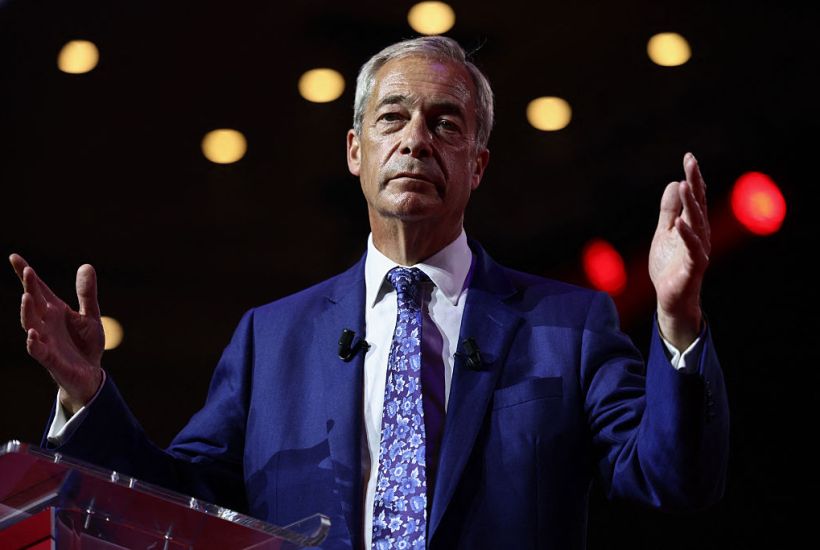
Mere months ago, the suggestion that Nigel Farage could step down as the leader of Reform would have felt absurd. The party was leading in the polls, had won the local elections, and Farage had an iron grip on the leadership. But now media scrutiny is growing and rumours are awash that he has at least considered throwing in the towel. The Clacton by-election circus has not gone down well.
The idea of a post-Farage Reform might not be so far-fetched. But who would replace him? And what would his departure from frontline politics mean for the party?
Speaking to these voters in northern working-class towns, ‘Rupert’ is raised in a way that is only similar to Nigel (Farage) or Boris (Johnson)
New Public First polling suggests they would be far from enamoured by the options. Ask Reform voters who they would like to see as leader if Farage goes, and ‘don’t know’ leads the pack on 37 per cent. Bleakly for any have-a-go leadership hopefuls, Zia Yusuf is second with a whopping 14 per cent.
Part of the problem for any challenger is that, compared to other party leaders, Farage enjoys massive support among his party’s voters. We find his net favourability at a huge 68 per cent among Reform voters. Richard Tice is the only of the other party big names who is above 40 per cent. Robert Jenrick is on just 21 per cent.
We hear the same when we speak to Reform-tempted voters in our focus groups. Mention any other prominent party figure and you’ll likely be met with a shrug or at best a mutter about having maybe seen them say something, somewhere at some point.
And when you consider the wider public, beyond Farage and Suella Braverman, the name recognition of senior Reform politicians is very poor. As few as 40 per cent know anything at all about any other figure.
This raises the serious question: in a scenario where Farage steps down, could current Reform voters be tempted elsewhere? While some in Westminster talk up the revival of Kemi Badenoch – and it is certainly true that the Tories are not dead as predicted – we’ve seen little evidence that voters will flock back to the Conservatives. Andy Burnham may tempt a few to Labour, but that remains to be seen.
Which, beyond the very large number who would surely simply stay at home and give up on the whole thing, would leave the door open for an exodus to Rupert Lowe’s Restore.
Some 34 per cent of Reform voters have a favourable view of Lowe. And unlike any of the Reform leadership potentials, he, like Farage, enjoys a personal affinity with a hardcore of right-leaning voters in this country. Particularly among working-class older voters who are the most angry about immigration.
Speaking to these voters in northern working-class towns, ‘Rupert’ is raised in a way that is only similar to Nigel (Farage) or Boris (Johnson). The same cannot be said of Robert (Jenrick), Zia (Yusuf) and even Lee (Anderson), although the latter does enjoy high support in patches.
Reform voters share a distrust of the mainstream parties who they feel have failed them in recent years. It is this, and a view that Farage saw this all coming, that binds them together. Not some deeply felt fondness for the Reform brand.
As one woman we spoke to in a former industrial town recently commented, many of these voters see little between the two parties:
‘Reform and Restore, I think the policies are very similar, aren’t they? I don’t know what to make of it all. A lot of it does sound good…they’re for the British people and trying to stop immigration, which I think’s a big thing at the moment.’’
For voters like her, it will likely be the leader, not the party, that will ultimately sway their vote.
When Farage leaves – whether in September or further down the line – his successors will need to prevent an exodus from the party before they do anything else. Brand Rupert will be waiting to suck up whole swathes of their traditional voters if they’re not very, very careful.