Although it may be in bad taste to have a favourite story about the General Strike of May 1926, one served up by David Torrance in his superb The Edge of Revolution is probably unbeatable. He quotes an anecdote told by Walter Citrine, the 39-year-old acting secretary of the TUC, who recalled a man ‘with rather sharp, hawk-like features’ turning up at the Congress’s London headquarters in Eccleston Square, near Victoria Station, and offering, in return for £1,000, to solve the unions’ problems. He announced:
I want 100 trusted men and if you cannot find them, I can. I will arm them, take them along to Downing Street, shoot the members of the cabinet and hold Princess Mary’s children as hostages.
Oddly, the trades unionists declined the offer, with one of their leading panjandrums, Arthur Pugh, rebuffing the maniac with this excellent statement: ‘But we don’t do these things in the British trade union movement.’ Once the man had gone, Pugh and Citrine agreed they would not tell the police, presumably since they thought him a lunatic. He was, in fact, according to Torrance, ‘a fraudster, drug addict and former felon’, who a few weeks later was arrested for obtaining money under false pretences. Perhaps somebody else had given him the £1,000.
These two books about the same highly significant event, published for the centenary this May, tell the story in rather different ways, one more satisfactorily than the other. The winner is Torrance, who in 2024 published a well-researched, highly readable account of the first Labour government. The Edge of Revolution is its codicil, with many of the same dramatis personae, its story told with equal verve and authority.
That is not to say that Jonathan Schneer’s Nine Days in May is a poor relation, but its earnestness drips off every page. The author is an American academic, two words that indicate there may be turgidity ahead. He has done his research; he has been into every imaginable archive during various visiting fellowships in this country, and has faithfully reproduced much of what he found. But he gets overwhelmed by an avalanche of detail and of context.
He gives us a vast backstory to the strike – which is almost as if one were to read a book about the Great War that began by discussing the Congress of Vienna. One senses, however, that the context is as much for his benefit as ours. Despite being published by Oxford University Press, the book has not been edited well, both in allowing such a slow-paced narrative and also in retaining the occasional Americanism. Someone at OUP ought to know that the participle ‘gotten’ went to America with the Pilgrim Fathers and stayed there.
But there are two other overriding problems with Schneer’s approach. First, whereas Torrance often sees the foolishness of the situation, to Schneer the thing is a grand tragedy. He has fallen almost completely for the romantic tosh about the glories of the spirit of the industrial working class – the sort that Harold Macmillan used to spout when he wanted to thumb his nose at Margaret Thatcher – and made little effort to imagine that there might have been two sides to the story.
Torrance quotes Lord Birkenhead’s magnificent remark: ‘It would be possible to say without exaggeration of the miners’ leaders that they were the stupidest men in England if we had not had frequent occasion to meet the owners.’ But the miners, whose fight with their masters provoked the sympathy strike that caused the mass walk-out on 4 May, were fighting against economic reality. Demand for coal had nosedived in the preceding years and many pits were uneconomic. Nobody would dispute that there were often appalling working conditions; but many miners, especially during the slump after 1931, went elsewhere in England to look for different work. This seems not to have been considered a possibility in 1926, when, if the owners were not prepared to pay miners uneconomic wages, they wanted the government to nationalise the pits and provide a subsidy instead.
The second big problem with Schneer’s book is that you sense he does not have an intimate understanding of the history of the period or of its leading players. He gives this away when writing about ‘Alfred Duff Cooper’ and ‘Howard Kingsley Wood’, as Duff Cooper and Kingsley Wood were not known. By contrast, Torrance has a superb conception both of the political figures, such as Stanley Baldwin, Ramsay MacDonald and the warmongering Winston Churchill (given the British Gazette to run to keep him out of trouble), and of the union men, notably A.J. Cook, the ur-Arthur Scargill. It was Cook’s fanaticism that largely caused the strike and kept the miners out until the autumn of 1926, when they were effectively starved back to work. And there is Ernest Bevin, who did more than most to make sense prevail and end the strike. The divisions in the movement between pragmatists such as Bevin, Citrine and the railwaymen’s Jimmy Thomas, and the hardliners in the Miners’ Federation of Great Britain, meant that the strike could never succeed. Indeed, that it lasted as long as nine days was surprising.
Society ladies managed the food depot in Hyde Park, while peers acted as porters at Paddington
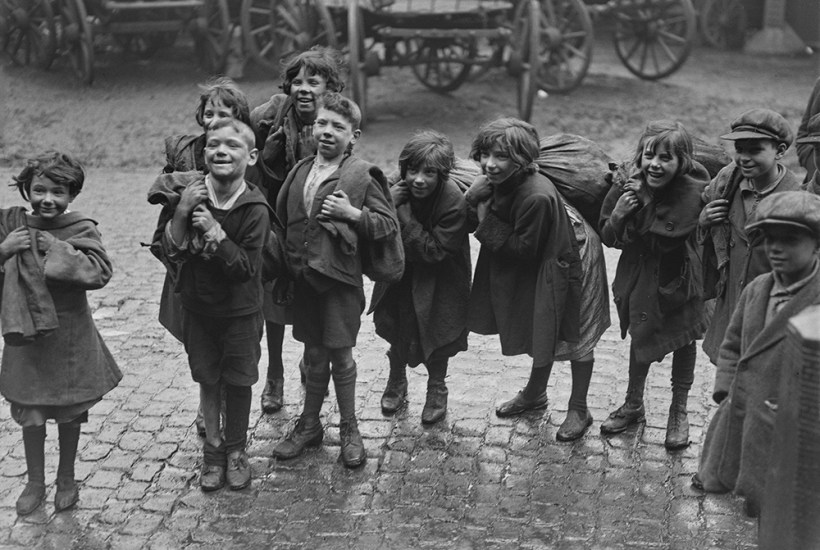
Torrance also supplies superb cameos of George V and John Reith (who read out the announcement of the end of the strike himself), and drops in commentaries from those arch-snobs Beatrice Webb and Virginia Woolf. There is familiar stuff about Cambridge undergraduates unloading ships at Dover and riding on the footplate of the odd train; of society ladies managing the food and milk depot in Hyde Park; of earls and viscounts doing the porterage at Paddington; and strikers and police playing football and cricket matches against each other.
Torrance is also better than Schneer at conveying the idea that even the union men thought the whole exercise was doomed. He instinctively understands how hard it was going to be to get the public on the side of the working-class movement, even those members who were working class themselves. But then – and this must be fundamental to a comparison of the two books – Torrance has a deep understanding of the British temper, whereas one never feels Schneer does.
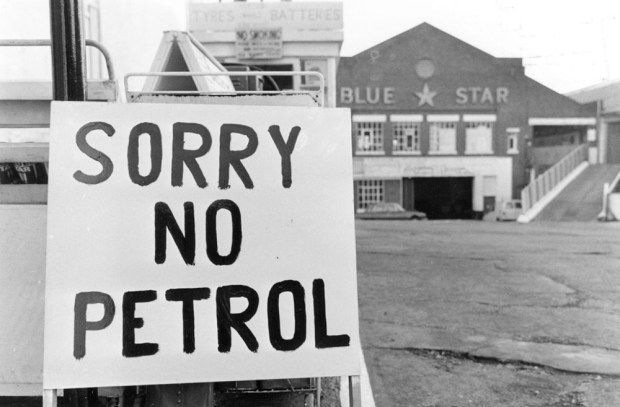
Schneer focuses much more than Torrance on the threat of communism – or, as they would have called it at the time, Bolshevism – and its underpinning of attitudes to the strike. Cook was undoubtedly a revolutionary; but hardly anyone else in the Labour movement was, whether politicians or union men. MacDonald, as the Labour leader, wanted nothing to do with it. There was unquestionably a threat to democratic parliamentary rule from the strike. The country was being held to ransom, with fuel and food supplies in peril and getting to work problematic. Many middle- and upper-middle-class volunteer strikebreakers feared for their privileges if Bolshevism broke out in Britain. But, as with the threatened Chartist uprising of 1848, this was never going to happen. Most Britons were perfectly content with their lot, and therefore could not be mobilised in the name of revolution. Baldwin, in refusing to negotiate with the unions and daring them to strike, asked a question that Ted Heath would repeat almost half a century later: who governs? In Baldwin’s case, the British public supported the idea that the British government did; and so he, and the settled order, survived.
Got something to add? Join the discussion and comment below.
You might disagree with half of it, but you’ll enjoy reading all of it. Try your first month for free, then just $2 a week for the remainder of your first year.