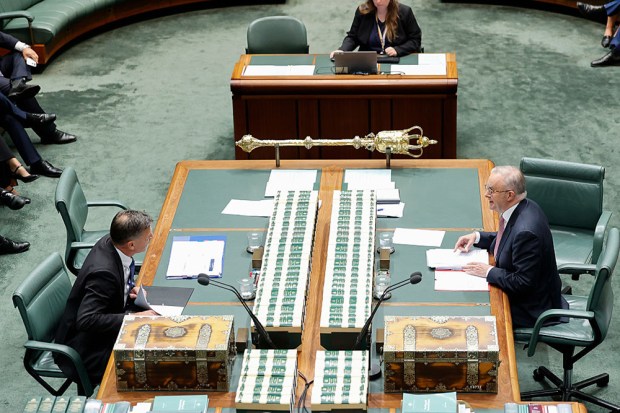
The Prime Minister recently characterised One Nation as ‘…some politicians, some of which have risen up recently in the polling, who essentially are appealing to, “Vote for us and the world will stop”, or worse still, we’ll go back to the Australia of the 1950s or 60s, with the same population that look like that’. This is the ghost of Paul Keating, whose 1990s rhetoric weaponised the 1950s to cast his opponents as relics of a stagnant, ‘un-Australian’ past.
This is a distinctly middle-class view of Australia. A shorthand for a racist era where everyone was white, boring, and apparently unpatriotic. If I were to be generous, I would describe this as a significant gap in the civilisational memory of the political class. A gap I partially share due to my age.
Generationally I am an elder Gen X kid born at the end of the 1960s, making me older than most of Australia. Straight off the bat most of us have no experience of the era these ALP politicians regularly invoke. Nor do most of us recall the white picket fences Paul Keating regularly railed against. Asbestos sheets maybe. To me this feels like an urban middle-class worldview. Something he must have picked up from American movies.
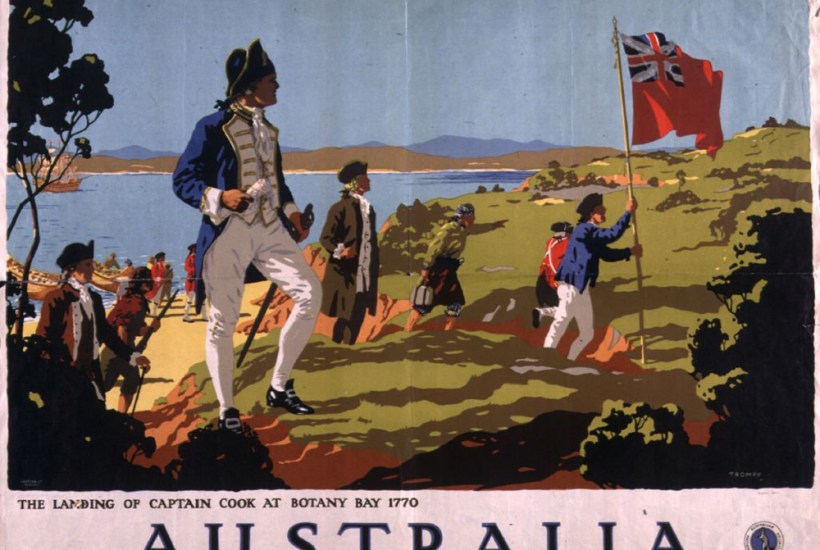
These continual slights and asides by ALP politicians are a deep-cutting slur on our history and the legacy of those of Australians who arrived before the first world war, a group I often refer to as The First Tribe. The ragtag assortment of Aboriginal people, convicts, jailers and settlers carved the nation out of our ancient, vast, and sparsely populated land. This organic identity, however, has come to clash with the white left’s preference for the imported ‘First Nations’ banner, a Canadian linguistic graft that seeks to segregate our shared history into neat, ideological silos. My ancestors in particular arrived here in chains as exiles. Yet, in the ALP’s retelling of history, they were akin to invading hooded Klansmen.
For the record, census data reveals that 46 to 57 per cent of us share First Tribe ancestry. Australia is a nation with immigrants, not a nation of immigrants. Immigrants come to a country that has already been built, hopefully to help advance it. Australia was built by a very particular population: convicts who were often little better than chattel slaves, their jailers, hardy pioneers, and an indigenous population with many of the oldest continuous cultures on earth. They carved a nation out of frontier bushland and the vast outback with little more than determination. The immigrants were the refugees we later invited to join us and those that followed.
Far from the staid fantasy of ALP memory, the 1950s was a time of extraordinary communal stoicism, hospitality and growth. The war in Europe against the German Nazis and Italian Fascists was over. The Imperial Japanese had been stopped in the most definite way that any war had ended. Yet even though Australia still had a scarcity mindset, with rations reaching into the 1950s, we embarked on a massive effort to integrate the refugees from Europe’s wars, including many of whom were our sworn enemies of not a decade earlier. Coincidently, this was also the period of history when my quite brown ancestors arrived from the subcontinent. Also exiles as it turns out.
While the ALP likes to use the ‘Populate or Perish’ mantra and portray the era as purely utilitarian, this is a convenient sleight of hand at best. As with the often mischaracterised White Australia policy, keenly supported by Henry Lawson, the very poet that South Australian Premier Peter Malinauskas recently quoted, our governments routinely impute the worst possible motives to our ancestors.
Since Paul Keating’s Redfern speech, it has become commonplace for the ALP to take the crimes and choices of Canberra, decisions we didn’t vote for and were often unaware of, and attribute them to all of us, despite being occupied with survival, often in squalor, and fighting in ten major wars since federation. They do so while militantly oblivious to the truth and the historical realities of the world outside the Pacific southeast.
Europe at the time was undergoing one of the largest refugee crises in modern history. Millions were unable or unwilling to return to homes that were destroyed, or neighbours that may have betrayed them. Australia actively recruited migrants from displaced persons camps in Europe. Early intakes included Baltic refugees (Estonia, Latvia, Lithuania), Poles, Ukrainians and Yugoslavs, later expanding to Italy, Greece and other southern Europeans.
Far from using them as ‘factory fodder’, as Paul Keating claimed in one of his many barbs, we, the working class, worked alongside them of course. We also intermarried, formed intergenerational relationships, and fully integrated them into our societies. It wasn’t the last time we would integrate large populations into our societies. We did so several times over the decades. At least until the Hawke and Keating administrations decided it was time to put a stop to all that.
My intention isn’t to idolise the era but to breathe life into it. It was a time of increasing confidence. Factories grew and operated; Australia began producing its own Holden cars on 29 November 1948, right up to 2017, when local production became one of the final victims of the Hawke/Keating deindustrialisation fad. Houses were being built, communities were forming, and former enemies were learning to live as neighbours.
What’s more, Australia had no monoculture of the kind they regularly rail against. The sanitised, middle-class Melbourne suburbia of The Sullivans is a very urban, very south-east view of the world. My family history is filled with stories of our Serbian and Croat mates working, fighting and surviving across the early Pilbara and Western Australia. Australians have never been all the same. Sometimes it seems our middle-class leaders simply don’t know us at all.
This was no paradise, of course. There were plenty of issues, friction and hardship, as there always have been. As Virginia Evans writes in The Correspondent (longlisted for this year’s Women’s Prize for Fiction and winner of the PEN/Hemingway Award): ‘with age I have learned my feelings and my experience are, sadly, not unique. Terrible things happen. We make choices. Time cannot be rewound’.
When I was younger, I was no victim in the slightest, thanks to self-defence lessons from my dad. Moreover, as someone from the north-west of the country I am far more interested in our own regional history rather than that of a Pacific south-east I have barely even seen. But, as someone who has felt the sting of racism in my life and knows the smug, haughty tone of a bully all too well, these remarks land with a familiar bite.
Even in the 1950s, Prime Minister, we were taking national steps to make sure that Australia wasn’t ‘the same population that look like that’, and we did it willingly. Without the level of contempt that your words regularly carry. While I don’t expect slavish devotion to a past that you may not carry family stories of, as Australians all, the least we can expect is a little more respect for the generations who built this country. Especially from those this system allows to lead us.
Got something to add? Join the discussion and comment below.
You might disagree with half of it, but you’ll enjoy reading all of it. Try your first month for free, then just $2 a week for the remainder of your first year.