Welcome to the new tax year, with its overflowing hamper of half-baked, growth-eating, enterprise-crushing Labour measures. And if you happen to be one of the 4.4 million self-employed who scrape an independent living despite rising costs and red tape, welcome to what must surely be one of Whitehall’s longest-running but least funny sitcoms, Making Tax Digital (MTD).
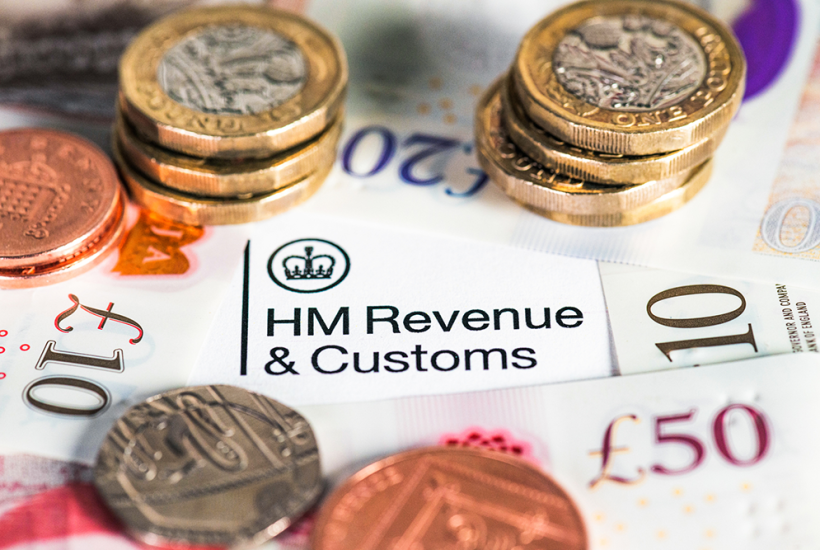
If your income from self-employment (or rents as a landlord) exceeds £50,000 a year, you must henceforth submit quarterly digital updates to HMRC; next year the threshold will drop to £20,000. You’ll have less time to pursue your trade but your costs will rise, because you’ll need new software and more professional advice. Proponents claim the upside is that MTD makes tax reporting more accurate, which means HMRC collects more revenue. Critics say it will simply throw more bureaucratic grit into the cogs of the small-business economy, possibly even reducing the overall tax take. And given the history, I doubt anyone even within HMRC believes it will come into full operation without a concatenation of cock-ups.
First unveiled by George Osborne as chancellor in 2015, MTD was due to be in place for income tax, VAT and corporation tax by 2020. Digital VAT reporting for small traders finally hit us in 2022 – I can attest to what a pain it is – while MTD for income tax self-assessment was repeatedly delayed. The budget for the whole exercise rose fivefold, while the National Audit Office found HMRC had hugely underestimated compliance costs for taxpayers.
At every step, officials failed to grasp the exigencies of their own project. Quizzed by MPs, they blamed ‘events’ and the challenge of migrating data from ‘legacy systems’ to new platforms. So who delivered the required tech solutions? Could it perhaps be Fujitsu, the deeply embedded Whitehall supplier behind the Post Office’s notorious Horizon IT system?
Up to last month, Fujitsu had paid zero towards the £1.5 billion cost of redress for victims of that scandal. But guess what, in June last year HMRC awarded Fujitsu a £61 million contract for ‘hosting provision for the computerised environment for self-assessment of income tax’. Due to ‘complex functionality’, however, no alternative bids were sought from other providers.
As I’ve written before, it makes sense to digitise tax, especially if it leads to shrinkage in HMRC’s 66,000 workforce. But MTD has been a decade-long farce, a model of how not to deliver public-service change while passing the buck and the stress to the hard-pressed citizen. The omens are not good.
Apple at 50
An early investor in Apple, who visited its founders Steve Jobs and Steve Wozniak in the Californian garage that was their venture’s first home, described them to a colleague as ‘renegades from the human race’. Wisely, he backed them anyway. Apple’s 50th birthday fell last week and as a devotee for 35 of those years – though still no techie – I remain in awe of the elegance, power and intuitive human interface of their devices. No wonder more than two billion of us use them and iPhones continue selling at the rate of 600,000 per day.
The downside is the panic that grips me when I’m parted from my MacBook for half a day while it’s in the repair shop, its one fault being a propensity for the screen to fail. But that’s the way we live now and younger generations will never know how disconnected and immobile we were before Apple set design standards (and Microsoft wrote software) for a wider digital industry which, in all its forms and for better or worse, has taken over the world. Those renegades made their mark on civilisation.
Macron’s war
Easter in Dordogne sunshine feels ominously quiet, not least because roads are empty for fear of local petrol shortages. But on a broader front, France seems to be having a considerably better crisis than we are. President Emmanuel Macron immediately pledged to send ten warships to the Middle East when the Royal Navy could find only one destroyer, which sailed a fortnight late. Yet Macron has also been far more eloquent than Sir Keir Starmer in his ripostes to President Donald Trump’s demented ramblings and jibes. Perhaps in oblique salute to that stance, the first western ship allowed through the blocked Strait of Hormuz was the French-owned container ship Kribi.
And while British talking heads endlessly argue the pros and cons of North Sea oil extraction that would deliver no short-term comfort whatsoever, the French company TotalEnergies muscled into the oil market in early March to buy up a reported 77 out of 82 tanker cargoes available from Gulf sources but not needing to pass through the Strait. This notched up a notional $1 billion profit as the crude price subsequently rose.
The OECD forecasts that the UK economy will be the worst-hit by the conflict among industrialised nations, suffering a 0.5 per cent fall in growth compared with 0.2 per cent for better-insulated France, Germany and Italy. Macron may not be much liked by his own fellow countrymen these days, but he has lessons to teach Downing Street.
Top job-swap
Contemplating the declared ambition of our Prime Minister and Chancellor to rebuild closer economic ties with the EU, I was struck by a scoop in a usually reliable daily bulletin from the City currency trader SGM-FX. It revealed that Rachel Reeves is about to be seconded for a minimum of three years to the European Central Bank, under a high-level job-swap scheme that would see Isabel Schnabel, the ECB’s formidable director responsible for market operations and top anti-inflation hawk, take command of HM Treasury.
‘I’ll vote for that,’ I said out loud before I noticed the date of the bulletin. April fooled as I was, my spirits momentarily lifted.
Got something to add? Join the discussion and comment below.
You might disagree with half of it, but you’ll enjoy reading all of it. Try your first month for free, then just $2 a week for the remainder of your first year.