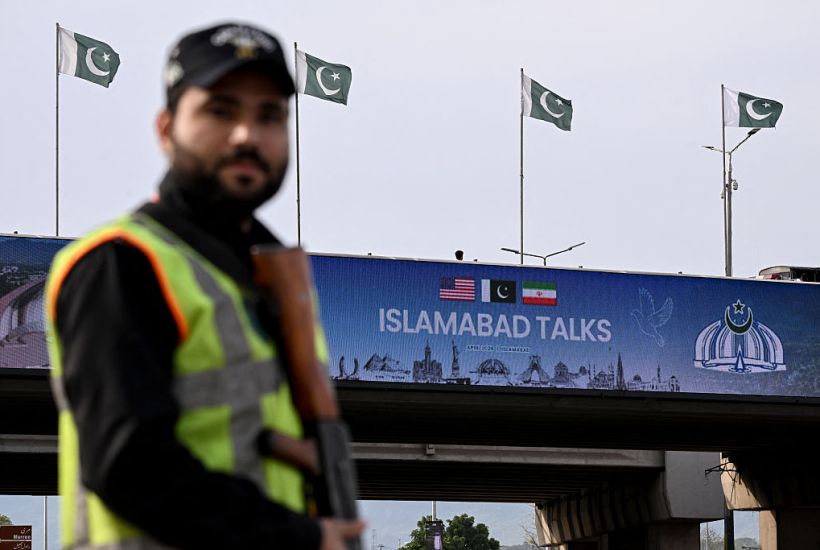
When the Iran war kicked off in late February, if you’d been asked to place a bet on which country would have the Herculean task of mediating between the combatants, Pakistan would have been a long shot. But through a combination of the scorched earth military tactics of the Islamic Republic, happenstance, and the current Pakistani leadership’s ‘economy first’ foreign policy, Pakistan emerged as the crucial broker for the recent ceasefire and is hosting negotiations between the two countries this weekend.
Pakistan leveraged its ties with Iran and its rekindled relationship with the United States to manoeuvre itself into the role as the only country acceptable to all the key players
It has the Iranian regime to thank for narrowing the field of candidates for the role. Iran’s wild lashing out at all the other Gulf states with ballistic missiles and Shahed drones ended up striking the traditional mediators in the region, namely Qatar and Oman. Both Gulf states have had a long-standing policy of Swiss-style ‘strategic neutrality’, acting as go-betweens in many of the region’s most intractable conflicts and trying to quell simmering diplomatic tensions before they escalated.
Each had managed to establish cordial relations with Iran going back to the early 1970s under the Shah and which continued after the 1979 revolution. Many assumed it would be one of them who would act as the intermediary between a bellicose Islamic Republic and the US in this latest conflict.
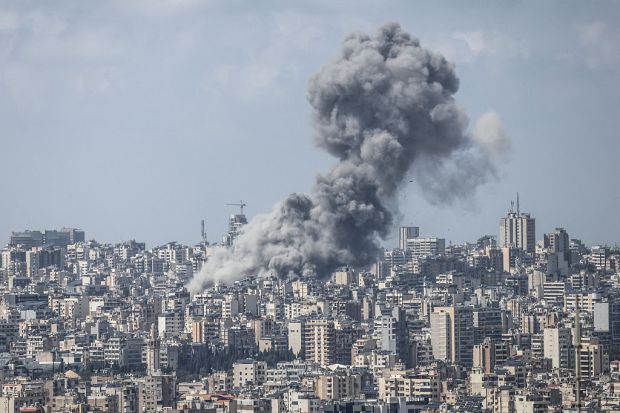
But Iran’s bombing of key targets in Qatar such as Al Udeid airbase outside Doha, along with Ras Laffan Industrial City and Hamad International Airport, and its bombardment of Omani ports at Duqm and Salalah, has drawn both states into the conflict and removed their ability to act as impartial third parties. In late March, Qatar ruled itself out of any involvement in mediating the end of the Iran war, instead declaring its focus was now on ‘protecting our country from ongoing Iranian attacks’.
With the two experienced Iran whisperers out of the running for the time being and other potential mediators like Turkey, Egypt and China lacking the trust of both sides, Pakistan leveraged its ties with Iran and its rekindled relationship with the United States to manoeuvre itself into the role as the only country acceptable to all the key players.
Iran was the first country to recognise Pakistan in 1947, and Pakistan has one of the largest Shia populations outside Iran, with historically strong Persian cultural influence. Both countries share a vast, 565-mile border and have maintained an often-rocky strategic alliance to counter the cross-border Baloch insurgency by separatist militants, with joint military operations and intelligence sharing. Pakistan’s backroom diplomacy over the past decade, trying to defuse the brewing conflict between Saudi Arabia and Iran, has also no doubt helped it to position itself as a trusted interlocutor for the Iranian regime.
Likewise, in recent years Pakistan has worked to rebuild its partnership with the United States which soured during the War on Terror. The country was accused of harbouring Taliban elements and playing a double game in Afghanistan. The CIA’s discovery of Osama bin Laden’s hideout less than a mile from Pakistan’s elite military academy in Abbottabad tanked US-Pakistani relations even further.
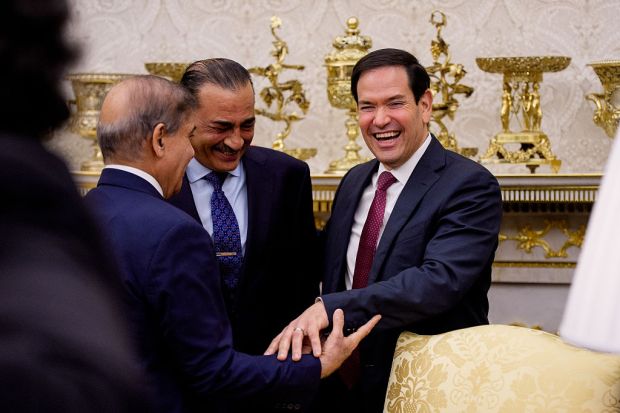
Since 2022, Prime Minister Shehbaz Sharif and Field Marshal Asim Munir (the Pakistani military controls security policy and intelligence relationships) have been conducting a relentless charm offensive on the White House. Pakistani intelligence helped to find those responsible for the Kabul airport bombing which killed 13 US service members in 2021 and in 2024 it captured one of the key masterminds of the attack for extradition to the US.
Multiple meetings in 2025 between President Donald Trump and Pakistan’s senior leadership sought to cement their repaired relations and Pakistan’s eagerness to mediate the Iran war is yet another move to make itself useful in Washington again.
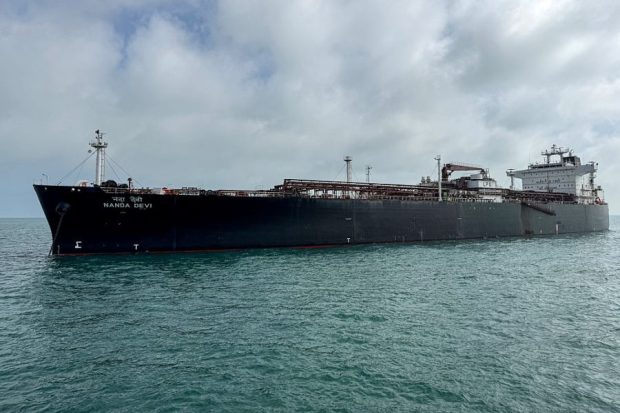
But one of Pakistan’s main motivations for playing the peace broker here is economic. It’s vulnerable to refugee flows if the Iranian regime completely collapses and its weak economy is highly exposed to the commercial shocks caused by the closure of the Strait of Hormuz. Poor productivity and investment, a struggling private sector, currency instability and inflation, and a heavy dependence on imported energy from the Gulf States mean it desperately needs the Iran war to end as soon as possible.
As President Trump can attest, mediating seemingly intractable conflicts also carries with it major kudos and Pakistan clearly wants this role to rehabilitate its international image. If it can change the global image of Pakistan from a problem state with constant political instability to an influential diplomatic success story, then it can attract foreign investment and secure the trade deals it needs to end its cycle of repeated IMF bailouts.
Still, with the Iran war ceasefire on shaky ground, Pakistan should beware the revolving carousel of mediators who have tried and failed to broker an end to the world’s persistent conflicts. If and when the war resumes, it might be a different peace broker who steps in to try to end it.