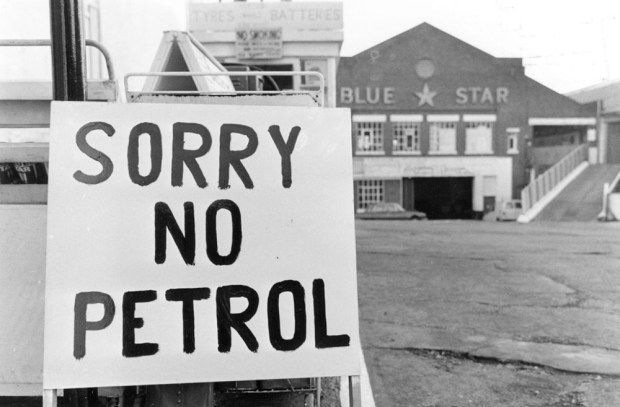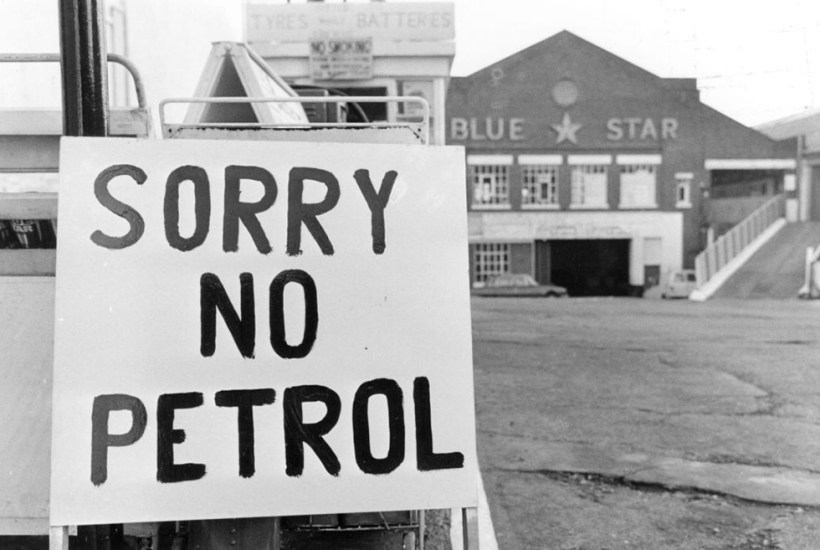
Australia has entered a crisis due to a shortage of fossil fuels. Over 600 service stations have run out of diesel or petrol, and those that still have supply often charge more than three dollars a litre. Without fuel, crops cannot be planted or harvested, food cannot be supplied to the cities and supermarkets will eventually run short of foodstuffs.
Even before recent geopolitical disruptions, Australia’s reserves were among the lowest in the world. Industry once thrived on abundant, low-cost energy. We are now among the highest-cost electricity producers, following policies that have demonised fossil fuels and constrained exploration and usage for more than two decades.
There is something curiously unscientific about the modern climate debate that has led to the deliberate bans and limitations on fossil fuels that have exacerbated this situation. A field that ought to be governed by uncertainty, measurement, and competing hypotheses has hardened into orthodoxy with remarkable speed. We are told not merely that the climate is changing – an irrefutable and thus unscientific observation – but that the causes are settled, the models are reliable, and the policy implications are beyond dispute.
That should give any serious observer pause.
Unsurprisingly, since the late-nineteenth century, global temperatures have risen by roughly one degree Celsius as Europe recovered from the devastating Little Ice Age. Temperature fluctuations have been sizeable – down as well as up.
In the context of geological history, this is not unprecedented. The Earth has experienced much larger fluctuations without industrial civilisation. Even within recorded human history there have been naturally occurring warm periods, such as the Minoan, Roman and Medieval Warm Periods, that supported agriculture in regions now far less hospitable.
This is not to deny that a small amount of largely beneficial warming has occurred. It is to question the leap from ‘there has been warming’ to ‘is there evidence that man has contributed to the slight rise?’.
The climate has always changed. Solar cycles, ocean oscillations such as El Niño and the Atlantic Multidecadal Oscillation, volcanic activity, and internal dynamics all contribute to fluctuations. These are not trivial influences. They can produce significant warming or cooling over decadal timescales.
The dominant explanation centres on carbon dioxide. The basic physics is not in dispute: CO2 absorbs infrared radiation at certain wavelengths. But from that modest starting point has emerged a far more ambitious claim – that incremental increases in this trace gas can drive large-scale climatic shifts through complex feedback, particularly involving water vapour.
Here scepticism is reasonable.
The climate system is immensely complex, shaped by interactions between oceans, atmosphere, clouds, solar radiation, and numerous feedback mechanisms, many only partially understood. The key amplification mechanism in most climate models is water vapour. Since CO2 is only a trace gas, overall, the ratio of CO2 to water vapour is only about 17 per cent, but in the moist tropics it falls to only one to two per cent.
Without it, the direct warming effect of CO2 is very modest; with it, warming is allegedly multiplied. Yet water vapour is not an independent driver. It is variable, unevenly distributed, and governed by temperature. Cloud formation alone introduces large uncertainty, capable of amplifying or dampening warming depending on altitude and type. Claims that such processes can be modelled with high precision decades into the future should invite humility.
Climate models have at times struggled to match observed outcomes. Periods of slower warming, regional variation, and unresolved cloud dynamics are often explained after the fact. To put it bluntly, most climate models cannot explain the past and their warming forecasts are highly questionable and contentious. This sits uneasily alongside claims of settled certainty.
Natural variability further complicates attribution. Solar cycles, ocean oscillations such as El Niño, volcanic activity, and internal dynamics all contribute to climate fluctuations. These influences can produce substantial warming or cooling over decadal timescales.
Ice core evidence suggests that natural warming episodes have historically preceded increases in CO2, as oceans release dissolved gases when they warm. Whether such CO2 increases subsequently amplify warming remains debated. Disentangling natural variability from human influence is difficult, and attribution studies often rely on the same models whose reliability is contested. Approximately 97 per cent of CO2 occurs naturally without human intervention.
The role of CO2 is also frequently simplified. It is described as a pollutant, yet it is fundamental to life. Plants require CO2 for photosynthesis, and higher concentrations can enhance plant growth and water-use efficiency under certain conditions. This does not imply that higher CO2 is uniformly beneficial, but it does mean the effects are mixed and context dependent.
The economic dimension is equally important. Energy systems underpin modern life – from transport and industry to healthcare and agriculture. Especially, fertiliser supply is curtailed. Policies aimed at rapid emissions reduction carry severe costs. Poorly designed transitions massively increase prices, reduce reliability, and impose disproportionate burdens on lower-income households.
A sceptical position does not deny risk; it weighs it. If the magnitude and timing of climate impacts are uncertain, and the costs of mitigation are low, then the case for rapid and disruptive policy becomes less straightforward. Adaptation, innovation and gradual transition may offer more resilient alternatives.
There is also a broader issue. Science depends on scrutiny and the testing of competing ideas. Yet in the climate debate, dissent is often treated as denial. This discourages critical examination and fosters a false sense of consensus.
A more robust discussion would distinguish clearly between what is known, what is uncertain, and what remains contested. It would separate physical science from policy judgments and recognise that the climate is a dynamic system influenced by many interacting factors.
None of this implies complacency. Environmental stewardship matters, as does sound energy policy. But so does proportionality.
A modest one-degree increase over more than a century does not, by itself, justify the most extreme claims or the most disruptive interventions. Nor does it remove the need to test alternative explanations rigorously.
The danger is not concern, but insulation from critique. When a field ceases to tolerate scepticism, it risks losing the qualities that make it scientific.
Climate change is real; the climate has always changed and often for the better. The relevant questions are how it works, how much, if any, is driven by human activity, and what responses are appropriate.
Those questions are not fully settled as there is no direct evidence that humans have influenced the climate. And presenting them as such weakens, rather than strengthens, the case for sound policy.
Got something to add? Join the discussion and comment below.
You might disagree with half of it, but you’ll enjoy reading all of it. Try your first month for free, then just $2 a week for the remainder of your first year.