Freedom of speech is back on the conservative agenda. At the Aspire conference in Sydney last week, sustaining our freedoms was one of the organising themes. Later this year the annual Samuel Griffith Society conference will devote attention to the implied freedom of political communication that exists in our Constitution. That this doctrine – still viewed with disdain by many on the centre-right – is of such interest in largely conservative forums tells us something important. The argument has shifted. Or at least, it needs to.
We remember the 1980s and 1990s, when it was the Left that pushed for a constitutional bill of rights. Conservatives resisted, and not irrationally. We defended parliamentary sovereignty. We did not want to politicise the High Court.
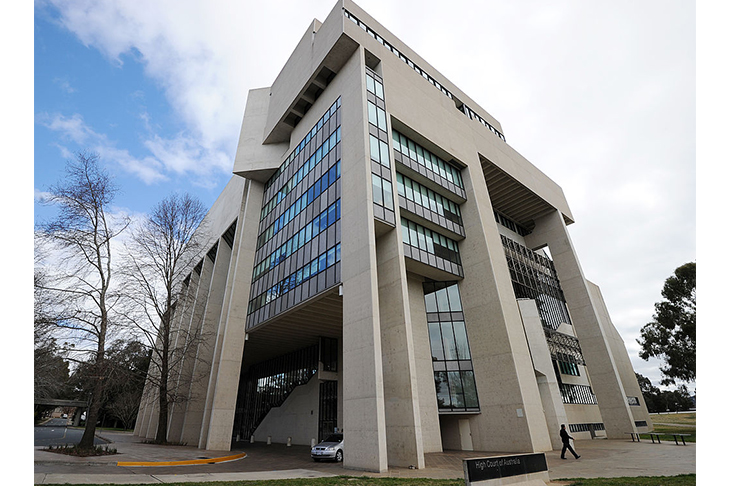
Then, in the early-1990s, the High Court implied the freedom of political communication from the text and structure of the Constitution. Conservatives hated it. It smelt of the very rights culture we had opposed and, it was said, would provide judges with too much power. For three decades, many conservatives have at best maintained significant emotional distance from the implied freedom. At worst it has been outright hostility.
We are fortunate to have a written constitution. Unlike the United Kingdom, we are not wholly reliant on the parliament to preserve fundamental political arrangements. A written constitution invites interpretation. It establishes structures and diffuses power, and ours entrenches representative and responsible government.
The Court’s justification for the necessary free speech implication was not mystical. It looked at provisions for elections and for choosing members ‘directly by the people’ and asked a simple question: what would it mean if representatives could lawfully silence the political communication of the very people who sent them there? A system that depends on public discussion of political ideas for its legitimacy cannot vote to eradicate that discussion. That makes a lot of sense to me.
Unlike the entirely fantastical right to abortion devised by the US Supreme Court in Roe v. Wade – which upturned American society for five decades – our free speech implication was not plucked from thin air. It is structural and defensive. It does not create a personal right in the American sense. It imposes a limit on legislative power where that power burdens political communication in a way incompatible with representative government.
Crucially, it has been used conservatively. In the thirty-plus years since, the High Court has invalidated only a minority of laws challenged under the implied freedom – roughly one in five cases in which the issue squarely arose. There has been no social collapse, no constitutional revolution, no Americanisation of Australian public life. If you ask me, the Court has often been too cautious in striking down laws that burden political speech.
Yet conservative politicians, academics and think tankers still wring their hands about something the High Court supposedly ‘made up’ thirty years ago, fantasising that one day the Court might reverse course and abandon it altogether. There is not a snowflake’s chance in hell of that ever happening.
Meanwhile, the world has changed.
The right are now – supposedly – the last defenders of freedoms. We experienced heavy weather through the 18C debate during the Abbott government without resolution. More recently, in the wake of the Bondi massacre, the Coalition again ruptured over hate speech laws which because of the urgency did not receive sufficient scrutiny and went too far. It is an understatement to say the weather is getting heavier.
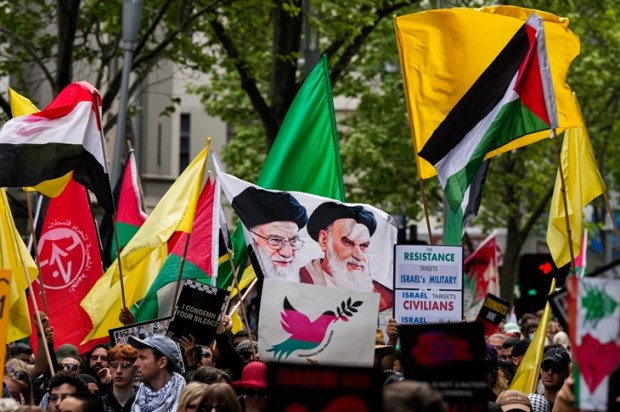
Public controversies over speech have intensified more generally but especially since the Bondi massacre. Pauline Hanson’s claim that there are ‘no good Muslims’ was deeply offensive to many Australians. Grace Tame’s chant of ‘globalise the intifada’ has been said to incite violence. These statements are not morally equivalent, and they raise different legal questions. But both sit within the broader category of political communication. And both have provoked calls for sanction.
We are not good, as a country, at distinguishing offence from incitement, or repugnance from unlawfulness. The American standard protects even extremist advocacy unless it is directed to inciting imminent lawless violence and is likely to produce such action. That is a demanding threshold. The United Kingdom, by contrast, offers zero constitutional protection; speech remains at the whim of parliament which is frankly why it is in such a terrible mess there.
In Australia we occupy an uneasy middle ground. But a huge difficulty is that conservatives have never fully owned it. We invoke ‘free speech’ rhetorically, yet in our conservative ecosystem we reject the one constitutional protection that safeguards it.
That ambivalence is now untenable.
If conservatives do not begin to actively defend and deploy the implied freedom – in litigation, in legislative scrutiny, and in public discourse – pressure will mount for something more explicit. An express constitutional freedom of speech, inserted by referendum and already called for by Pauline Hanson, might well succeed. It could attract support from both left and right if legislators attempt to criminalise chants about the global intifada, as vile as they are. One can only imagine the martyrdom achieved by Grace Tame serving time in jail. In a country that instinctively distrusts censorship, attempts to punish political speech are precisely the kind of overreach that generates constitutional reform.
One of the most striking features of American civic culture and discourse is the educative power of the express freedoms enshrined in the First Amendment. I’ve never met an American – left or right – who does not instinctively defend the idea of free speech and understand, at least broadly, where the constitutional line lies. That shared constitutional literacy anchors public debate and disciplines lawmakers.
Because conservatives in Australia have never embraced the implied freedom, we have enabled a lack of clarity around it. Our debates oscillate between absolutism and prohibition. We lurch from outrage to regulation and back again.
We must stop treating the implied freedom as an embarrassment and embrace it as ours to defend. For thirty years, by resisting it instead of shaping it, Australian conservatives have left themselves without a settled understanding about what political speech should be protected and why.
As we survey a fractious, shouty polity, this modest constitutional protection looks less like a judicial indulgence and more like the constitutional necessity the judges said it was. It provides a constitutional language with which to resist the impulse of governments of all kinds to criminalise mere offence and political dissent.
We need to get with the program, be grateful that we have a measure of speech protection in the Constitution, and give it a lot more love.
Got something to add? Join the discussion and comment below.
You might disagree with half of it, but you’ll enjoy reading all of it. Try your first month for free, then just $2 a week for the remainder of your first year.