Sixty years ago, I first gazed out on the Strait of Hormuz from the Musandam peninsula of Oman. I was there as private secretary to my godfather, Selwyn Lloyd, who had been Britain’s foreign secretary during the Suez Crisis.
The previous evening our host, Sultan Said bin Taimur, the ruler of Oman for nearly 40 years, commented gloomily: ‘When two fish are fighting in these waters, the British are behind it.’
I estimate that I must have made at least 250 visits to the Gulf states in the intervening six decades. The key question which would surely now be asked by the ghosts of my former Middle East interlocutors – from Richard Nixon and Henry Kissinger to King Fahd of Saudi Arabia, Sheikh Zayed Al Nahyan, the first president of the UAE, and the visionary Sultan Qaboos of Oman – is this: who will emerge as the real winners and losers from the present Hormuz crisis?
Poor little Bahrain and arrogantly rich Qatar will go downhill as the price for subservience to America
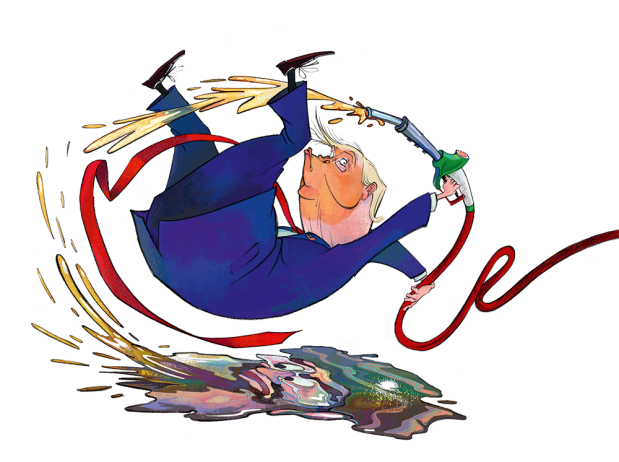
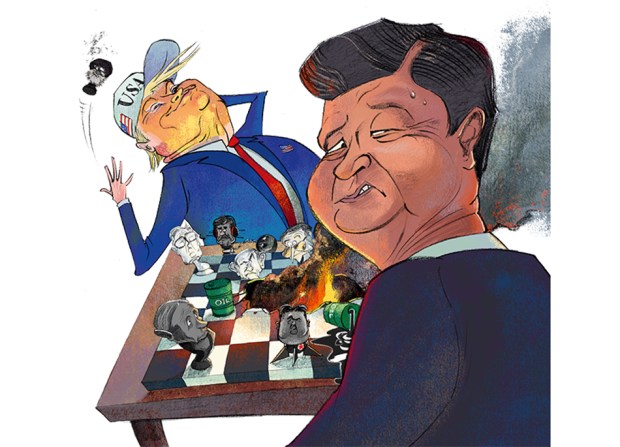
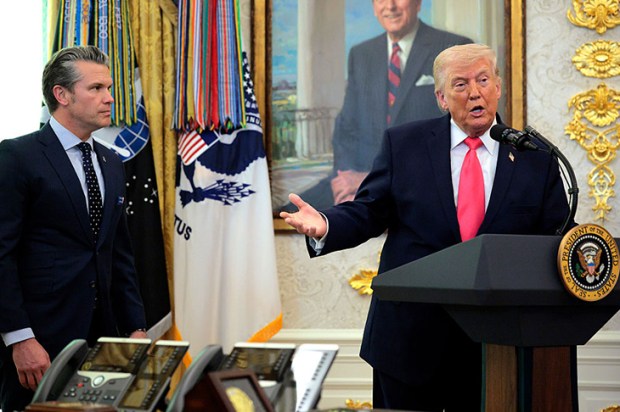
The Americans are already big losers in terms of reputational face and folly. The zigzags of Donald Trump’s strategic pronouncements make no sense from day to day. The bombastic boasts of the War Secretary, Pete Hegseth, have turned him into the Comical Ali of this conflict. The Pentagon’s spokesman is now saying ‘the situation is fluid’, which is hardly a convincing cry of victory after three weeks of fierce fighting.
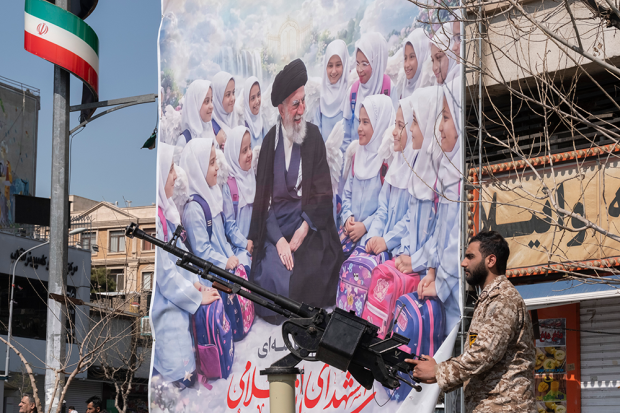
Despite America’s errors, the Iranians are bigger losers. The Spectator’s leading article last week was right in its fierce condemnation of the horrors of the Ayatollah’s evil strategy but wrong to be sanguine about what might follow it.
The most likely outcome is Iran will be militarily and economically ruined for decades. This is a win for the Israelis, but trouble for almost everyone else. Iran itself will have a changed regime, yet possibly without real regime change. But sooner or later, whoever is in charge in Tehran will have to learn to live with the neighbours – the Gulf states, where Britain’s interests are still great.
Here, the winners and losers scoreboard is sure to prove complicated. Poor little Bahrain and arrogantly rich Qatar will go downhill as the price for their subservience to Trump’s America.
Cash-strapped but oil-rich, Saudi Arabia (‘the big enchilada’, as Nixon called it) will remain inwardly strong but outwardly more cautious. Its special relationship with the United States – effectively these days with the Trump family – has been tarnished and weakened. My Saudi friends are furious but impotent. They loathe the Iranians but will only sabre-rattle at them.
The UAE has been hit harder than it admits. It has been the target of more than 2,000 Iranian missiles and drones, whose debris has damaged oil storage depots, hotels and banks. Dubai, the emirate for expatriates, is suffering a crisis of confidence. Yet despite a reverse charge of the bling brigade, it will stagger flashily on with the declining status of a lesser Monaco of the Middle East – a sunny place for shady people.
The true heart, strength and soul of the UAE is Abu Dhabi, which accounts for more than 80 per cent of the country’s land, over 90 per cent of its massive oil reserves and 40 per cent of its local Emirati population.
Throughout the hostilities, my son, -William, who lives and works in Abu Dhabi, has been doing the rounds of the sheikh and merchant family majlis (coffee gatherings). He reports a robust resilience among the sons and grandsons of the region’s original Bedouin desert fighters.
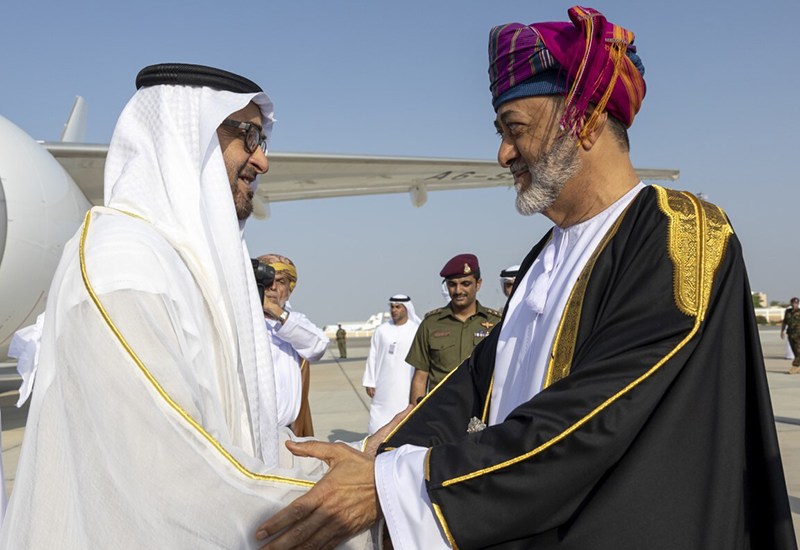
Sheikh Zayed’s son, Sheikh Mohamedbin Zayed (MBZ), whom I know well, is largely the reason for the country’s relative stability. When the first Iranian missiles struck, he gave an eloquent interview, combining menace for the Iranians, compassion for the wounded, reassurance for the expatriates, gratitude to his fellow Emiratis and hope for the future. ‘The UAE is a role model,’ he said. ‘I promise everyone we will emerge stronger than before.’ If MBZ can pull off his goal of making Abu Dhabi the safest and most attractive jurisdiction in the region, his already mega-rich emirate could become the primary beneficiary of global or regional instability.
Another dark horse to watch in the race for post-war success in the Gulf is Oman. Arguably the most perceptive article by an Arab author since the war began was in last week’s Economist under the headline: ‘America’s friends must help extricate it from an unlawful war.’ It was by Badr Albusaidi, Oman’s foreign minister, who mediated the last round of apparently promising nuclear talks between America and Iran.
The Albusaidis are the Kennedys of their country, occupying seven cabinet posts. But, unlike the JFKs and RFKs, the Albusaidis follow the Omani tradition of rarely putting their heads above the parapet. Why intervene now? Because for strategic, diplomatic, geographical, political and economic reasons, Oman is likely to emerge as the new jewel in the crown of tomorrow’s Gulf.
Its Switzerland-style neutrality for many years has paid off. Over the past few weeks, Iran has fired only two or three token missiles in its direction. An Omani economic boom is coming anyway thanks to the imminent completion of long-planned rail and pipeline infrastructure links to Saudi Arabia and the UAE. These have been encouraged by the new ruler Sultan Haitham, author of the government blueprint ‘Oman Vision 2040’, which aims to bring in $50 billion in foreign direct investment.
To do this, the Sultan needs help. MBZ and other Gulf leaders may need to swallow their irritation over Oman’s history of fence-sitting. But if Abu Dhabi and the Gulf Co-operation Council decide to embark on an economic reconstruction programme when hostilities cease, Oman – in co-operation with Abu Dhabi – would give tomorrow’s Gulf a great future. But be careful about such predictions. Experienced travellers in these desert sands remember what Lord Curzon said when he was foreign secretary in 1923: ‘The Arab world is a university where the student never takes his degree.’
Got something to add? Join the discussion and comment below.
You might disagree with half of it, but you’ll enjoy reading all of it. Try your first month for free, then just $2 a week for the remainder of your first year.