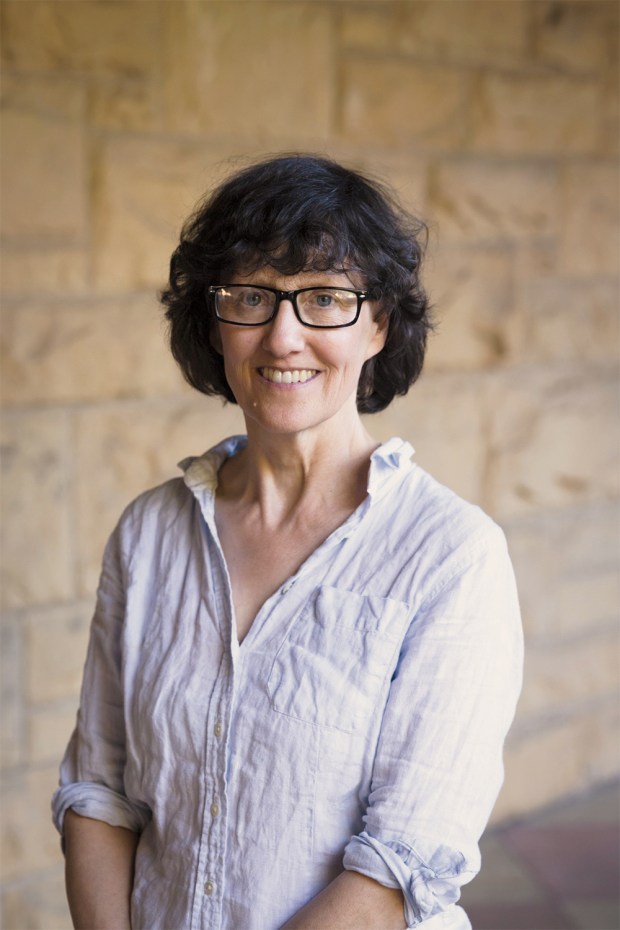
For a fortnight, four women have been combing through a 30-metre forest plot with infinite care. They have noted the age and height of every tree, measured every fallen branch and twig, identified every plant and assessed the depth and composition of the forest floor. The purpose of this backbreaking work is to understand the critical role played by old-growth forest in carbon storage. Unusually for a field experiment, the team includes a mother and her two daughters. Teenagers are not generally known for their willingness to spend weeks in the undergrowth, but then Suzanne Simard is not your average mother. She is the pioneering Canadian ecologist who has changed the way we think about forests.
Suddenly, lightning flashes overhead. Alerted by the smell of smoke, the women start to run. Fleeing beside them are the forest’s wildlife: rabbits, deer, even a gray wolf. Reaching their truck just in time, Simard radios in a report of a wildfire. The dramatic opening of Simard’s second volume of memoirs highlights one of the major hazards of climate change in British Columbia. Some two-thirds of the vast province is covered with forest, comprised mainly of flammable commercial plantations. The summer of 2018, when the book begins, was the worst on record, with more than 2,000 wildfires consuming an area almost the size of Northern Ireland.
Simard has long celebrated the resilience of old-growth forests. She first came to public attention in 1997 with an article in Nature on the ‘wood-wide web’: the theory that trees in a forest are linked through a communication network of underground fungal threads or mycorrhizae. At the hubs of this network, Simard and her team suggested, were ancient ‘mother trees’, sharing information and resources with their kin and other species. For Simard, forests are sites of collaboration as much as Darwinian competition.
Her idea of a forest community quickly gained ground. James Cameron imagined a version of the mother tree in his 2009 film Avatar and Richard Powers featured a scientist based on Simard in his 2018 novel The Overstory. In 2021 Simard published a memoir, Finding the Mother Tree, which became a bestseller. Her work was recognised in 2023 with the award of the Kew International Medal.
More recently, however, her findings have been challenged. A 2024 Nature article reported the publication of several pieces (some written by Simard’s former collaborators) which raised questions about the rigour of her team’s experiments and the validity of their conclusions. For many, anthropomorphism has no place in science.
When the Forest Breathes picks up where Finding the Mother Tree ended. Simard recounts the progress and setbacks of her ambitious ‘Mother Tree Project’. Spread over nine forests in various climatic zones of British Columbia, the programme tests different levels of timber harvesting, from clearcutting (the standard method) to selective felling. The aim is to discover the best means to regenerate forests in our climate-changed future.
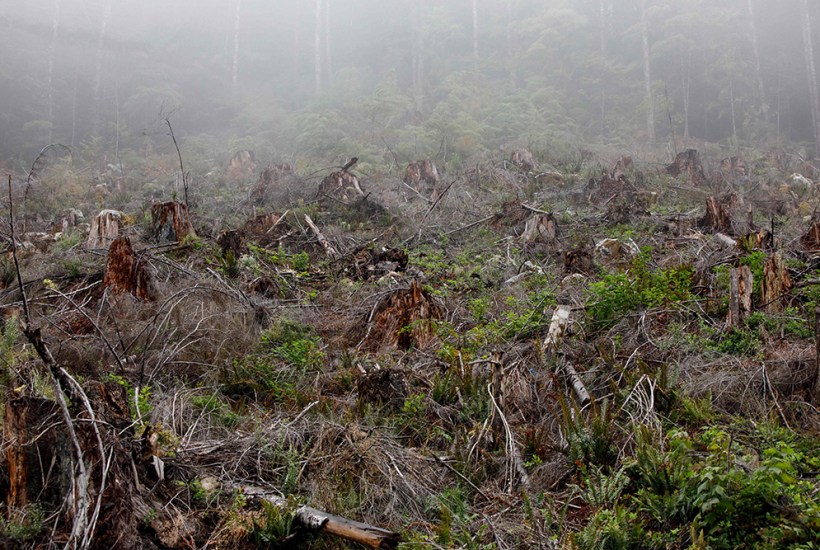
One of these forests is located on First Nations land, in Nlaka’pamux territory. Simard writes of her increasing attraction to Indigenous beliefs and the practices of the ‘first ecologists’. She lends her support to eco-activists. In 2021, she and her younger daughter visit an encampment at Fairy Creek on Vancouver Island, set up to protect old-growth forest from logging. The pair nestle among the roots of ‘Titania’, a 2,000-year-old yellow cedar matriarch, marked for felling. Simard later views a video of Titania’s final moments and imagines ‘the dying sound’ – the gasping of roots, the starvation of mycorrhizal fungi, the death of protozoa and millipedes, the crumbling of soil, the collapse of the forest floor, and the earth finally washed into streams and estuaries – a devastating vision of the environmental consequences of one destructive act.
The dying of mothers – both arboreal and human – preoccupies Simard in this book. Her own mother, Ellen June, is diagnosed with dementia and decides on an assisted death. Simard reconciles herself to this decision by drawing parallels with the forest’s cycle of life. She believes that her own affinity with forests is inherited from her mother’s woodcutting ancestors and will in turn be handed on to her daughters. As her mother tells her: ‘Trees are in your blood. ‘Simard’s memoirs combine family life and scientific endeavour, down-to-earth fieldwork and forest epiphanies. The second volume lacks the narrative drive of the first, which traced Simard’s ascent in the face of opposition; but it successfully communicates the urgency of her call to halt reckless exploitation. This book will attract anyone who is fascinated by forests and their remarkable capacities, even if Simard’s appeals to ancient wisdom may make some readers uncomfortable. For her part, she defiantly embraces the maternal motif, ending with a triumphant vision of herself transformed – into a 60ft Douglas fir, the ultimate mother tree.
Got something to add? Join the discussion and comment below.
You might disagree with half of it, but you’ll enjoy reading all of it. Try your first month for free, then just $2 a week for the remainder of your first year.