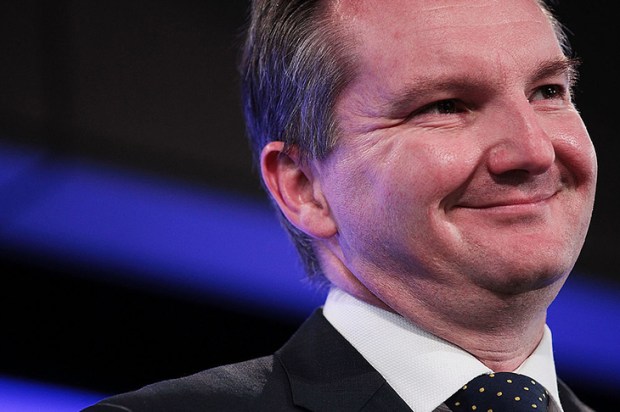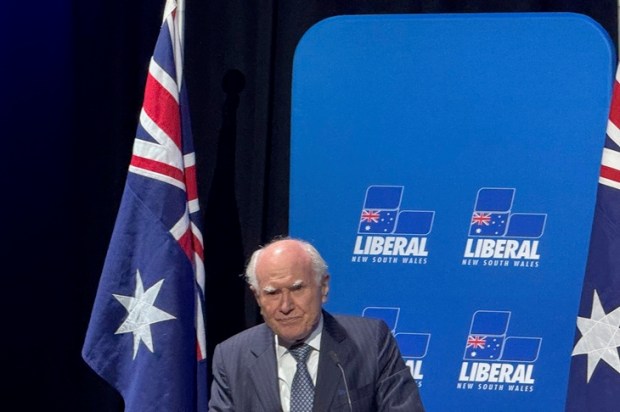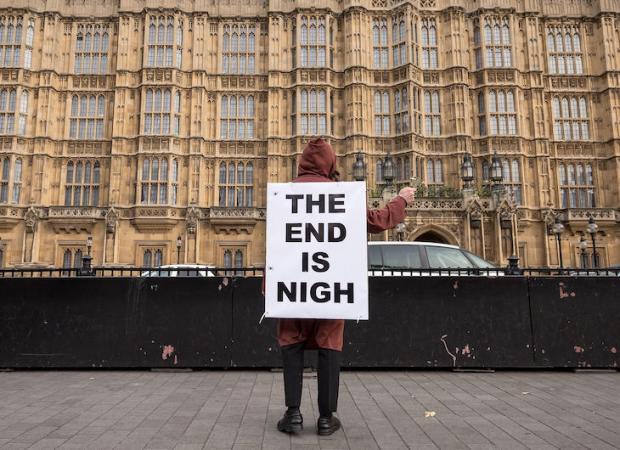
Matt Canavan deserves congratulations on becoming leader of the Nationals. Staunch, switched-on, savvy – everything David Littleproud struggled to be. It would once have been a genuinely life-changing promotion – the kind that reshapes a career. Today, with the Coalition in its present condition, it is roughly equivalent to being elevated from bus conductor to bus driver on a vehicle nobody is sure has brakes. Some say a Coalition dream team is forming. I see deck chairs being repositioned on the SS Bedwetter.
The more interesting question, once Albanese and his socialist leprechaun army are evicted from office, is what a united right government would actually do with the power. Winning is not a programme. The right has won before and used the opportunity to manage the existing state with mild embarrassment rather than dismantle it. They need answers before they arrive in Canberra, not after.
Barnaby Joyce has already called time on the Department of Climate Change, Energy, the Environment and Water. Good. Lock the doors, cancel the contracts, tell staff the ideology has been defunded. Time to re-evaluate your career choice. The party is over.
Consider it the amuse-bouche. The serious question is what comes after.
Pauline Hanson has been pointing at the right targets for longer than most of her critics have been willing to admit. Immigration, energy economics, foreign ownership of strategic assets, the relentless expansion of the radicalised bureaucratic class – she identified the disease before the Liberal party had finished congratulating itself on its moderation – and its remarkable facility for elevating strange backstabbing dudes to the premiership. But identifying the disease is not administering the cure. The Prophet of the Pampas, Javier Milei, did not merely name Argentina’s problem. He appeared on television with a chainsaw. Hanson has not shown us the chainsaw yet.
Argentina was a basket case and knew it. Then Milei, all Howard Beale, reached into the living rooms of Buenos Aires and told them, ‘I am sick of this third-world madness and I am not going to take it any more.’ Argentina is being fixed. Australia, no longer the Lucky Country, is heading dead-set in the opposite direction – comfortable enough not to panic, declining too gradually for fury, choosing its own assisted economic death with the serene procedural calm of a nation that has redefined governing as the orderly management of decline.
Hanson has the instincts and the voters. What she needs now is the chainsaw – a genuine small-government programme that doesn’t just redirect the state toward her constituency but actually shrinks it. The warning is simple: a united right government that wins power without the right plan will do what every previous conservative government has done. It will manage the decline more congenially than Labor. Nothing more.
A united right government would need to go further than Hanson and Joyce have committed to so far. They need to show how real fiscal conservatism translates into higher after-tax earnings – not as a side effect of good management but as the direct result of dismantling wasteful government. That requires a number. Not a mood, not a commitment to efficiency, not a promise to review the forward estimates. A number that working families can feel. Two hundred dollars a week. That is the promise a serious conservative government should make – and mean, and defend, and die in a ditch for.
Getting to 200 dollars a week requires savings closer to 80 billion dollars annually. The abolition list has to go well beyond arts grants and climate departments. It means zero federal involvement in school funding. Education is a state responsibility. States run the schools, hire the teachers, set the curriculum. Canberra’s role is to generate compliance bureaucracy and funding conditions that consume billions without adding a single classroom. The Commonwealth should exit the sector entirely. No federal money, no federal strings – no Canberra-approved curriculum telling Queensland how to teach kids to hate Australia.
It means abolishing the duplication of services already run by the states – hospital administration, environmental approvals, infrastructure planning, regional development programs. Australia runs two bureaucracies across most of these domains: two departments, two funding streams, two regulatory layers, and a permanent architecture of blame-shifting. Billions exist not to deliver services but to manage the relationship between governments. Remove the federal layer and the saving is real, immediate and permanent.
It means cutting middle-class welfare – the subsidies, offsets and comfort payments distributed to households perfectly capable of funding their own lives. Much of what modern governments call social spending is not relief for the poor or support for the genuinely disabled. It is the state underwriting ordinary consumption choices for people who do not need underwriting. You cannot promise lower taxes for working families while preserving every concession that cushions middle-income life. Much of that money is sitting in the transfer system dressed up as compassion.
It means capping the NDIS in real terms and meaning it – not watching its trajectory with concern while it accelerates toward 90 billion dollars annually, but imposing a hard limit, tightening eligibility back to severe and permanent disability, and breaking the provider inflation that has turned a genuinely compassionate programme into a fiscal emergency. Restoring it to its original purpose is not cruelty. It is solvency.
And it means unleashing the productive economy – faster approvals, more domestic gas and resources development, fewer regulatory chokepoints, fewer green vetoes disguised as consultation. Growth is not a substitute for cuts. Politicians love growth rhetoric precisely because it avoids confrontation. But a richer, more productive Australia amplifies every dollar of fiscal reform and makes the tax relief sustainable rather than a one-term gesture.
The right has spent 30 years promising smaller government and delivering larger government because it never named the number. Two hundred dollars a week is the number. It is achievable. It requires a government willing to say plainly that entire categories of federal activity are illegitimate – not wasteful, not inefficient, but simply not the business of a national government – and hold that position when the bureaucracy, the commentariat and the beneficiaries push back.
Canavan’s ‘hyper Australia’ instinct – more farming, more manufacturing, more Australian everything – has a genuine constituency and a genuine logic. But larrikin energy without structural seriousness is just another mood in a political culture that has confused moods with programmes for three decades. The question is not which Labor programmes offend them. It is which parts of Canberra’s empire should not exist at all – and what comes back to the people who have been paying for it.
Until conservatives are willing to say that plainly, and mean it when the bureaucracy pushes back, the growth of the Australian state will continue regardless of who is driving the bus.
Got something to add? Join the discussion and comment below.
You might disagree with half of it, but you’ll enjoy reading all of it. Try your first month for free, then just $2 a week for the remainder of your first year.