
As chairman of the value-for-money Iceland frozen-foods chain, Richard Walker might be expected to know what he’s talking about in his newly ennobled role as the government’s ‘cost of living champion’. But he was also one of the few recognisable names on the list of 121 ‘business leaders’ who endorsed Labour’s clueless economic programme ahead of the 2024 general election. So we should be wary of his intervention on Rachel Reeves’s behalf, warning ‘profiteers’ not to ratchet up prices in response to the Iran crisis, having already ‘hauled petrol retailers and energy producers into Downing Street’ to tell them ‘opportunistic rip-offs will not be tolerated’.
That combative script is a distraction from the fact that ministers can set fuel and energy prices wherever they wish, far more so than retail suppliers. A litre of petrol at £1.50 includes 53 pence of fuel duty and 30 pence of VAT; the fuel duty is set to rise in September and VAT (at 20 per cent) is charged on the duty as well as the underlying fuel cost, which might include 10 pence profit for the retailer. While VAT is 5 per cent on domestic electricity, Ed Miliband’s green levies add £150 to the average annual bill.
By all means call out greedy motorway service stations. But if we’re facing a sustained spike in wholesale oil and gas markets, Lord Walker would be a more useful champion if he pressed for the duty rise to be scrapped, VAT on vehicle fuel to be temporarily cut and the green sting to be strimmed. Consumers would be grateful, the economy would better resist the shock, which means overall tax revenues would hold up stronger, and for once his Chancellor might look wise.
Short’s not sweet
With apologies for a jokeless and rather technical topic, here’s another crisis in the making to set alongside Trumpian mayhem and the private credit time-bomb I identified two weeks ago. The government’s cost of borrowing, as indicated by ten-year gilt yields, hit a post-2008 peak this week of 5.1 per cent. Public sector net debt, at 95 per cent of GDP and rising, is at its highest since the 1960s, carrying an interest bill of £111 billion that is almost double this year’s defence budget. In other OECD nations as well as the UK, rising deficits and evolving market structures have led to greater reliance on shorter-term public debt, which investors, including private citizens, tend to find more attractive.
But therein lies danger for the UK. Institutional investors are wary of our longer-term growth prospects, while the defined-benefit pension funds that used to be big buyers of long-dated gilts have withered away. The result is that the Treasury’s debt management office is increasingly reliant on quick-fire refinancing of short-dated paper. That makes the UK peculiarly vulnerable to sudden interest-rate upticks and, worse, outbreaks of international bond-market panic – which in the febrile and volatile world of today, could be upon us at any moment.
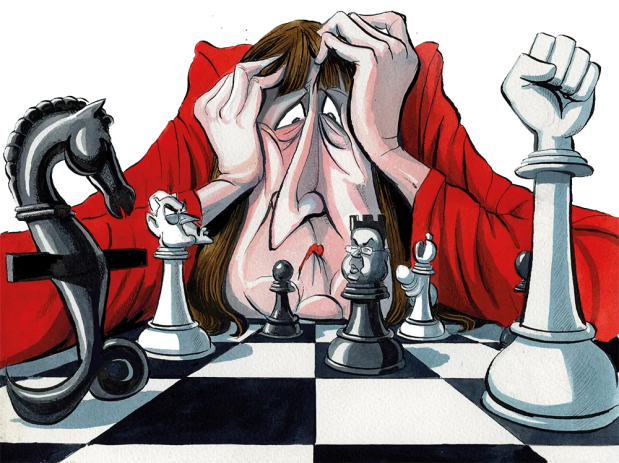
Black knight
The kindest thing I’ve heard said by a friend of the fallen hedge-fund chief and former half-billionaire Crispin Odey (a real friend, that is, not a PR spinner) is that ‘he’s a cavalier in an age of roundheads’. We might even say he has a touch of Monty Python’s Black Knight, who held his ground despite having his limbs chopped off one by one.
Odey Asset Management (OAM), which once held £11 billion of investments, closed in 2023, after multiple allegations of sexual misconduct against Odey himself, and became a ‘dormant company’ in January. But its founder is still suing the Financial Times over a series of investigative exposés, claiming £79 million in libel damages. And he’s challenging, in the Upper Tribunal, a decision by the Financial Conduct Authority (FCA) to ban him from UK financial services and fine him £1.8 million for ‘lack of integrity’ and ‘reckless disregard’ of governance.
The FCA cites as an example that when OAM’s executive committee called a hearing to discuss Odey’s behaviour, he used his majority shareholding to make himself the committee’s sole member, then declared that the disciplinary hearing ‘would be indefinitely postponed since he said he was unable to conduct it with impartiality’.
The last high-profile financier to challenge an FCA ruling of recklessness and lack of integrity was the former Barclays boss Jes Staley, who was accused of misrepresenting the closeness of his friendship with Jeffrey Epstein; the Upper Tribunal dismissed Staley’s plea last year. If it also finds against Odey, he has a last resort in a (rarely used) route to the Court of Appeal; and even if the tribunal refuses permission to appeal, he can ask for that decision to be reviewed. Don’t expect this Black Knight to go quietly.
Towns of culture
I was half-pleased to see Skipton in North Yorkshire named by the Sunday Times as the best place to live in the north-east. Fair play to Skiptonians, but my own Yorkshire fiefdom of Helmsley is at least as lovely, neighbourly and well-provided – and we won only an irritating tick for being ‘a stone’s throw’ from the ‘well-heeled’ villages of the Howardian hills, where ‘the closer to Castle Howard, the greater the cachet’. What utter estate-agent piffle.
But it’s worth asking what does make a good place to live in as the government announces seven new towns of up to 40,000 new homes each, including one that will overwhelm the quiet Bedfordshire village of Tempsford, current population 600. I’d argue that our mellow northern towns, developed on a human scale around castles, chapels and marketplaces, offer a near-perfect model.
Town planners hate pastiche and scorn the King’s own shot at it, at Poundbury in Dorset; but before they turn rural Tempsford into a hideous Corbusian experiment, they should travel north and discover why we’re (mostly) so content with our lot. Helmsley, by the way, is bidding to be ‘UK small town of culture’ in 2028.
Got something to add? Join the discussion and comment below.
You might disagree with half of it, but you’ll enjoy reading all of it. Try your first month for free, then just $2 a week for the remainder of your first year.