The European Union, like the United Nations, can often seem an unstoppable force of wokery, including on climate issues. Yet it can be derailed when its fashionable pieties collide with the self-interest of its member-states, especially Germany and France. And there’s no stronger European lobby than Germany’s car industry, which employs 800,000 of the country’s workers, five per cent of its labour force.
The Green-left-dominated German government of Olaf Scholz supported the EU’s revolutionary decision in 2023 to require new vehicles to have zero CO2 emissions from 2035, effectively banning internal combustion engine (ICE) vehicles. Aghast, Germany’s car industry pressured him into telling the EU to water down the plan. Grudgingly, Brussels accepted that not all new cars from 2035 would have to be electric: ICE vehicles using e-fuels (synthetic fuels which combine hydrogen with carbon dioxide captured from the atmosphere) would also be allowed.
Germany’s Christian Democrat Chancellor Friedrich Merz, who replaced Scholz last year, in opposition described the EU’s 2035 vehicles plan as still a major economic threat and called for it to be scrapped. But, in government coalition with the Green-friendly Social Democrats, he accepted the EU’s further compromise that the 2035 plan could be relaxed by dropping the requirement from 100 per cent of new vehicles having zero emissions to 90 per cent. This would allow the continued sale of petrol and biofuel ICE vehicles and hybrids.
Although the EU’s proposed compromises, yet to be formally agreed, are a long way from Merz’s commitment to ‘scrap’ the 2035 plan – manufacturers would still face pressure including penalties if they don’t prioritise sales of electric cars – they’re also a big retreat from the all-electric vehicle future earlier insisted on by climate change evangelists. EU car industry lobbies have welcomed the revised 2035 plan but, backed by the political right, including the surging Alternative for Germany – neck and neck with the Christian Democrats as the country’s most popular party – have criticised it as not enough to protect manufacturing and jobs. So pressure remains for further EU green retreats.
Europe’s electric car lobby is on the back foot because the expected rapid consumer shift to electric cars has simply failed to materialise. As automotive journalist Jack Baruth has written in the Washington Examiner, ‘There’s a limited number of customers for cars that cost more while offering less, and most of those customers already bought one.’
Europe’s electric cars continue to be more expensive than traditional vehicles, often costing twice as much to insure, and remain stubbornly inferior in terms of range. Car manufacturers are repeatedly caught wildly exaggerating range and are shy about acknowledging awkward details such as range reducing significantly in cold weather, if you drive up hills or use the heating, air conditioning or windscreen wipers. Further negatives are the complexity of recharging compared to refueling, steeper depreciation than in relation to petrol cars and issues over electric vehicle batteries – both their worrying record of combustibility and the huge cost of replacement. The inability of European car producers to compete with Chinese imports on cost (despite tough EU tariffs) and a range of concerns about how electric cars are produced are further negatives.
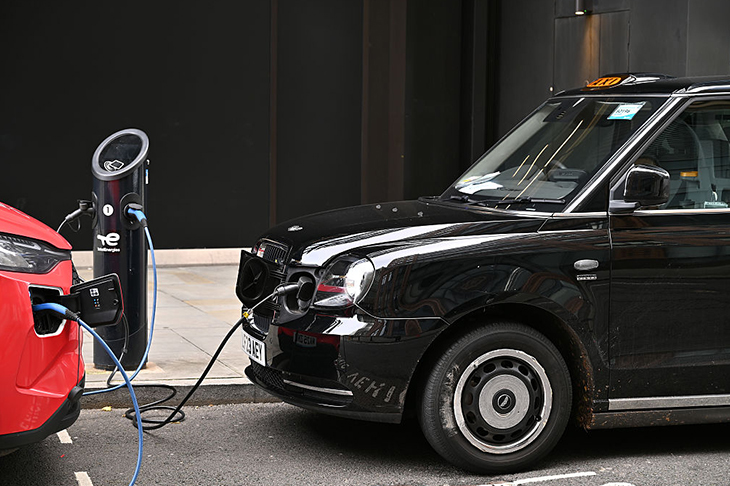
Still, British columnist Giles Coren has noted an upside about electric cars: their contribution in our atomised societies to camaraderie, as ‘leccy drivers’ bond for hours at dysfunctional charging stations, drooling over how easy petrol cars are to refill and discussing which one they plan to buy.
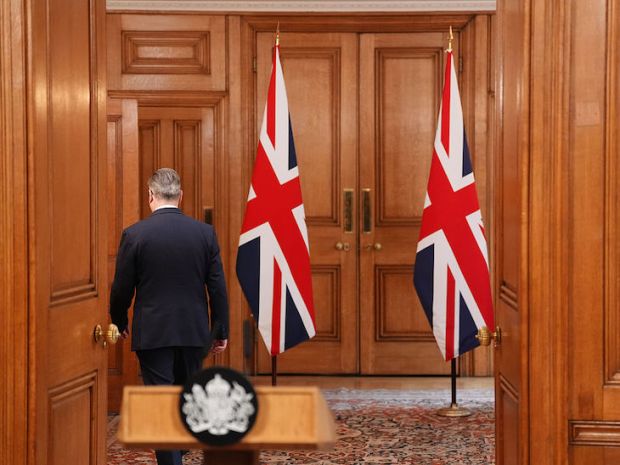
Europe’s deepening hesitation about electric cars is unlikely to spread to Britain’s hard-left, net-zero-obsessed Labour government. Yet the issue will likely be one more that blows up in its face. Keir Starmer’s reverse-Midas-touch is evident most days, from his selection of Jeffrey Epstein ‘best pal’ Peter Mandelson as his ambassador in Washington to blocking the one Labour candidate – Manchester mayor Andy Burnham – who could have prevented his party’s humiliating achievement of third place in the by-election in Gorton and Denton, where its 25-per-cent vote was less than half that at the 2024 general election. And following his astonishing initial refusal to support the US in Iran, he’s the first British prime minister ever to prompt a US president to say he’s ‘very disappointed’ in him.
But Starmer has tried to please his restive anti-Brexit base by cosying up to the EU, including through ‘re-aligning’ the UK economy with rules set in Brussels. Yet awkwardly for Labour, in the area of motor vehicles, its net zero obsession would lead to divergence, not alignment. Boris Johnson when prime minister signalled his eco-virtue by radically bringing forward the UK’s phase-out of new petrol and diesel cars from 2040 to 2030 – so he could beat the EU’s 2035 target. In a nice illustration of the UK’s political consensus on climate issues over the past three decades, Starmer’s Labour has kept the Old Etonian’s deadline. It also plans another piece of Johnson-era eco-lunacy: requiring all trucks to be electric by 2040.
The UK’s radical deadline for banning new non-electric cars means, for example, that from the beginning of 2030, if Labour is still in power, the currently unrestricted right of a Northern Irish resident to go south of the border into the EU to buy a petrol car and register it in the UK will cease. Similarly, post-2030, Britain’s car manufacturers would hope to continue exporting ICE cars to the EU. But Labour would ban ICE imports in return. These cases obviously point to divergence, not alignment.
Jaguar’s recent saga mirrors the fluctuations of Europe’s enthusiasm for electric cars. Two years ago, the company unveiled plans to go all-electric by 2026. These were accompanied by a widely mocked advertisement featuring no cars, only ambiguously gendered fashion models. After the executive most closely associated with the rebrand was sacked, the Sunday Times reported that Jaguar has secretly junked its ambitions to go all-electric.
Europe’s plans for an electric vehicle future are likely to fail. In Britain’s case they would be abandoned by either Reform UK or the Tories in the election to be held by 2029. Across the Channel the commitment will probably die a death of a thousand cuts, a process likely to be accelerated with further conservative political shocks – especially the increasingly likely possibility that France’s right-wing Rassemblement National wins next year’s presidential elections.
Got something to add? Join the discussion and comment below.
@markhiggie1
You might disagree with half of it, but you’ll enjoy reading all of it. Try your first month for free, then just $2 a week for the remainder of your first year.