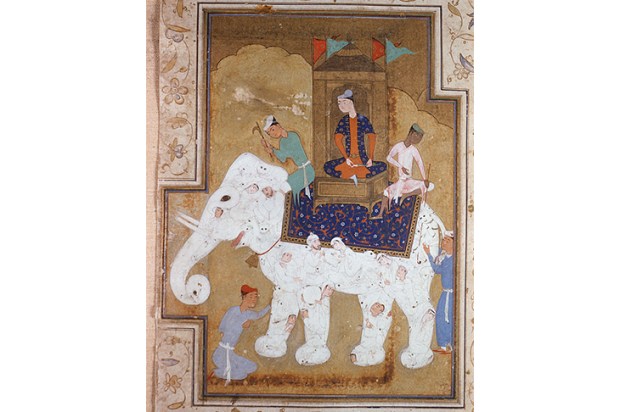
In the final years of the Soviet Union, a strange psychological phenomenon took root. The state’s economy was disintegrating, its ideology was hollow and its leaders were literally frail, yet everyone – from the Politburo to the person in the breadline – acted as if the system was functioning perfectly. They lived in what anthropologist Alexei Yurchak called ‘hypernormalisation’: a state in which everyone knew the system was failing, but because no one could imagine an alternative, they collectively maintained a fake version of reality.
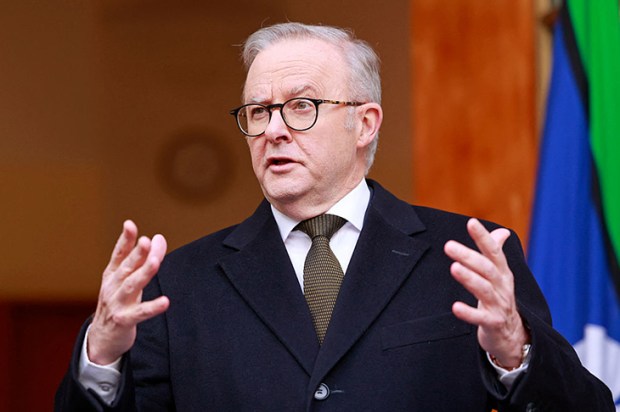
In 2026, Australia finds itself in a strikingly similar position. The official Australia – broadcast by Canberra and corporate boardrooms – describes a prosperous, multicultural miracle sustained by high migration. In reality, Australians face a desperate struggle for housing, a strained social fabric, and a growing sense that Albo’s leadership is managing a simulation rather than a country.
The foundation of hypernormalisation is the ‘Big Australia’ policy. For decades, the official narrative has claimed that high net overseas migration is the only way to avoid recession, fund baby boomer retirements, and address skills shortages – presenting this as an incontestable fact, not a choice.
By late-2025, the gap between narrative and reality had become a chasm. Labor celebrated GDP growth, but most Australians felt poorer as a ‘per-capita recession’ dragged on for nearly two years. To sustain the illusion of prosperity, the state relied on a constant influx of new people, creating a Ponzi-style economy driven by volume, rather than productivity. The government treated the economy like a spreadsheet, ignoring that many could no longer afford housing.
The failure of the official reality is most obvious in the housing market. By January, the national rental vacancy rate had fallen to just 1.2 per cent. Median apartment rents reached $750 a week in Sydney and $600 in Melbourne, far beyond the reach of essential workers. In response, elites offered performative solutions like ‘Housing Accords’ and ‘Future Funds’ – yet, in their collective wisdom, continued to welcome record arrivals: over 150,000 in the first two months of 2025 into an already saturated market.
When citizens point out that adding the population of Canberra each year without a housing plan is unsustainable, they are met with the usual script: claiming any link between migration and housing prices is simplistic or a racist dog whistle.
The most tragic rupture in this facade is the surge in violence among young people. In late-2025, Victorian Coroner Ingrid Giles reported on Melbourne’s warring youth gangs. Between 2014 and 2025, Victoria recorded 245 knife-related homicides – 18 of children, of which 11 were gang-related.
Giles noted that ‘the Victorian community is still grappling with the impacts of knife crime’ and that many of these gangs, such as Brotherhood and 97, are primarily made up of juveniles from migrant backgrounds. For families in the north-west of Melbourne – where 44 per cent of youth gang crime occurs – the reality is not one of inclusion, but of fear as young boys are hunted in shopping centre car parks.
Beyond the bloodstained streets, deeper cultural friction has emerged – something the official ‘diversity is strength’ narrative ignores. In Western Sydney and Melbourne, unassimilated cultural enclaves strain the hypernormalism facade. The Muslim population increased by 35 per cent between 2016 and 2021. Islam, fuelled by arrivals from the Middle East, is now one of Australia’s fastest-growing religions. Western values often clash with hard-line Islamic practices.
This manufactured reality is reinforced by new speech codes and legislative shifts. The Criminal Code Amendment (Hate Crimes) Bill and expanded anti-vilification laws were introduced as protections for social cohesion, created ad hoc to shield the growing Muslim community from hate speech. These laws exemplify hypernormalisation: when the state can no longer provide basic material needs – like affordable housing or safe streets – it retreats into managing perception. By policing speech, it acts as a censorious moral arbiter, distracting from its failure to protect fundamental liberties.
The immigrant detainee release scandal shattered the illusion. Nearly 150 non-citizens, many with violent or sexual offence histories, were freed from indefinite detention. By late-2025, reports showed dozens had re-offended, exposing the state’s border control narrative as fiction. The public saw a system unable to deport dangerous criminals but willing to prosecute citizens for ‘offensive’ speech online.
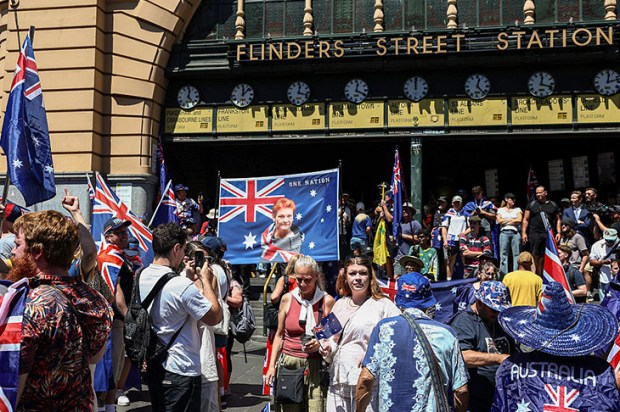
Hypernormalisation ends when the public stops participating in the delusion. The March for Australia rallies of August 2025 and January 2026, which brought tens of thousands into the streets, were not just about immigration – they were a rejection of the fake world. Protesters reacted to the cognitive dissonance of being told the country is wealthier than ever, while many live in caravans, sleep on the streets, or share houses into their thirties.
The collective failure of Labor and the perennial bickering of the Liberal-National Coalition have resulted in growing public hostility toward politics. A recent Purpose for Government survey found that 55 per cent of Australians do not believe that politicians serve the interests of citizens.
One Nation’s support doubled by the end of last year, not because voters were radicalised, but because the party voiced the obvious truths the hypernormalised mainstream ignored. One Nation has become the voice for ordinary working Australians fed up with imported crime, overcrowded schools and public transport, state-mandated acceptance of archaic cultural practices and draconian speech codes. For many, Australia feels like a socially engineered liberal utopia—one that ignores their daily realities. To Labor, these voters are probably a basket of deplorables; to One Nation, they are simply normal people.
Australia is a nation holding its breath. Its leaders continue to read from an autocue powered by Windows 95, promising that more growth and stricter speech codes will eventually deliver a progressive utopia. In reality, the hypernormalised state is fracturing.
A society can only pretend for so long. People are told immigration doesn’t affect housing, but they can see the ‘No Vacancy’ signs. They’re told the streets are safe, but see the faces of grieving mothers after their child are slain on the footpath. Our ruling class is an army of smug credentialed ideological clones.
As Bertrand Russell said, to understand the actual world as it is, not as we wish it to be, is the beginning of wisdom. The performance is ending; the real world must now be faced.
Got something to add? Join the discussion and comment below.
You might disagree with half of it, but you’ll enjoy reading all of it. Try your first month for free, then just $2 a week for the remainder of your first year.