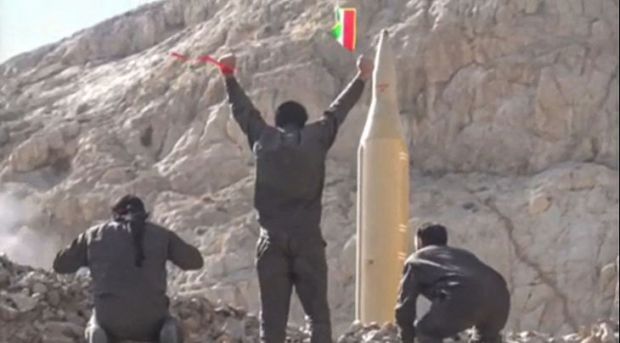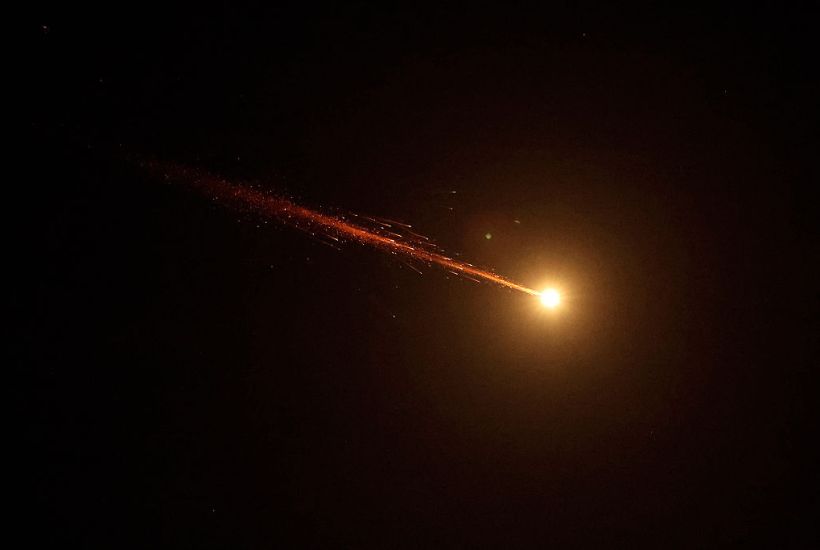
Barbarossa. Pearl Harbor. Swindon? Surprise attacks can, in a moment, change the course of history, the destiny of a nation and the future of a leader. After it was revealed this weekend that the Iranians have developed missiles capable of reaching the United Kingdom – and reportedly attempted to hit the UK-US military base on the Chagos islands – we should be more worried than ever about the possibility of a British Pearl Harbor style attack.
The nation that built the world’s first integrated air defence system no longer has one – successive prime ministers have been happy to rely on the American military to defend our homeland instead
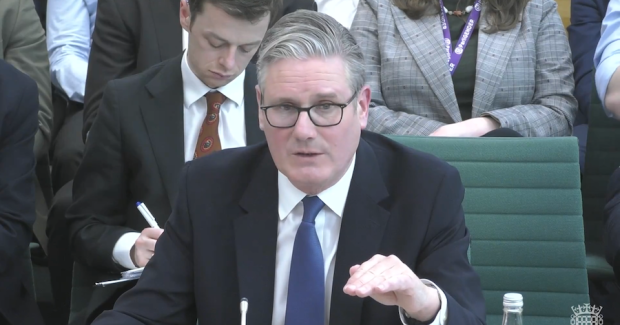
Imagine the scenario: a single conventionally armed ballistic missile is detected launching over a thousand miles away from Russia or Iran – target: the United Kingdom. There is little that Starmer can do to stop it. The nation that built the world’s first integrated air defence system no longer has one – successive prime ministers have been happy to rely on the American military to defend our homeland instead. Of the two missiles fired at the Chagos islands, one is reported to have failed and the other intercepted by the Americans. In our scenario, approximately ten minutes after being alerted to the missile, it hits a new drone factory in Swindon, one of two such sites operating in the UK, knocking out a key military technology. Certainly, this scenario may sound unbelievable, but that’s the thing about surprise attacks – they are unbelievable, until they are suddenly, and bloodily, not.
On 22 June 1941, Adolf Hitler launched Operation Barbarossa. More than 3.8 million Axis troops invaded the Soviet Union, catching the Red Army by surprise. Joseph Stalin had chosen to ignore the intelligence that warned him that the Germans were about to attack, because he believed that Hitler wouldn’t break the Nazi-Soviet Pact. As a result, the Germans were to reach the gates of Moscow before they were halted.
Six months later, the Japanese navy attacked the United States Pacific fleet in Pearl Harbor in Hawaii, to the great shock of the fleet and the army, whose job it was to defend the base. Like Stalin, Admiral Kimmel and Lieutenant General Short had ignored warnings, in this case that a Japanese attack on Pearl Harbor was possible. The reason for their inaction? They didn’t believe the Japanese had the capability to sail a fleet across the Pacific undetected and attack from the air.
It is one thing for Starmer to forget the lessons of the second world war. It’s another to ignore those from a war that is still being fought. In November 2021, British and American intelligence had realised that Russia was preparing to invade Ukraine. But their warnings to allied intelligence services were not believed. It was inconceivable to their colleagues that a major land war could be fought in Europe in the 21st century. They weren’t the only ones. President Zelensky himself dismissed warnings from the Americans as scaremongering until the final hours, leaving his country unprepared for the coming assault.
Four years later, the chaos and unpredictability in the world that seems to have been unleashed by the Russian invasion of Ukraine is only growing worse, and Starmer appears to have failed to learned a key lesson from these events – that it is dangerous to dismiss a scenario because it seems to fit outside the realm of what is rational, imaginable or desirable. Members of a parliamentary select committee recently attacked the government’s contingency planning for doing precisely this; ignoring the worst-case scenario and ‘just dealing with something that you think you can manage’ – and that seems to be the case with aerial defence too.
Indeed, its lucky that a Pearl Harbor-style attack has not already occurred while Keir Starmer is prime minister. A similar lack of imagination and sense of denial is evident in Starmer’s apparent failure to adequately defend RAF Akrotiri in Cyprus from aerial attack. Three Iranian designed drones attacked the base – out of which, two were shot down but the third evaded detection and hit the base. This time the attack caused minimal damage. But a missile strike on Akrotiri would likely devastate the base.
Akrotiri is one of Britain’s most important military bases and home to Eurofighters and now F-35s – warplanes that would be very expensive and hard to replace. While it hasn’t been successfully attacked in 40 years, its vulnerability to a surprise ballistic missile attack from Iran and its proxies has been evident for a while.
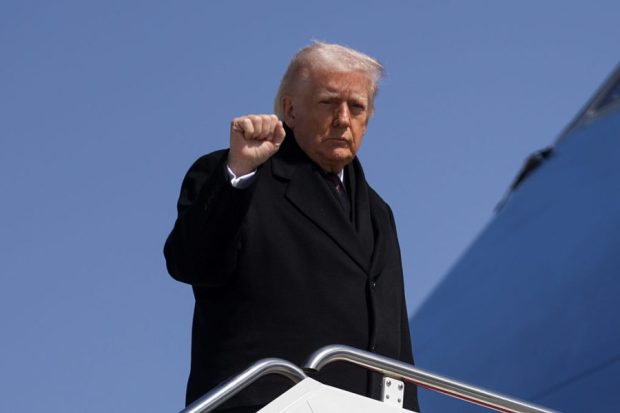
Yet the decision to send HMS Dragon – a Type 45 anti-missile destroyer – to protect the base seven days after Trump attacked Iran, and two months after the President’s military build-up began, seems like it was dragged out of Starmer. HMS Dragon has only just arrived in the eastern Mediterranean, three weeks since the conflict began.
Type 45 destroyers are the only kit Britain has that can blast these missiles out of the sky. Worse still, the Royal Navy has only six Type 45s, with three at various stages of readiness and the other three undergoing maintenance and currently unavailable. Let’s hope HMS Dragon isn’t needed in home waters.
While Sweden is spending over £1 billion on ground-based air defence to protect its cities, infrastructure and military, Britain’s defence investment plan is delayed once again owing to the difficulty of increasing defence expenditure without raising taxes or cutting public expenditure in other areas. But perhaps this ‘conspiracy of stupidity’ is a failure of imagination rather than politics. For if the Prime Minister truly believed in the need for greater defence spending, he might find a way to cut this Gordian knot.
In the end, if Britain was hit by a surprise strike from Iran or Russia, the political fallout would likely bring down Keir Starmer. The only upside would be that it just might convince Britain to finally begin rearming.